
 Need help?
Do you have a question about the Electrolux FRIGIDAIRE PMBS3080AF and is the answer not in the manual?
Details on power supply, voltage, frequency, and grounding for the microwave.
Guidance on proper grounding procedures to prevent electric shock.
Solutions for common oven problems like not starting, arcing, or uneven cooking.
Addressing issues such as display not operating, power loss, slow cooking, sparks, and noise.
This document is a comprehensive "Use & Care" manual for a Frigidaire Professional Microwave Oven, designed to guide users through its operation, maintenance, and safety precautions.
The manual begins by welcoming the user to the Frigidaire family and encourages product registration for official support and easy access to information. It provides dedicated sections for recording the model number, serial number, and purchase date, along with an illustration showing the serial number's location, ensuring users can easily find and reference their product details.
A critical section, "Precautions Microwave Energy," emphasizes safety measures to prevent exposure to excessive microwave energy. It warns against operating the oven with the door open, tampering with safety interlocks, or placing objects between the door and the oven front face. Users are advised not to operate a damaged oven, especially if the door, hinges, latches, or seals are compromised. All adjustments and repairs must be performed by qualified service personnel. The manual also notes that the device complies with part 18 of the FCC Rules for the USA, addressing potential radio interference and offering solutions like cleaning the oven's sealing surface, reorienting antennas, or relocating the oven.
The "Utensils" section provides crucial guidance on what materials are safe for microwave use and what should be avoided. It highlights the danger of tightly-closed utensils exploding and advises opening containers and piercing plastic pouches before cooking. A "Utensil Test" procedure is outlined for users to determine if non-metallic utensils are microwave-safe. A detailed table lists materials that can be used, such as browning dishes, dinnerware, glass jars (for warming only), heat-resistant oven glassware, oven cooking bags, paper plates, paper towels, parchment paper, plastic, plastic wrap, thermometers, and wax paper, along with specific usage instructions for each. Another table lists materials to be avoided, including aluminum trays, food cartons with metal handles, metal or metal-trimmed utensils, metal twist ties, paper bags, plastic foam, and wood, explaining why each should not be used (e.g., arcing, fire risk, melting, contamination).
"Important Safety Instructions" reinforces general safety practices, urging users to read all instructions before use and pay attention to warning and caution statements. It defines these safety symbols and notes that the instructions cover common conditions but common sense should always be exercised. Electrical requirements specify the product's rating (120 volts AC, 60 Hertz, 1.5 kilowatts, 13.5 amps) and the need for a separate, dedicated supply circuit with proper voltage and frequency. Grounding instructions are detailed, explaining that the appliance must be grounded to reduce electric shock risk and that improper grounding can be hazardous. It advises consulting a qualified electrician for any grounding or electrical questions and warns against disassembling the appliance. The manual also discusses the use of extension cords, specifying that they must be 3-wire grounding type and adequately rated.
Further safety instructions include warnings against overcooking food, using combustible materials, and leaving the oven unattended. It advises removing wire twist-ties from bags, keeping the oven door closed if contents ignite, and not using the cavity for storage. Special attention is given to liquids, which can overheat beyond boiling without visible signs, leading to sudden boiling over. Users are instructed to stir liquids, use wide-mouthed containers, allow liquids to stand after heating, and exercise caution when inserting utensils. It also warns against using oversized metal utensils or scouring pads, and emphasizes the importance of cleaning ventilation hoods and filters regularly.
The "Counter Top Installation" section provides clear guidelines for setting up the microwave oven. It specifies selecting a level surface with adequate open space for intake and outlet vents, requiring a minimum clearance of 3.0 inches (7.5cm) from adjacent walls and 12 inches (30cm) above the oven. Users are instructed not to remove the oven legs or block vents, as this can cause damage. It also advises placing the oven away from radios and TVs to prevent interference. The manual mentions that a built-in trim kit is sold separately for cabinet or wall installation, providing model numbers and descriptions for the microwave and trim kit.
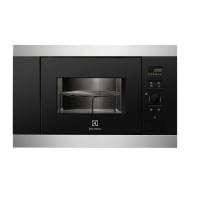
The "Names Of Oven Parts And Accessories" section visually identifies the control panel, glass turntable, and turntable ring assembly, helping users familiarize themselves with the components.
The "Operation" section is extensive, covering various cooking functions and settings. It starts with initial setup, including plugging in the oven and setting the clock. Instructions are provided for setting and turning off the clock display, as well as using the control lock feature to prevent accidental starts or child use. The "+10 SEC / +30 SEC" key function is explained for quick starts and adding cooking time.
Different heating methods are detailed:
The manual also covers specific food features:
"User Reference" and "Preferences" sections outline how to customize oven settings, including volume, weight units (lbs/kg), language mode, and demo mode.
The "Maintenance" section includes a "Troubleshooting Guide" with a chart listing common problems, possible causes, and remedies. This guide helps users diagnose issues like the oven not starting, arcing or sparking, unevenly cooked food, overcooked food, undercooked food, and improper defrosting. It advises checking electrical connections, door closure, cookware, and power levels.
"Cleaning Suggestions" provides detailed instructions for keeping the oven clean inside and out. It recommends using a soft cloth with warm, mild detergent solution and avoiding rough scouring powders. Users are advised to wipe up spills immediately, especially greasy foods, and to heat water with lemon juice to loosen baked-on particles. Instructions for cleaning the glass turntable tray and the oven door window are also provided, emphasizing careful handling and avoiding abrasive cleaners. It notes that steam accumulation is normal in high humidity and warns against operating the oven empty, as this can damage the magnetron tube or glass tray.
Finally, the "Service Call Check" section offers a checklist to perform before calling for service, ensuring basic functionalities like the oven light, cooling fan, turntable rotation, and water warming are checked. It reiterates that a microwave oven should never be serviced by an unqualified person.
 General
| Brand | Electrolux |
|---|---|
| Model | PMBS3080AF |
| Appliance Category | Microwave Oven |
| Type | Built-In |
| Width | 30 in |
| Power Output | 1000 Watts |
| Exterior Finish | Stainless Steel |
| Control Type | Electronic Touch |
| Interior Lighting | Yes |
| Turntable | Yes |
| Voltage | 120 V |
| Cooking Modes | Reheat, Defrost, Popcorn |



 To Next Page