Need help?
Do you have a question about the Elektron Syntakt and is the answer not in the manual?
Guidance on safe usage and ventilation for the power adapter.
Information regarding potential loud audio signals during test mode.
Instructions for performing a complete restart of the Syntakt.
Explanation of symbols, formatting, and terminology used in the manual.
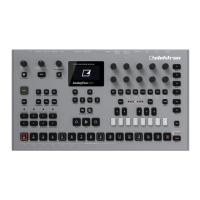
Detailed description and identification of all front panel controls and displays.
Identification and function of all rear panel input and output connectors.
Step-by-step guide for initial setup and powering on the Syntakt.
Instructions for navigating and playing pre-loaded patterns and sounds.
Guide to adjusting the global or pattern tempo and tap tempo functionality.
How to use the TRIG keys for chromatic playing and scales.
Method for muting or unmuting individual sequencer tracks.
How to access and adjust track parameters using DATA ENTRY knobs.
Overview of the digital sound engine and its components.
Description of analog sound engines for drums and cymbals.
Explanation of how delay and reverb send effects are utilized.
Details on the analog drive, multimode filter, and amplifier components.
Instructions for routing tracks and external inputs through the FX block.
Information about the +Drive storage for projects and sounds.
Explanation of how projects, patterns, and sounds are organized.
Details on audio, MIDI, and FX tracks within the Syntakt sequencer.
How to use tracks for controlling external MIDI gear.
Functionality of the dedicated FX track for analog drive and send effects.
Methods for navigating menus and sub-menus using keys and knobs.
Explanation of the uses of the TRIG keys for sequencing and control.
Details on the function and operation of DATA ENTRY and LEVEL/DATA knobs.
How keys function individually and in combination with other keys.
Guide to adjusting track parameters using DATA ENTRY knobs.
Techniques for faster menu and list navigation.
Commands for copying, clearing, and pasting data within the Syntakt.
Method for naming sounds, projects, and other files.
Using the pop-up menu for convenient character input during naming.
Using the TRIG keys to play sounds chromatically and in scales.
Options for configuring scales, root notes, and keyboard layout.
Functionality for muting or unmuting tracks globally or per pattern.
Using trig modifiers to alter track sounds during performance.
Triggering Syntakt functions via external MIDI note data.
Information on integrating Syntakt with computer DAWs via Overbridge.
Details on Syntakt's USB compatibility and audio/MIDI streaming.
Procedures for backing up and transferring projects and sounds.
Overview of sound storage options: +Drive library and Sound Pool.
Methods for playing sounds using TRIG keys or external MIDI devices.
Process for adjusting sound parameters on the active track.
Instructions for loading sounds from the Sound Browser or Manager.
Steps to save edited sounds to the +Drive.
Accessing and using the SOUND menu for sound management.
Functionality for previewing and loading sounds from the library.
Tools for managing sounds: import, export, rename, and tag.
Detailed steps for loading sounds into patterns.
Procedure for exporting the active track's sound to the +Drive.
How to rename sounds using the NAMING screen.
Resets track parameters to default values.
Adjusting tempo, global vs pattern tempo, and tap tempo features.
Selecting banks and patterns, and pattern chaining.
Starting, stopping, pausing, and resuming pattern playback.
Introduction to pattern editing modes and trig types.
Method for inputting trigs using the TRIG keys in real time.
Real-time recording of notes, parameter locks, and trigs.
Inserting notes and parameter locks step-by-step.
Adjusting the timing of trigs for micro-timing effects.
Customizing retrig behavior for sequencer steps.
Applying quantization to micro-timed and off-grid trigs.
Configuring the internal metronome settings.
Setting pattern and track lengths and playback scales.
Setting shared length and scale for all tracks in a pattern.
Assigning individual lengths and scales to each track.
Advanced sequencer functions like parameter locks and sound locks.
Setting unique parameter values for individual sequencer steps.
Changing a track's sound on specific sequencer steps.
Applying rules to trig events based on conditions.
Using FILL mode for temporary pattern variations.
Adjusting the swing ratio for rhythmic groove.
Managing patterns, tracks, and trigs via copy, paste, and clear functions.
Saving and reloading patterns to a temporary memory space.
Sequencing patterns to create longer song structures.
Arranging patterns into songs for sequential playback.
Interface for creating and editing songs, rows, and settings.
Step-by-step process for building and modifying songs.
Instructions for playback, navigation, and control within Song Mode.
Accessing and modifying parameters on the SYN, FLTR, AMP, and LFO pages.
Settings for note trig actions: pitch, velocity, length, probability.
Filter Trig control for triggering the filter envelope.
LFO Trig control for triggering the Low-Frequency Oscillator.
Portamento Time setting for pitch glide duration.
Enabling and disabling the portamento effect.
Parameters for sound synthesis, varying by selected machine.
Multimode filter parameters and its associated envelope settings.
Cutoff frequency of the multimode filter and EQ center frequency.
Filter resonance and EQ boost/cut settings.
Selection of filter types, including digital and analog options.
Filter envelope depth for modulation of cutoff frequency.
Envelope delay and filter envelope reset parameters.
Base frequency setting for the digital voice filter.
Width adjustment for the digital voice filter frequency range.
Amplitude envelope, effect sends, panning, and volume parameters.
Sustain level for the amplitude envelope (ADSR mode).
Release time for the amplitude envelope (ADSR mode).
Delay send amount for sending audio to the delay effect.
Reverb send amount for sending audio to the reverb effect.
Stereo panning position for the track's sound.
Volume level of the track's amplifier.
Amplitude envelope reset, mode, and track routing settings.
Parameters for the Low-Frequency Oscillator 1 behavior.
Speed setting for the LFO waveform cycle.
Multiplier for LFO speed, affecting sync with tempo.
Fade in/out settings for LFO modulation depth.
Selecting the target parameter for LFO modulation.
Selection of LFO waveform shapes.
Start Phase setting for the LFO waveform cycle.
Trig Mode settings for LFO behavior upon note trigger.
Depth and polarity setting for LFO modulation.
Parameters controlling the behavior of the second LFO.
Accessing and modifying parameters for MIDI tracks.
Settings for MIDI note trig actions: note, velocity, length, probability.
LFO Trig control for triggering LFO on MIDI tracks.
MIDI channel, bank, program change, and CC parameter settings.
Setting values for up to eight assignable CC commands.
Controls for CC values, specified on the AMP (CC SELECT) page.
Selecting CC commands controlled by FLTR PAGE parameters.
Parameters for the LFO behavior on MIDI tracks.
Speed setting for the MIDI track LFO.
Multiplier for MIDI track LFO speed.
Fade in/out settings for MIDI track LFO modulation.
Selecting modulation destination for MIDI track LFO.
LFO waveform selection for MIDI tracks.
Start Phase setting for MIDI track LFO.
Trig Mode for MIDI track LFO behavior.
Depth and polarity for MIDI track LFO modulation.
Parameters controlling the second LFO for MIDI tracks.
Accessing and adjusting parameters for the FX track.
Settings for FX track trig events: length, probability, LFO, filter, amp.
FX track analog drive parameter settings.
Amount of analog drive added to the audio through the FX track.
Analog multimode filter parameters and its envelope.
Cutoff frequency of the analog multimode filter.
Resonance setting for the analog multimode filter.
Selection of filter types for the analog FX block.
Filter envelope depth for modulation of cutoff frequency.
Envelope delay parameters for the analog filter.
Amplitude envelope, sends, panning, and volume for the FX track.
Sustain level for the FX track amplitude envelope.
Release time for the FX track amplitude envelope.
Depth modulation for the FX track amplitude envelope.
Delay send amount from the FX track.
Reverb send amount from the FX track.
Stereo panning position for the FX track.
Volume level of the FX track amplifier.
FX track amplitude envelope reset and mode settings.
Parameters for the first LFO on the FX track.
Speed setting for the FX track LFO.
Multiplier for FX track LFO speed.
Fade in/out settings for FX track LFO modulation.
Selecting modulation destination for FX track LFO.
LFO waveform selection for FX tracks.
Start Phase setting for FX track LFO.
Trig Mode for FX track LFO behavior.
Depth and polarity for FX track LFO modulation.
Parameters controlling the second LFO for FX tracks.
Accessing and adjusting delay, reverb, and mixer settings.
Parameters for the delay send effect, including time and feedback.
Ping-pong setting for stereo delay effect.
Stereo width adjustment for delay signal pan.
Feedback gain for the delay effect.
Highpass filter cutoff frequency for the delay effect.
Lowpass filter cutoff frequency for the delay effect.
Reverb send amount from the delay effect.
Mix volume adjustment for the delay output signal.
Parameters for the reverb send effect, controlling persistence and ambiance.
Pre-delay time setting for the reverb effect.
Decay time setting for the reverberated signal.
Shelving filter frequency for reverb sound shaping.
Shelving gain for dampening reverb above a chosen frequency.
Highpass filter cutoff frequency for the reverb effect.
Lowpass filter cutoff frequency for the reverb effect.
Mix volume adjustment for the reverb output signal.
Track level settings for audio tracks 1-8.
Setting the track level for audio tracks 1 through 8.
Track levels for tracks 9-12, FX, Delay, Reverb, and external inputs.
Setting the track level for audio tracks 9 through 12.
Setting the overall level of the FX track.
Setting the overall level of the delay effect.
Setting the overall level of the reverb effect.
Routing and level settings for incoming external audio.
Managing projects: loading, saving, and managing project files.
Performing tasks related to songs, including editing and loading.
Renaming the active song.
Clearing the active song.
Selecting and loading songs.
Saving the active song to the current project.
Managing patterns: renaming, clearing, saving, and reloading.
Reloading pattern data from the project.
Setting audio routing options on a per-pattern basis.
Configuring MIDI functionality: sync, ports, and channels.
Configuring MIDI port functionality and signal types.
Setting MIDI channels for tracks, FX, and auto channel.
Sending and receiving SysEx data for projects, patterns, and sounds.
Procedure for sending project, pattern, or sound data via MIDI/USB.
Procedure for receiving project, pattern, or sound data via MIDI/USB.
Setting global audio routing options for all tracks and effects.
Configuring incoming audio from INPUT L/R as stereo or mono.
Customizing which tracks send audio to MAIN OUT.
Customizing which tracks send audio to Delay/Reverb effects.
Routing incoming audio from USB devices into the Syntakt signal path.
Routing outgoing Syntakt audio to USB devices.
Setting if internal audio is sent to MAIN OUT with Overbridge/USB.
Amplification level for audio streamed over USB to the main output.
Setting if USB audio is pre or post track level.
Applying global FX/Mix settings across all patterns.
System settings: USB config, LED intensity, OS upgrade, format.
Configuring USB connection modes: Overbridge, USB MIDI, USB AUDIO/MIDI.
Adjusting the brightness of key LEDs and the screen.
Recalling the last used parameter page subpage.
Procedure for upgrading the Syntakt operating system software.
Erasing all content from the +Drive storage.
Procedures for oscillator calibration and factory restore.
Performing hardware self-tests and checking for errors.
Erasing patterns and sounds while keeping +Drive data.
Re-initializing the Syntakt to factory default settings.
Alternative method for upgrading the Syntakt OS via startup menu.
Exiting the Startup menu.
Example setup for syncing Syntakt with a legacy DIN sync bass machine.
Using Syntakt's sequencer to control external MIDI synthesizers.
Common functions like copy, paste, clear, and parameter changes.
Key combinations for selecting tracks, patterns, and banks.
Key combinations for character selection and deletion in naming screens.
Key combinations for saving projects and temporary pattern reloads.
Shortcuts to access various menus like SOUND, MACHINE, and FX.
Key combinations for tempo, metronome, trig, and timing adjustments.
Key combinations for entering Mute modes and quick muting tracks.
Key combinations for entering Keyboard, Fill, and other modes.
Key combinations to clear track or pattern data.
Methods to reset individual parameters or entire parameter pages.
Randomizing parameters on a selected page.
Key combinations to preview sounds and trigs.
Key combinations for entering, exiting, and navigating Song Mode.
Technical details on audio levels, impedance, and power consumption.
List of physical components and connectivity options.
Dimensions, weight, and environmental operating limits.
List of individuals involved in the Syntakt development.
Credits for sound design and preset creation.
Official website and office address for Elektron.
Overview of Syntakt's voice types (Analog/Digital) and machine concepts.
Steps to assign a specific machine to an audio or MIDI track.
Detailed description of Syntakt's eight digital voice machines.
Parameters for the SD BASIC digital machine.
Parameters for the PC CARBON digital machine.
Parameters for the CP VINTAGE digital machine.
Parameters for the CY ALLOY digital machine.
Parameters for the SY BITS digital machine.
Parameters for the SY TONE digital machine.
Parameters for the SY CHORD digital machine.
Parameters for the SY TOY digital machine.
Parameters for the SY SWARM digital machine.
MIDI channel and parameter settings for the MIDI machine.
Assignable CC command settings for the MIDI machine.
Values for MIDI CC commands, specified on AMP page.
Selection of CC commands for MIDI machine parameters.
Machine setting to disable sound output for a track.
Detailed description of Syntakt's analog drum voice machines.
Parameters for the BD CLASSIC analog drum machine.
Parameters for the BD FM analog drum machine.
Parameters for the BD PLASTIC analog drum machine.
Parameters for the BD SILKY analog drum machine.
Parameters for the BD SHARP analog drum machine.
Parameters for the BD HARD analog drum machine.
Parameters for the SD FM analog drum machine.
Parameters for the SD NATURAL analog drum machine.
Parameters for the SD CLASSIC analog drum machine.
Parameters for the SD HARD analog drum machine.
Parameters for the RS HARD analog drum machine.
Parameters for the white noise generator utility machine.
Parameters for the impulse utility machine.
Parameters for the SY DUAL VCO machine.
Parameters for the SY RAW machine.
MIDI channel and parameter settings for the MIDI machine.
Assignable CC command settings for the MIDI machine.
Selection of CC commands for MIDI machine parameters.
Machine setting to disable sound output for a track.
Detailed description of Syntakt's analog cymbal voice machines.
Parameters for the CH CLASSIC analog cymbal machine.
Parameters for the OH CLASSIC analog cymbal machine.
Parameters for the CH METALLIC analog cymbal machine.
Parameters for the OH METALLIC analog cymbal machine.
Parameters for the HH BASIC analog cymbal machine.
Parameters for the CY CLASSIC analog cymbal machine.
Parameters for the CY METALLIC analog cymbal machine.
Parameters for the CY RIDE analog cymbal machine.
Parameters for the CB CLASSIC analog cymbal machine.
Parameters for the CB METALLIC analog cymbal machine.
Parameters for the white noise generator utility machine.
Parameters for the impulse utility machine.
MIDI channel and parameter settings for the MIDI machine.
Assignable CC command settings for the MIDI machine.
Selection of CC commands for MIDI machine parameters.
MIDI CC and NRPN specifications for track level parameters.
MIDI CC and NRPN specifications for trig parameters.
MIDI CC and NRPN specifications for SYN page parameters.
MIDI CC and NRPN specifications for FILTER page parameters.
MIDI CC and NRPN specifications for AMP page parameters.
MIDI CC and NRPN specifications for LFO page parameters.
MIDI CC and NRPN specifications for FX track parameters.
MIDI CC values for parameters on the FLTR page.
MIDI CC and NRPN specifications for miscellaneous parameters.
MIDI CC and NRPN specs for FX track SYN, FILTER, and AMP pages.
List of parameters on audio tracks that can be modulated by LFOs.
List of parameters on MIDI tracks that can be modulated by LFOs.
List of parameters on the FX track that can be modulated by LFOs.
 General
| Voices | 12 |
|---|---|
| Number of Parts | 12 |
| Number of Tracks | 12 |
| Type | Drum Machine, Synthesizer |
| Synthesis Types | Analog, Digital |
| Filters | Analog multimode filter for analog voices |
| Effects | Chorus, Delay, Reverb, Distortion |
| Sequencer | Elektron sequencer |
| Memory | 128 projects, 128 patterns per project |
| Connectivity | MIDI In/Out/Thru, USB |
| Power | 12V DC |
| Weight | 1.53 kg |
| Sound Engines | 8 digital, 4 analog |

 To Next Page