EasyManua.ls Logo

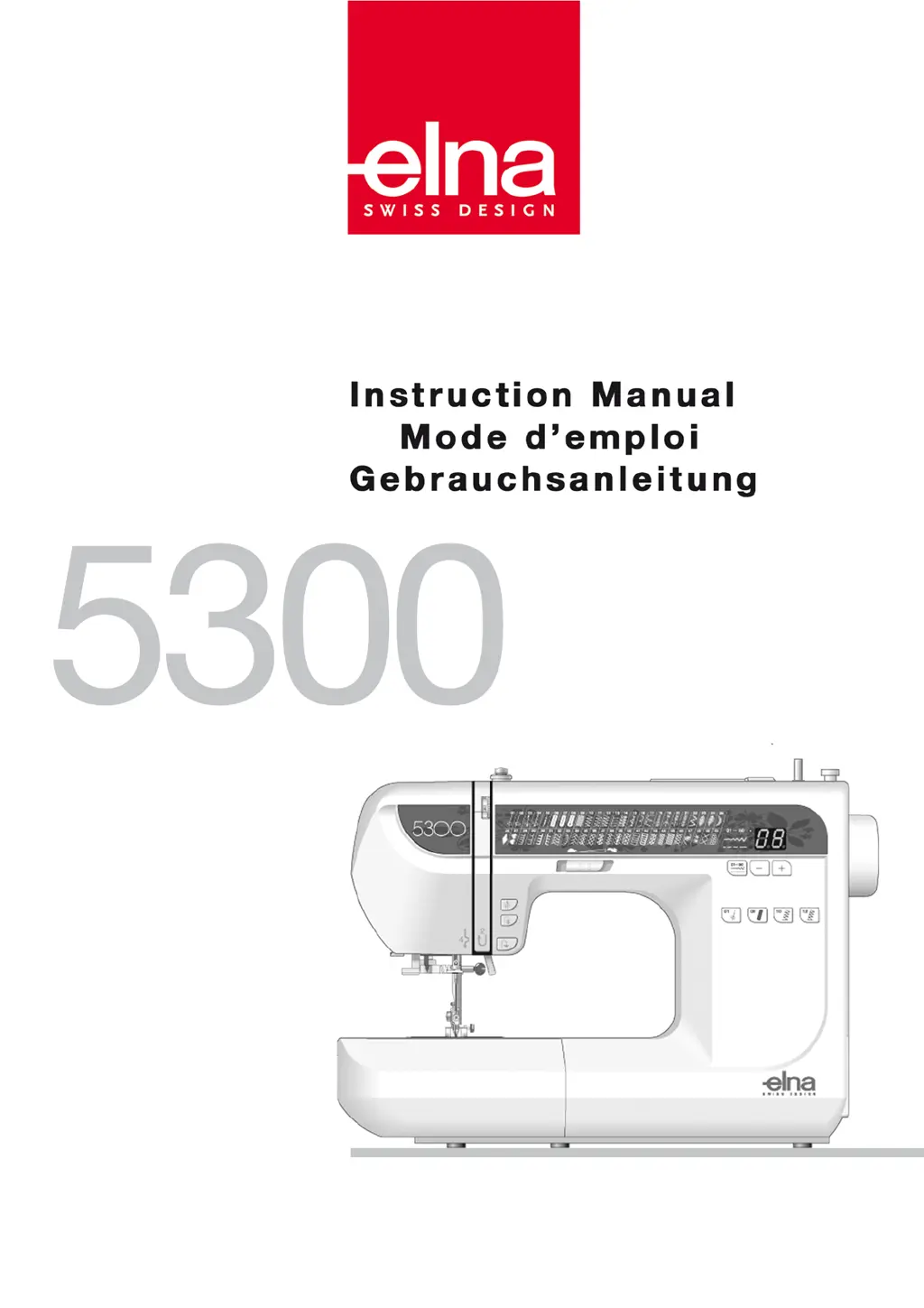
ELNA 5300 - User Manual

ELNA 5300
96 pages
Print Icon
To Next Page IconTo Next Page
Loading...

Table of Contents

Questions and Answers

  • T
    Teresa PetersonAug 17, 2025
    What to do if my ELNA 5300 Sewing Machine is skipping stitches?
    • P
      Paul LiAug 17, 2025
      Skipped stitches on your ELNA Sewing Machine can occur for a few reasons. Check if the needle is inserted correctly or if it's bent or blunt. The needle and/or thread might not be suitable for the fabric. For stretch, very fine fabrics and synthetics consider using a blue tipped needle. Also, make sure the needle thread is threaded properly, and consider replacing the needle if you are using a poor quality one.
  • S
    Sara SanchezAug 20, 2025
    Why is the needle breaking on my ELNA Sewing Machine?
    • D
      Dylan SpearsAug 20, 2025
      Your ELNA Sewing Machine needle may break due to incorrect insertion, or if the needle is bent or blunt. Ensure the needle clamp screw isn't too loose. Using the proper foot is important. Avoid drawing the fabric to the rear when sewing is finished. Also, the needle might be too fine for the fabric you're sewing. Remember to use the proper foot.
  • V
    Vanessa NelsonAug 23, 2025
    Why does the needle thread keep breaking on my ELNA 5300?
    • R
      Richard ColemanAug 23, 2025
      The needle thread may break on your ELNA Sewing Machine due to several reasons. The thread might not be threaded correctly, or the needle thread tension could be too tight. Other potential causes include a bent or blunt needle, incorrect needle insertion, improper thread placement under the presser foot at the start of sewing, failure to draw the fabric to the rear after sewing, or using a thread that's too heavy or fine for the needle.
  • A
    Adam MillerAug 26, 2025
    How to fix seam puckering on my ELNA Sewing Machine?
    • A
      Angela HamptonAug 26, 2025
      Seam puckering with your ELNA Sewing Machine can happen if the needle thread tension is too tight or if the needle thread isn't threaded correctly. The needle might be too heavy for the fabric, or the stitch length may be too long. For very fine fabrics, try using a stabilizer. You can also make the stitch shorter.
  • J
    Jennifer GonzalezAug 28, 2025
    Why does the bobbin thread break on my ELNA 5300 Sewing Machine?
    • C
      Christopher CastanedaAug 28, 2025
      The bobbin thread in your ELNA Sewing Machine might break if it's not threaded properly in the bobbin holder. Lint accumulation in the bobbin holder can also cause this issue. If the bobbin is damaged and doesn’t turn smoothly, replace it. If the thread is wound loosely, re-wind the bobbin.
  • T
    Thomas WilsonAug 31, 2025
    Why is the needle thread looping on my ELNA 5300 Sewing Machine?
    • G
      ghartAug 31, 2025
      Needle thread looping on your ELNA Sewing Machine can occur if the needle thread tension is too loose, or if the needle size isn't suitable for the thread.
  • D
    Devon GomezSep 2, 2025
    What to do if the cloth is not feeding smoothly in my ELNA Sewing Machine?
    • A
      Andrew BellSep 3, 2025
      If the cloth isn't feeding smoothly through your ELNA Sewing Machine, the feed dog might be packed with lint. The stitches could also be too fine; try making them longer. Also, make sure the feed dog was raised after being lowered.
  • J
    Jessica VazquezSep 5, 2025
    What to do if my ELNA 5300 Sewing Machine does not work?
    • A
      Angela McgrathSep 5, 2025
      If your ELNA Sewing Machine isn't working, first check if it's plugged in. Also, thread might be caught in the hook race, or the bobbin winder spindle might still be in the winding position.
  • W
    William AlvarezSep 8, 2025
    Why is my ELNA Sewing Machine so noisy?
    • D
      Dale RichardsonSep 8, 2025
      Noisy operation of your ELNA Sewing Machine can be due to the feed dog being packed with lint, or lint accumulation in the bobbin holder.
  • J
    Jeffrey SanchezSep 12, 2025
    Why is the buttonhole not sewn well on my ELNA 5300 Sewing Machine?
    • K
      Kimberly TurnerSep 12, 2025
      A poorly sewn buttonhole on your ELNA Sewing Machine could be due to the stitch density not being suitable for the fabric, or if interfacing isn't being used with stretch fabrics.

Summary

IMPORTANT SAFETY INSTRUCTIONS

DANGER- To reduce the risk of electric shock:

Instructions to reduce the risk of electric shock when using the sewing machine.

WARNING-1 To reduce the risk of burns, fire, electric shock, or injury to persons:

Instructions to reduce the risk of burns, fire, electric shock, or injury to persons.

SAVE THESE INSTRUCTIONS

Instruction to save safety precautions for future reference.

SECTION I. MACHINE PARTS AND FUNCTIONS

Name of Parts

List and identification of all machine components with corresponding numbers.

Standard Accessories

List of standard accessories provided with the sewing machine, with storage information.

Extension table and Free Arm

Details on the extension table and its use for free arm sewing.

SECTION II. GETTING READY TO SEW

Connecting Machine to Power Supply

Instructions for connecting the sewing machine to the power supply.

For Your Safety

Safety precautions regarding power cord usage and wet hands.

Controlling Sewing Speed

Speed control slider

How to adjust the maximum sewing speed using the slider.

Foot control

How sewing speed is varied by pressing the foot control.

Presser Foot Pressure Adjusting Lever

How to adjust the presser foot pressure for different fabrics.

Main Function of Keys

Reverse Key

Using the reverse key for backstitching and locking stitches.

Auto-Lock Key

Using the auto-lock key to secure stitches automatically.

Up;Down Needle Key

Controlling the needle's up and down position.

Mode Key

Pattern selection mode

Selecting stitch patterns using the mode key and pattern chart.

Stitch width adjusting mode

Adjusting the stitch width using the mode and +/- keys.

Stitch length adjusting mode

Adjusting the stitch length using the mode and +/- keys.

Direct Pattern Selection Keys

Quickly selecting commonly used stitches via dedicated keys.

How to Drop the Feed Dog

Attaching and Removing Presser Foot

Procedure for attaching and removing presser feet.

Attaching and Removing Shank

Procedure for attaching and removing the presser foot shank.

Raising and Lowering Presser Foot

Adjusting Needle Thread Tension

How to adjust needle thread tension for optimal stitch quality.

Tension is too tight

Tension is too loose

Changing Needles

Selecting the Correct Needle for Fabrics

Guidance on choosing the right needle type for different fabric types.

Needle Definitions

Needle Types and Descriptions

Descriptions of various needle types including Universal, Ball point, Denim, Stretch, Leather, Topstitching, and Twin/Double.

Winding the Bobbin

Threading for Bobbin Winding

Step-by-step guide to threading the machine for bobbin winding.

Setting the Spool of Thread

How to place the spool of thread on the spool pin.

Inserting the bobbin

Threading the Machine

Built-in Needle Threader

Drawing Up the Bobbin Thread

Procedure for bringing up the bobbin thread to the needle area.

SECTION III. BASIC SEWING

Straight Stitch Operation

Covers machine settings, starting, changing direction, and finishing straight stitch seams.

Adjusting Stitch Length

Adjusting Needle Position

How to adjust the needle's horizontal position.

Seam Allowance Lines

Sewing on Heavy Fabrics

Techniques for sewing through multiple layers of heavy fabric.

Variety of Straight Stitches and Recommended Feet

#01, #02 Straight stitch:Zigzag foot A

Description of straight stitch patterns #01 and #02 and recommended foot.

#03 Lock-a-matic stitch: Zigzag foot A

Description of lock-a-matic stitch for securing seams.

#04 Locking stitch: Zigzag foot A

Description of locking stitch for invisible finishing.

Gathering

Machine settings

Machine settings for gathering: Pattern, Presser foot, Tension.

Zipper Insertion

Machine Settings

Machine settings for zipper insertion: Pattern, Presser foot, Tension.

Lapped Application

Instructions for applying lapped zippers, typically in side seams.

Fabric Preparation

Steps for preparing fabric for zipper insertion, including marking and basting.

Zigzag Stitch

Machine Settings

Machine settings for zigzag stitch: Pattern, Presser foot, Tension.

Adjusting Stitch Width

How to adjust stitch width for the zigzag stitch.

Adjusting Stitch Length

How to adjust stitch length for the zigzag stitch.

Overcasting with Zigzag Stitch

Machine Settings

Machine settings for overcasting stitch: Pattern, Presser foot, Tension.

Satin Stitch Applique

Machine Settings

Machine settings for satin stitch applique: Pattern, Presser foot, Tension, Pressure.

Whip and Rolled Hem

3-step Zigzag (Multiple zigzag)

Mending a Tear

Overcasting Stitch

Machine Settings

Machine settings for overcasting stitch: Pattern, Presser foot, Tension.

Double Overcasting Stitch

Machine Settings

Machine settings for double overcasting stitch: Pattern, Presser foot, Tension.

Buttonhole Variations

#06 Classic Buttonhole

Description and use of the classic buttonhole stitch.

#07 Rounded Buttonhole

Description and use of the rounded buttonhole stitch.

#08 Keyhole Buttonhole

Description and use of the keyhole buttonhole stitch.

Classic Buttonhole

Machine Settings

Machine settings for classic buttonhole: Pattern, Presser foot, Tension.

Starting to sew

Step-by-step guide to sewing a classic buttonhole.

Adjusting the Buttonhole Width

Adjusting the Buttonhole Stitch Density

How to adjust the density of the buttonhole stitches.

Double Layer Buttonhole

Instructions for sewing a sturdy, layered buttonhole.

Rounded End and Keyhole Buttonholes

Adjusting the Buttonhole Width

Adjusting width for rounded and keyhole buttonholes.

Keyhole buttonhole

Specific instructions for adjusting keyhole buttonhole width.

Corded Buttonhole

Machine Settings

Machine settings for corded buttonhole: Pattern, Presser foot, Tension.

Button Sewing

Machine Settings

Machine settings for button sewing: Pattern, Presser foot, Tension, Feed dog.

Darning

Machine Settings

Machine settings for darning: Pattern, Presser foot, Tension.

Setting memory darning size

Setting the darning length memory.

To adjust the evenness of darning

Adjusting darning evenness using +/- keys.

Blind Hem Stitches

Machine settings

Machine settings for blind hem stitches: Pattern, Foot, Tension.

Starting to sew

Steps for sewing blind hems on woven fabrics.

SECTION IV. DECORATIVE STITCHES

Super Stretch Stitch

Recommended stitch for swimwear and stretch velour for durability.

Shell Tuck

Pretty hem finish for lingerie and tricot fabrics.

Satin Stitches

Decorative stitch for appliques, monograms, and floral designs.

Applique Sewing

Machine Settings

Machine settings for applique sewing: Pattern, Foot, Tension, Pressure.

Scallop Stitch

Patchwork

Smocking

Fagoting

Cross Stitch

Pattern Combination

Machine Settings

Machine settings for pattern combination: Pattern, Presser foot, Tension.

Using the Fine Adjustment Dial

SECTION V. CARE AND MAINTENANCE

Replacing the Light Bulb

Procedure for replacing the machine's light bulb.

WARNING:

Warning regarding replacing the light bulb, noting potential heat.

Cleaning the Hook Race

WARNING:

Warning to turn off power before cleaning and not dismantle machine.

Inserting the Bobbin Holder

NOTE:

Note to ensure needle and presser foot are attached after cleaning.

Problems and Warning Signals

Warning signal

Table listing warning signals, their causes, and suggested solutions.

Audible signal

Table listing audible signals and their meaning (normal operation, errors).

Troubleshooting

Needle Thread Breakage

Causes and references for needle thread breakage.

Bobbin Thread Breakage

Causes and references for bobbin thread breakage.

Needle Breakage

Causes and references for needle breakage.

ELNA 5300 Specifications

General IconGeneral
BrandELNA
Model5300
CategorySewing Machine
LanguageEnglish

Related product manuals