@
Defrosting
Du€ to the humidity of
the air within the cabinet
storage space,
Jrpst will form on the surface
of
the evaporator
when rhis has b€en wo*ing
for som€ time. A
layer of frost in etcess
of about 6mm
ein)
has än sdverse
etf€ct
|rpon cooting efficiency,
thoaetore the
evaporätor must be
defrosted at
regular intervals, For this
purpose,
set
the
thermo$at
control
knob to
"O"
(OFF).
After delrosring
the cabinat
intenor must b€ cleaned and
dd€d before the
refrig€rator is switchsd on again-
O
cl€aning.
ALWAYS DISCONNECTTH:
ELECTRIC CUNNENT
SUPPLY BEFORE CLEANING,
SWTCHING
OFF IS NOT
ENOUGH.
PUL!
OUT THE PLUGI Remove from the cabinet
all water r€sulting
lrom defro6ting, because
this
wall
otheNise
become
the
cause of
unpleasant
order
and taining affectng
ths retrigerator contents.
Wipe the cabinst
intetio. clean
with a
damp
clorh rvrung out
in warm watsr containing a mild,
non-abmdv6
household dsterg€nt.
Dry thoroLrghly
with
a soft.
dry
cloth.
Never use brushss, scl6peß,
soap
powdeE.
petrol,
benzine or thinners,
which wll dämage
the
cabinet
lioing. Door or lid linings must
not be altowed
to become too wst, or water
rmy be absor.led by
the lttsulalion
marerial, and
insulsting
efficiency
will b€ adreßely
affected ußtil ths insutad
has died out. Wash all
removable
shslv€s and fittings in warm soapuds, then
dnse and dry with a soft clean
cloth.
@
Laying-up.
when the refrigerator is to be left unused for any appr€ciabls
peiod
of 6me,
the
plug
must be
removed from the
suppty socket.
lt is
advisable that
rhe cabinet should be cleaned
and ths lid or door
left op€n for a {ew
hours to
prevent
odour
formation.
O
Tochnical Advic€ foi DC Operalion.
7.1. Direct conn€ction bstween battery and
ref.igerator. Avoid the
use of u.n€cssary
plugs,
swirches,
disüibutron
socksts src. betwssh the bstery and the
refrigsretor,
as
these will
contributs to voltage drop at
th€ input t6rminals
and momen€ry
peak
vohagss caused by other electdcal
equipm€nt the same circuit can
damage the
refrigerator
lnv6n6r. Always connect the
refrigerator dir6ctly to the battery-
(See
Fig.3)
7.2. The elsctric currsnt supply to the retrigerator
must be
protected
by
a
line {us€ insen€d in the
positive
lead.
as clo6s to thg battsrv as oossible.
24V DC
fuss rating l0A.
l2V
DC
fuse r.lrng 154.
7.3. DC cunent supply cable must have cross
s€ctional area ofat
least 2.5mm2to
prevent
voltage drop,
Cable runs
should
be as
short
and dkect 6s
possible,for
the same rBason.
(ReJer
to
Fig.3,4l
7.4. ENGEL ecltFe refflgeratof
is
protected
against
radio imerference
to the requiremsnts of
EN
50081-l
In o.d€r to
avoid
Iadio ,nterference
on the OC supplylin6,
plsaso
use s€pardte
positivo
and
negative
cabl6, which
are
twisted
together in ä spiral fom.
(See
Fig.s)
7.5. Bctterv
Mairtenanco is Most lmportant.
Sholtd rhe
voltage ar the retrig€rator input terminals
fall below the rated r€quiremsm, rhe cooling
efficiency will
immedlatsly be r€ducod. Plsase
pay
due attention
lo th€ maim€nänca o{
your
battery
in
a
good
stat€ of charge.
7.6.
Ouick charg6rs supply lhe bat€ry wilh ercess
voltage in
p€rforming
their
intended function. Should the retrigerator
remain
swiiched-on
whilst 6
quick
cha€er is connected
to the batt€ry, the invener c€n sufter darnags,
7.7. Nswr us6 a battory charger, lransformer/rectifier,
battsry €lirninator or ACIDC convsner
to supply
your
Engel
refd-
gerator,
Such oquiprtent can,
und6r conain circumstanc6s, d6liver cunert at a
vohalp which may damage the
in-
vener. lt is in
ordgr
to use these
jtems
always
provided
that
the bdft6ry is connecled
in
parallel
betw€en
the charg-
ing €quipmsm
and
th€ refrigarator.
(See
Fig.
)
@
APPLICATION
of
ENGINE GENERATOR
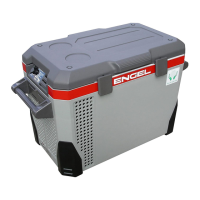
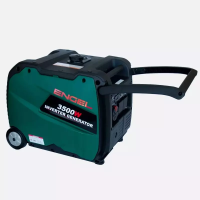
To use an engine
gen€r€tor
as
powsr
source for ENGE! ectipse refrig€rator. ugers are advised
to contact their
ENGEL eclips€ deals. loa
hr
application method in order
to
prot€ct
rhe rgfrigerator {rom damage
caus6d by high
vohage.


 To Next Page