
 Need help?
Do you have a question about the Equator EZ 4700 C and is the answer not in the manual?
Combines washer and dryer to save space.
Can be installed in place of a standard dishwasher.
Compact design suitable for kitchens or laundry rooms.
Automatic water level and energy-saving features.
No agitator protects clothes for better appearance.
Offers programs like Sanitize, Allergen, Winterize.
Keeps clothes warm and fluffy.
1400 rpm spin speed extracts more water.
Simple to use as washer or dryer.
Automatically selects ideal dry level.
Self-cleaning pump and coin trap require no lint cleaning.
Can be installed permanently or made portable.
1 Year Parts & Labor for personal use, 90 days for commercial.
Lists conditions not covered by warranty.
Contact details for warranty service.
Covers non-removal of shipping rods, leveling issues, etc.
Covers coin trap cleaning and improper maintenance.
Covers breakage of cosmetic parts.
Covers misuse, accidents, acts of God, etc.
Details on trip charges, remote areas, RV installation.
Consumer responsibility for purchase date verification.
Width, height, depth measurements.
Electrical and water pressure specifications.
Wash/dry capacities and net weight.
Maximum spin speed and power consumption.
Basic safety rules for appliance usage.
Caution against flammable liquids, gases, and hot water systems.
Warnings for foam rubber, cooking oils, and drying cycle procedures.
Keep area clean and check coin trap.
Tips on spin speed and fabric softener use.
Advice on overloading, condensing drying, and HE detergent.
Guidelines for sorting clothes for optimal washing.
Needs a protected, dry, well-ventilated area.
Precautions for carpet or wood floor installation.
Proper grounding and outlet specifications.
Labels for the washer-dryer's main parts.
Lists factory-supplied and optional accessories.
Guidance on moving, lifting, and disposing of packaging.
Recommendations for recycling old appliances.
Proper installation location and shipping rod removal.
Verifying all supplied accessory parts are present.
Inspecting the unit upon arrival and keeping parts safe.
Using adjustable feet for proper leveling.
Importance of correct placement for operation.
Connecting to a 110V/60Hz, 15 Amp outlet.
Connecting to an individual circuit with fuse/breaker.
Ensuring proper grounding for safety.
Specific safety warnings for electrical setup.
Connecting hoses to cold/hot water faucets.
Connecting hoses to the appliance.
Connecting the drain hose to a sink or drain.
Details on various wash cycles and their features.
Information on available dry cycles.
Details on Self clean, Drain, Winterize cycles.
Minimum clearance requirements for installations.
Conformance to mobile home construction standards.
Requirements for ADA compliant installation using a platform.
Instructions for removing pet hair from laundry.
General steps for starting and running cycles.
How to use the detergent and fabric softener dispensers.
Performing an initial wash without clothes.
How to interpret garment care symbols.
Tips for sorting clothes by soil, color, and fabric.
Checking pockets and preparing garments before loading.
Explanation of each button on the control panel.
Symbols for different dry level settings.
Symbols for various washing stages.
Symbols for delay start, dry cycle, time/error codes.
How to start and manage wash/dry cycles.
How to add forgotten items during a cycle.
Procedure to prepare the appliance for cold temperatures.
Explanation of the door lock mechanism during cycles.
Denim alert and vacation unplugging advice.
Step-by-step guide to cleaning the coin trap.
How to clean detergent dispensers and their recess.
How to clean the appliance's outer surfaces.
How to clean the inside of the drum and door area.
Steps to clean the water inlet filter.
How to clean the washing drum and prevent rust.
How to clean the door gasket with bleach solution.
Procedure for opening the door during power failure.
Stain removal for blood and burn marks.
Stain removal for wax and gum.
Stain removal for food and beverage stains.
Stain removal for makeup and dairy products.
Stain removal for ink, ketchup, mildew, and mud.
Stain removal for nail polish, paint, perfume, perspiration.
Stain removal for various common stains.
Solutions for appliance not starting or water supply problems.
Solutions for appliance vibration, noise, or stopping mid-cycle.
Troubleshooting door lock and drain/spin problems.
Troubleshooting incorrect water temperature and wet loads.
Solutions for water leaks, excessive suds, and drying issues.
Explanation of normal condensation at the soap dispenser.
Error codes related to door lock and drain pump.
Error codes for water inlet and level sensor issues.
Error codes for motor, heater, and dryer component failures.
Error codes for communication issues and general dryer malfunctions.
This document describes the Equator Advanced Appliances All-in-One Combo Washer-Dryer, Model EZ 4700 C, a built-in appliance designed for efficient and convenient laundry care. The manual provides comprehensive instructions for installation, operation, and maintenance, ensuring users can maximize the lifespan and performance of their unit.
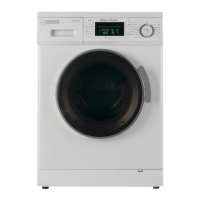
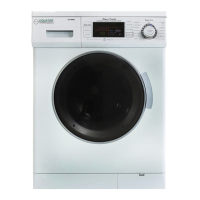
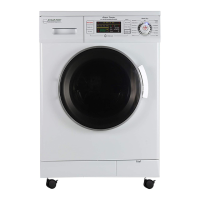
The Equator EZ 4700 C is a front-loading, all-in-one combo washer-dryer that combines the functions of both a washing machine and a dryer into a single unit. This design offers significant space savings, making it ideal for smaller homes, apartments, or any space where a separate washer and dryer might not fit. It can be completely built-in, replacing a standard dishwasher, with zero clearance at the back and sides. The appliance is engineered for water and energy saving, featuring an automatic water level detection system that adjusts water usage based on the load size. An LED display further contributes to energy efficiency by turning off after five minutes of inactivity.
The washer-dryer operates without an agitator, which helps to preserve clothing appearance and extend garment life. It offers specialized wash programs, including Sanitize, Allergen, and Winterize, catering to various laundry needs. The refresh function keeps clothes warm and fluffy, while a high spin speed of 1400 rpm extracts more water, leading to improved dry times. The sensor dry function automatically selects the ideal dry level for clothes based on the wash cycle, ensuring optimal drying results. For maintenance, the machine features a self-cleaning pump, eliminating the need for lint cleaning after drying, and includes a convenient coin trap. The appliance can be permanently installed or made portable with an optional portability kit.
The EZ 4700 C offers a variety of wash and dry cycles, as well as other specialized functions, all controlled via a user-friendly panel. The program dial knob allows users to select from 16 programs, including:
Wash Programs:
Dry Cycles:
Other Cycles:
The control panel features a colored LED display that shows selected program information such as water temperature, spin speed, remaining time, rinse times, wash cycles, and error messages. Dedicated buttons allow users to select "Wash + Dry," "Wash only," or "Dry only" cycles. An "Extra Rinse" button adds an additional rinse to the selected cycle. The "Dry Level" button allows users to choose between Normal, Extra, Low, or Damp Dry for sensor dry cycles. A "Chime" button turns the audible alerts on or off, and a "Delay" button enables users to postpone the start of a wash cycle by 1 to 24 hours. The "Start/Pause" button initiates or interrupts a program, while the "Power" button turns the machine on or off.
An "Add-a-sock" feature allows users to pause the wash program, drain water (to prevent overflow), and add forgotten items before resuming the cycle. The door lock function ensures safety during operation, locking the door until the cycle is complete.
Regular maintenance is crucial for the optimal performance and longevity of the Equator EZ 4700 C. The manual outlines several simple procedures:
Cleaning the Coin Trap: Users are instructed to switch off the appliance, allow water to cool, open the service flap, and carefully unscrew the coin-trap cover. Any residual water will flow out. Foreign objects and fluff should be removed, and the interior cleaned. The pump impeller wheel, located behind the water filter, must be able to rotate freely. Detergent residue and fluff should be removed from the pump cover thread and pump housing before reinserting and tightening the coin-trap cover.
Cleaning the Detergent Drawers and Recess: The detergent drawer can be removed by pressing a release lever. The cap from the fabric softener compartment should be removed, and the drawer recess cleaned with a small brush. After cleaning, the cap is reinserted, the drawer pushed back into place, and a rinse program run without laundry.
Cleaning the Machine Exterior: The exterior can be cleaned with warm water and a neutral, non-abrasive household detergent. Spills should be wiped immediately with a damp cloth. Users are advised not to use sharp objects, methylated spirits, diluents, chemicals, or similar products.
Cleaning the Machine Interior: After each use, the area around the door opening, flexible gasket, and door glass should be dried. Periodically, the appliance should be run through a complete cycle using hot water. For hard water deposits, only washer-safe cleaners should be used.
Cleaning the Water Inlet Filter: If water is hard or contains lime deposits, the water filter may clog. Users should turn off the water faucet, unscrew the water inlet hose, clean the filter with a hard bristle brush under running water, and then reinsert the filter and tighten the hose.
Cleaning the Drum: The washing drum should be cleaned periodically, especially in hard water areas where lime scale can build up. If descaling agents, dyes, or bleaches are used, they must be suitable for washing machines. Any rust specks from small metal articles should be removed with a stainless steel cleaning agent, and steel wool should never be used.
Cleaning the Door Gasket: The door gasket should be cleaned monthly to prevent dirt buildup. Users should open the door, empty the drum, and combine 3/4 cups of liquid chlorine bleach with 1 gallon of warm tap water. Wearing rubber gloves, a soft, clean cloth dipped in this solution should be used to clean the gasket. After standing for 5 minutes, it should be wiped dry, and the gasket put back in place. Undiluted bleach should not be used, and bleach manufacturer's instructions should be followed carefully.
Emergency Release: In case of a power failure or other issues, the door can be opened manually. Users should open the service flap, drain any remaining water, pull down the emergency release lever with a tool, and then open the door.
The manual also includes a comprehensive stain removal chart, offering guidance on how to treat various types of stains, from blood and ink to grease and fruit, using appropriate methods and cleaning agents. Troubleshooting tips are provided to address common issues such as the machine not starting, lack of water, excessive vibration, failure to drain, or drying inefficiencies, helping users resolve problems before calling for service.
 General
| Width | 27 inches |
|---|---|
| Depth | 29 inches |
| Height | 39 inches |
| Color | White |
| Spin Speed | 1200 RPM |
| Type | Washer/Dryer Combo |
| Washer Type | Front Load |


 To Next Page