20
Eversense E3 CGM Quick Reference Guide
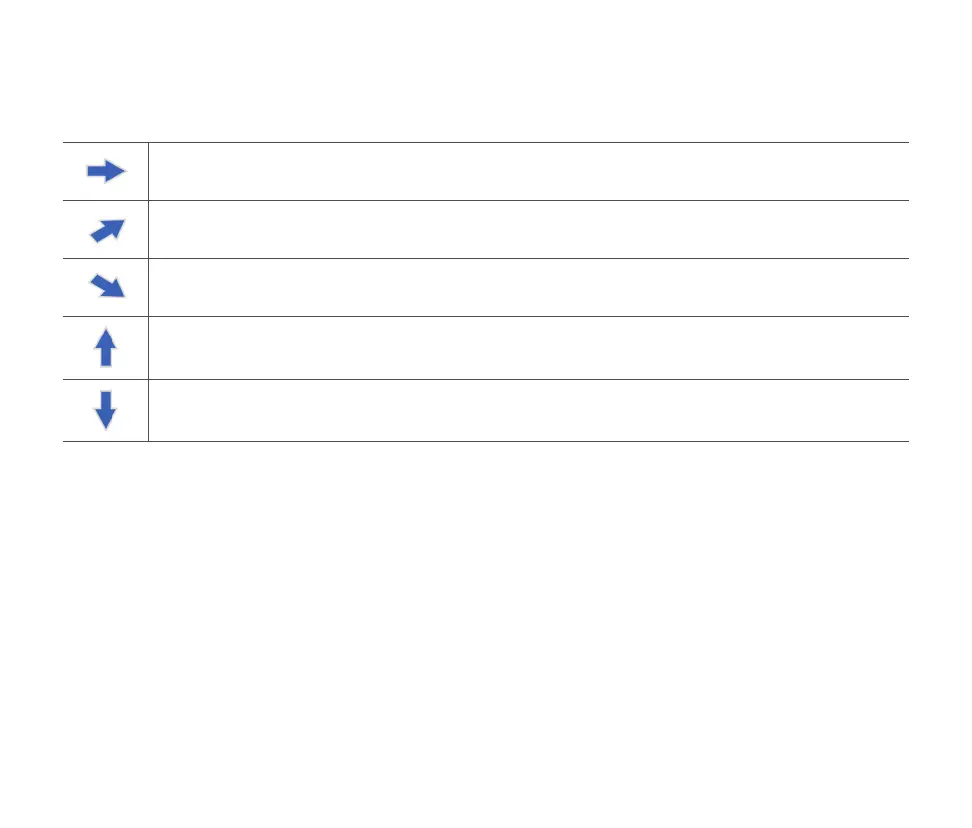
Understand your trend arrows – this can help you make more informed diabetes management decisions.
Glucose is stable – changing less than 1 mg/dL per minute. A change of 0-30 "points"
in 30 minutes.
Glucose is rising moderately – between 1-2 mg/dL per minute. Up 30-60 "points" in
30 minutes.
Glucose is falling moderately – between 1-2 mg/dL per minute. Down 30-60 "points"
in 30 minutes.
Glucose is rising rapidly – greater than 2 mg/dL per minute. Up 60 "points" or more in
30 minutes.
Glucose is falling rapidly – greater than 2 mg/dL per minute. Down 60 "points" or
more in 30 minutes.
Your Diabetes Management
Understanding Sensor Glucose versus Blood Glucose
• Your sensor measures glucose in the fluid in your skin tissue – called interstitial fluid. Your blood
glucose (BG) meter measures glucose in the blood.
• The glucose level in interstitial fluid and blood are usually close. Calibrating your system properly
is the best way to ensure they are as close as possible.
• Dierences between glucose levels in the interstitial fluid and the blood are especially evident
during times of rapid change in blood glucose (after eating, dosing insulin or exercising), and
for some people, during the first several days after insertion due to inflammation that may result
from the insertion procedure.
• Typically, the dierence you see is the sensor glucose level "lags behind" the blood glucose level
by several minutes.



 To Next Page