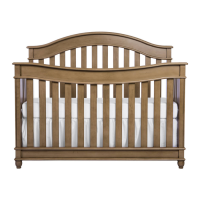
This manual describes the Amsterdam Changing Tray, a product designed to convert a dresser into a changing station for infants. It emphasizes the importance of adult assembly and warns about small parts that could pose a choking hazard before assembly. The changing tray is designed to be secured to a dresser, providing a stable and safe surface for changing a baby.
Function Description:
The Amsterdam Changing Tray serves as an accessory that transforms a compatible dresser into a functional changing table. It provides a raised, enclosed surface to safely hold a changing pad and the baby during diaper changes. The tray is designed to be secured to the top surface of a dresser, ensuring stability and preventing accidental movement during use. It is intended for use with a flat changing pad of specific dimensions (32 inches x 17 inches, not exceeding 1 inch in thickness). The primary function is to offer a convenient and secure area for infant care within a nursery setting, leveraging existing furniture (a dresser) rather than requiring a separate, dedicated changing table. This design aims to optimize space and provide a versatile solution for parents.
Usage Features:
The manual outlines several key usage features and safety precautions for the Amsterdam Changing Tray:
- Adult Assembly Required: The product requires assembly by an adult, and small parts are present, which could be a choking hazard before assembly is complete.
- Simple Step-by-Step Instructions: The manual provides clear, sequential instructions to facilitate quick assembly. Users are advised to read all instructions thoroughly and identify all parts and hardware before beginning.
- Tools Required (Not Provided): Users will need to provide their own tools for assembly, specifically a Philips head screwdriver, a flat head screwdriver, and a hammer. The manual explicitly states that power drills or drivers should not be used to protect the parts from damage.
- Soft Surface for Assembly: To prevent damage to the parts during assembly, users are instructed to place them on a soft surface.
- Dresser Compatibility and Securement: The changing tray is designed to be secured to specific dresser models (e.g., #885, #862, or #833 by Dream On Me Inc., sold separately) or any level, stable, and structurally sound surface with a minimum dimension of 20" x 58". The manual stresses the importance of always securing the unit to the changing surface using the provided hardware to prevent falls.
- Changing Pad Compatibility: The unit is to be used with a flat changing pad measuring 32 inches x 17 inches and not exceeding 1 inch in thickness.
- Weight Limit and Discontinuation of Use: A critical safety feature is the maximum weight limit of 30 lbs for the child. Once the child reaches this weight, the changing tray should no longer be used.
- Fall Hazard Warning: The manual includes a prominent warning about the fall hazard, noting that children have suffered serious injuries from falling off changing tables and that falls can happen quickly. It advises users to stay within arm's reach of the child at all times.
- Inspection Before Use: Users are instructed to read all instructions before using the changing tray or changing pad and to keep all instructions for future reference. It is crucial not to use the changing tray if there are any loose joints, missing or broken parts, or sharp edges. In such cases, users should contact Dream On Me Inc. for replacement parts and instructional literature, and explicitly warned against substituting parts of any kind.
Maintenance Features:
The manual provides comprehensive instructions for the care and maintenance of the furniture, which apply to the changing tray as well, given its wood construction. These guidelines aim to preserve the quality and appearance of the product over time.
- Cleaning: For cleaning the surface, only water on a damp cloth should be used. Mild soap is acceptable, but window cleaner, abrasive cleaners, or cleaning abrasives should be avoided as they can scratch the surface and damage the protective coating.
- Room Climate Control: Wood is porous and sensitive to humidity changes. The manual explains that wood furniture is prepared with a moisture content of 8-10%, but high humidity can cause it to absorb moisture and expand, while low humidity can cause it to lose moisture and shrink.
- Ideal Environment: Fine wood furniture performs best in a controlled environment with a temperature between 65 and 75 degrees Fahrenheit and a relative humidity between 35 and 40 percent. Extreme variations outside these limits can lead to shrinking, expansion, and small cracks, which are not considered material or structural defects.
- Placement: Furniture should not be placed near air-conditioning outlets, fireplaces, radiators, space heaters, humidifiers, or dehumidifiers, as exposure to extreme temperature and humidity variations can damage fine wood products.
- Sticking Doors and Drawers (Applicable to dressers, but the principle applies to wood movement): Minor changes in temperature and humidity can cause wood components to swell, potentially leading to sticking. While tolerances are built-in, extreme conditions can still cause issues. The manual suggests using a dehumidifier or rubbing candle wax or paraffin on sticking surfaces, noting that the wood will adjust back to normal over time.
- Avoid Direct Sunlight: Direct sunlight should be avoided as ultraviolet rays can fade or darken colors, cause crazing or hairline cracks in the finish, and accelerate the natural yellowing of white finishes. This natural process is not considered a quality defect.
- Proper Storage: If the furniture needs to be stored, it should not be kept in a damp basement or a hot, dry attic. Adequate air movement around the furniture is necessary, and nothing should be stacked on it.
- General Care Tips:
- Surface Protection: Protect the furniture surface from hot or extremely cold items. Use coasters under hot or cold beverages.
- Material Avoidance: Do not use synthetic fabric under accessories or lamps. Protect tops from pens, markers, and crayons. Oils from potpourri and other scented items can damage the furniture finish.
- Handling: Do not drag items across the surface of the furniture. When moving the furniture, always lift the unit instead of pushing or dragging it to avoid damage to the legs.
- Air Circulation: Allow the surface to "breathe" by rotating accessories and lamps.
- Polishing and Waxing: Do not over-polish the furniture (limit to two or three times a year) as over-polishing can distort the natural finish. Do not wax the furniture, as wax buildup can destroy the natural finish.
- Leveling: Keep the furniture level to ensure components (like drawers or doors on a dresser) open and close freely.

 Need help?
 General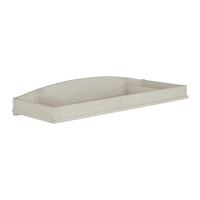

 To Next Page