The ExpertPower EP48100 is a 48 Volt Lithium Iron Phosphate (LiFePO4) deep cycle battery designed for high energy density storage solutions in commercial and residential applications. This modular battery system allows for parallel connections, enabling configurations of up to 51.2KWH and a discharge current of 100A per battery, making it suitable for large commercial applications.
Important Technical Specifications:
- Nominal Voltage: 51.2 V
- Nominal Capacity (77°F, 0.2C): 100 Ah
- Normal Energy (77°F, 0.2C): 5120 Wh
- Dimensions (L x W x H): 19 x 18.9 x 7 inches
- Weight: 98 lbs
- Terminal Type: M6
- Max. Charge Current: 50 A
- Max. Constant Discharge Current: 100 A
- Charge Voltage: 56 V
- Cut-off Voltage: 40 V
- Charging Standard: CC: 0.2C to 56 V, CV: 56 V, Floating: 55.2 V - 56 V, Charging end current: 0.01C
- Estimated Life (77°F): > 10 Years
- Cycle Life (0.2C, 77°F): 8000 cycles with 50% DOD, 4000 cycles with 80% DOD, 3000 cycles with 100% DOD
- Operating Temperature: Charging: 32 - 131°F, Discharging: -4 - 131°F
- Storage Time / Temperature: Less than 18 months at -4-77°F, Less than 12 months at 25 - 95°F, Less than 3 months at 95-131°F
- Casing Material: Steel
- Assembly: 16S1P - Single cell Capacity 100Ah
- Recommended Charging Type: CC - CV - Float charge
- BMS: Integrated with LCD display
Usage Features:
The EP48100 battery incorporates several features to enhance its usability and performance:
- RS485 Communication: Equipped with RS485 communication for computer monitoring, allowing users to track battery status and performance.
- Built-in BMS: Features a built-in Battery Management System (BMS) that provides automatic protection against a variety of conditions, ensuring safe and reliable operation.
- Cell-by-Cell Monitoring: The BMS offers cell-by-cell monitoring, enabling precise oversight of individual cell health within the battery pack.
- Modular Design: Its convenient modular approach facilitates easy replacement and maintenance, simplifying upkeep and extending the system's lifespan.
- A+ Grade Cells: Constructed with A+ grade cells, ensuring reliable and long-lasting power delivery.
- Smart BMS Display: A dedicated display allows users to monitor battery health and status through various menus. Navigation is intuitive, using MENU, ENTER, DOWN, and ESC buttons to view internal cell status and 14 different protection parameters. The main menu provides access to Analogue Information (Battery Voltage, Charge/Discharge Current, Cell Temperature, Cell Voltage, Cell Capacity), BMS Status (Protection History, Over Temperature, Over Voltage, Under Voltage, Over Current, Short Circuit Protection, Failure Status), Parameter Settings (Manufacturing Use Only), and System Settings (Current Baud Rate).
- Reset Button: A reset button is provided to place the BMS into a low-power or sleep mode. Pressing and holding the button for 3 to 6 seconds transitions the battery in or out of low-power mode, controlling its power state.
- Battery Communication Pinout: The battery uses the industry-standard ANSI/TIA 568B protocol for communication and includes a dedicated cable for intercommunication among batteries. For inverter communication, users are advised to consult their inverter manufacturer for pinout information and ensure the inverter protocol is set to "LiB".
- Parallel Configuration: The system supports expansion with up to 10 batteries connected in parallel, creating a robust 48V 1000Ah setup. Important Note: EP48100 batteries cannot be used in series.
Maintenance Features and Guidelines:
To ensure optimal performance, longevity, and safety, adherence to specific maintenance and operational guidelines is crucial:
- Battery Consistency: For parallel connections, it is essential to use identical batteries.
- Uniform Voltage Levels: Before connecting batteries in parallel, fully charge each individual battery to ensure uniform voltage levels. The permissible voltage difference should be less than 0.2V.
- Avoid Mixing Batteries: Do not combine old and new batteries within the same setup.
- Parallel and Series Separation: Avoid simultaneous parallel and series connections for the batteries.
- Circuit Limitation: Do not exceed connecting more than 10 batteries per circuit.
- Regular Maintenance: Annually, batteries should be individually charged after being detached from the series. Upon reassembly, the voltage difference should not exceed 0.5V.
- Charging Algorithm: Efficient charging requires a precise 2-stage "Constant Current/Constant Voltage" (CC/CV) algorithm. A 0.2C Constant Current (CC) charge up to 56.8V is followed by Constant Voltage (CV) at 56V until the current reduces to ≤ 0.05C.
- Recommended Max Charging Current: Ideally, the charging current should not exceed 50A (0.5C). While a faster charge of 100A (1C) is possible in certain circumstances, consistent 1C charging may reduce battery lifespan and capacity due to increased heat generation.
- Avoid Incompatible Chargers: Do not use chargers designed for other battery types (e.g., SLA, Gel chargers) as their features (desulfation, equalization, float charging) are detrimental to LiFePO4 batteries and can lead to accelerated aging, polarization, and electrolyte decay.
- Before Use Inspection: Conduct a thorough examination for visible damage or structural irregularities. Do not use the battery if terminals are bent, broken, or if there are signs of abnormal heat, leaks, water exposure, loose components, cracked casing, bloating, melting, heavy stress, or indentation.
- Professional Installation: For optimal performance and damage prevention, installation by a professional or experienced individual is strongly recommended. Monitor charging and discharging during initial use and observe temperature and operational performance.
- Proper Storage Conditions: Store the battery pack in a well-ventilated, cool, and dry environment. Avoid stacking under heavy objects, exposure to high temperatures, open flames, or corrosive substances.
- Temperature and Humidity Considerations: Store the battery within specified temperature conditions, maintaining a recommended humidity of 60±15%.
- Ideal Storage Capacity: For storage exceeding three months, maintain the battery at a capacity between 40% and 60%. Every three months, fully charge, then completely discharge, and finally recharge to 40-60% capacity to prevent over-discharge.
Warnings:
- Do not immerse the battery in water or allow it to get wet.
- Do not use or store the battery near sources of heat such as a fire or heater.
- Do not reverse the positive (+) and negative (-) terminals.
- Do not connect the battery directly to wall outlets or car cigarette-lighter sockets without proper charging equipment.
- Do not allow exposed ends of cables connected to opposite terminals to touch.
- Do not put the battery into a fire or apply direct heat.
- Do not use the battery if the casing is pierced, broken, cracked, or visibly damaged. Do not forcibly open the battery casing.
- Avoid severe physical shock; do not throw, heavily strike, put excessive pressure on, or step on the battery.
- Never solder anything directly to the battery terminals.
- Do not attempt to disassemble or modify the battery.
- Do not place the battery in a microwave oven or pressurized container.
Warranty & Disclaimer:
The EP48100 batteries come with a four-year warranty covering defects in materials and workmanship under normal use. This warranty does not cover damages caused by customer abuse, improper handling, overcharging, undercharging, water damage, fire, natural disasters, normal wear and tear, capacity loss over time, or gradual decrease in battery performance. The warranty is void if the product is misused, neglected, improperly installed, repaired by unauthorized personnel, disassembled, or modified. Repair, replacement, or credit are the sole remedies, and ExpertPower is not liable for direct, incidental, special, or consequential damages. Professional installation is strongly advised to ensure safety and optimal functioning of the electrical system. ExpertPower is not responsible for damages resulting from misuse, whether intentional, accidental, or environmental.

 Need help?
 General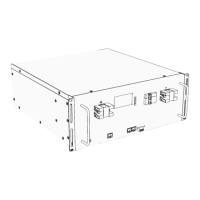

 To Next Page