2
Features
Easy to use –
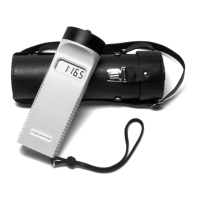
A special measuring pin protrudes from the
centre of the measuring head. In order to take a reading, you
simply press the pin against the sample to be measured. When
you remove the
KT-9
, it automatically displays the true
measured susceptibility of the sample in
SI
units.
Hi-sensitivity –
The maximum sensitivity of the
KT-9
(in com-
mon with the
KT-5
) is 1x10
-5
SI
units. The largest value that can
be read is 999x10
-3
SI
units. The autoranging capability of the
unit gives it the best sensitivity range available.
True susceptibility –
Unlike all other current commercial
instruments, which measure the
APPAR ENT
susceptibility, the
KT-9
’s automated correcting routines display the
TRUE
suscepti-
bility. In older instruments, the measured apparent susceptibil-
ity differs significantly from the real susceptibility in the higher
ranges. Users of these instruments would then have to manually
correct the measured data to obtain a true value.
Long battery life –
The special power saving techniques used
by the
KT-9
allows you to take up to 10,000 readings (under
normal conditions) using a single 9-volt battery.
Uneven samples –
The measurement of magnetic susceptibil-
ity is dependent upon the volume of material being sampled.
The presence of an uneven surface (as is the case in most practi-
cal situations) creates air space gaps due to the sensor sitting up
on bumps. This causes serious errors in the measured suscepti-
bility of all other currently available commercial units.
The
KT-9
overcomes this problem by spacing the sensor a fixed
distance away from the sample by means of a
PIN
. The average
of repeated measurements (placing the pin in different loca-
tions) averages the errors due to the bumps to provide the true
reading of the magnetic susceptibility.
There is no reduction in the effective sensitivity of the
KT-9
due
to the air gap, because of the automatic compensation built
into the unit.
2
Features
Easy to use –
A special measuring pin protrudes from the
centre of the measuring head. In order to take a reading, you
simply press the pin against the sample to be measured. When
you remove the
KT-9
, it automatically displays the true
measured susceptibility of the sample in
SI
units.
Hi-sensitivity –
The maximum sensitivity of the
KT-9
(in com-
mon with the
KT-5
) is 1x10
-5
SI
units. The largest value that can
be read is 999x10
-3
SI
units. The autoranging capability of the
unit gives it the best sensitivity range available.
True susceptibility –
Unlike all other current commercial
instruments, which measure the
APPAR ENT
susceptibility, the
KT-9
’s automated correcting routines display the
TRUE
suscepti-
bility. In older instruments, the measured apparent susceptibil-
ity differs significantly from the real susceptibility in the higher
ranges. Users of these instruments would then have to manually
correct the measured data to obtain a true value.
Long battery life –
The special power saving techniques used
by the
KT-9
allows you to take up to 10,000 readings (under
normal conditions) using a single 9-volt battery.
Uneven samples –
The measurement of magnetic susceptibil-
ity is dependent upon the volume of material being sampled.
The presence of an uneven surface (as is the case in most practi-
cal situations) creates air space gaps due to the sensor sitting up
on bumps. This causes serious errors in the measured suscepti-
bility of all other currently available commercial units.
The
KT-9
overcomes this problem by spacing the sensor a fixed
distance away from the sample by means of a
PIN
. The average
of repeated measurements (placing the pin in different loca-
tions) averages the errors due to the bumps to provide the true
reading of the magnetic susceptibility.
There is no reduction in the effective sensitivity of the
KT-9
due
to the air gap, because of the automatic compensation built
into the unit.


 To Next Page
 Loading...