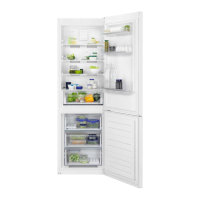
This document is a user manual for a Faure refrigerator, model FRA25600WA. It provides comprehensive information on safety, installation, daily use, maintenance, troubleshooting, and environmental considerations.
Function Description
The Faure FRA25600WA is a household refrigerator designed for storing foodstuffs and beverages. Its primary function is to maintain a cold environment to preserve food, with specific zones for different types of food to ensure optimal storage conditions and hygiene. The appliance features automatic defrosting in the refrigerator compartment and a temperature indicator to help users monitor and adjust internal temperatures.
Important Technical Specifications
- Dimensions:
- Height: 1250 mm
- Width: 550 mm
- Depth: 612 mm
- Electrical Supply:
- Voltage: 230 V
- Frequency: 50 Hz
- Refrigerant: Isobutane (R600a), a natural gas with high environmental compatibility, which is flammable.
- Climate Class: The appliance is designed to operate within specific ambient temperature ranges:
- SN: +10°C to +32°C
- N: +16°C to +32°C
- ST: +16°C to +38°C
- T: +16°C to +43°C
- Fuses: Rating of in-line fuses (one per phase): 10 A at 230 V.
Usage Features
- Temperature Regulation: The appliance's temperature is automatically regulated. Users can adjust the temperature regulator to lower settings for minimum coldness or higher settings for maximum coldness. A medium setting is generally recommended. The internal temperature depends on room temperature, door opening frequency, quantity of food stored, and appliance location.
- Temperature Indicator: A "coldest area" symbol and an "OK" message on the temperature indicator help users ensure proper food storage. If "OK" is not displayed, the temperature controller should be adjusted to a colder setting, and the indicator rechecked after 12 hours.
- Movable Shelves: The refrigerator walls are equipped with runners, allowing shelves to be positioned at different heights to accommodate various food package sizes. Door shelves are also adjustable.
- Food Storage Zones: The manual emphasizes storing food in appropriate zones:
- Moderate Zone: Drinks, eggs, butter, commercial and home-made sauces, hard cheeses, fruit, and fresh vegetables.
- Fresh Zone: Dairy products, desserts with dairy content, fats, soft cheeses.
- Coldest Zone: Meat, poultry, fish, cold meats, prepared dishes, mixed salads, egg/cream-based foods, fresh dough, cake dough, pizza, quiches, fresh foods, and raw milk cheeses with a "best-before" date related to a storage temperature of +4°C or lower.
- Food Hygiene Rules:
- Wrap foods to prevent cross-contamination.
- Wash hands before and during food handling.
- Do not reuse unwashed utensils.
- Allow prepared food to cool before storing.
- Limit door opening frequency and duration.
- Arrange food for free air circulation.
- Regularly check and adjust temperature if necessary.
- Door Reversibility: The door opening direction can be changed, requiring specific steps involving removing and reattaching hinges and feet. This operation is recommended to be performed with assistance.
Maintenance Features
- Cleaning:
- Interior and Accessories: Clean with lukewarm water and neutral soap. Avoid detergents, abrasive powders, highly perfumed cleaning products, or wax polishes.
- Door Seals: Regularly check and wipe clean to ensure they are free from debris.
- Condenser: Clean the black grill and compressor at the back of the appliance with a brush to improve performance and save electricity.
- Defrost Water Drain Hole: Periodically clean the drain hole in the refrigerator compartment channel using the provided cleaner to prevent water overflow.
- Outer Casing: Clean with warm water and a little washing-up liquid.
- Defrosting: The refrigerator compartment automatically defrosts when the motor compressor stops. Defrost water drains into a special container at the back of the appliance and evaporates.
- Light Bulb Replacement: Instructions are provided for replacing the internal light bulb, emphasizing disconnecting power, unscrewing the lamp cover, unhooking the moving part, and replacing the bulb with one of the same power designed for household appliances.
- Door Gasket Maintenance: Clean door gaskets, adjust the door if necessary, and replace defective gaskets by contacting the Service Center.
- Periods of Non-Operation: For long periods of non-use, disconnect the appliance, remove all food, defrost and clean it, and leave the door(s) ajar to prevent unpleasant smells.
Safety Instructions
- General Safety:
- Read the user manual carefully before installation and use.
- Ensure all users are familiar with operation and safety features.
- Keep packaging materials out of reach of children.
- Transport the appliance in its operating position with packing blocks.
- Installation, connections, and maintenance must be carried out by a qualified service technician.
- Appliance is designed for normal domestic use, not commercial or industrial purposes.
- Disconnect power before cleaning or changing light bulbs.
- Do not spray water or steam onto the appliance.
- Do not put inflammable products inside, near, or on the appliance.
- When disposing, disable hazards (cut mains cable, remove door).
- Maintain the "cold chain" for food safety.
- Children and Vulnerable People Safety:
- Children should be supervised and not play with the appliance.
- Keep packaging away from children.
- If discarding an old appliance, disable spring locks on doors to prevent entrapment.
- Electrical Safety:
- Do not alter specifications or modify the product.
- Power cord must not be lengthened.
- Ensure the power plug is not squashed or damaged.
- Ensure the mains plug is accessible.
- Do not pull the mains cable.
- Do not insert the power plug into a loose socket.
- Any electrical component replacement must be done by a certified service agent.
- Connect to a single-phase 230 V supply with an earth connection, complying with NF.C.15100 and electrical energy supplier requirements.
- Do not use extension cables or multiple sockets.
- Refrigerant Circuit:
- Do not damage the refrigerant circuit.
- The refrigerant (R600a) is flammable.
- Ensure components of the refrigerant circuit are not damaged during transportation and installation. If damaged, ventilate the room and avoid open flames.
- Installation Safety:
- Keep ventilation openings clear.
- Do not use mechanical devices or artificial means to speed up thawing.
- Do not use other electrical appliances inside the refrigerator unless approved by the manufacturer.
- Appliance is heavy; take care when moving.
- Avoid prolonged exposure to direct sunlight.
- Bulb lamps are for household appliance use only, not room illumination.
- Ensure adequate air circulation around the appliance.
- Position the back of the product against a wall to avoid touching warm parts.
- Do not locate near radiators or cookers.
- Wait at least four hours after unpacking before connecting to allow oil to flow back to the compressor.
- If installed in a corner with hinges facing the wall, ensure at least 10 mm distance from the wall for door opening.
Environmental Concerns
- Disposal: The appliance should not be treated as household waste. It should be taken to an appropriate collection point for the recycling of electrical and electronic equipment to prevent negative environmental and health consequences.
- Materials: The insulation foam contains flammable gases. The materials used are recyclable.
- Ozone Layer: The appliance does not contain gases that could damage the ozone layer.

 Need help?
 General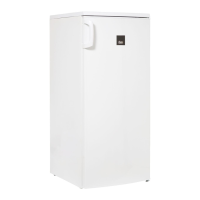

 To Next Page