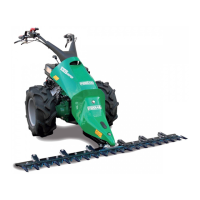
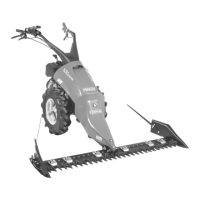
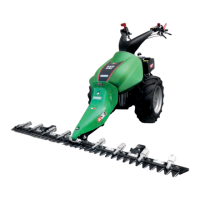
This manual describes the Ferrari PowerSafe® motor mowers, specifically models 514 PS, 515 PS, 518 PS, 530 PS, 530 S PS, and 530 S ED PS. These machines are designed for various front-mounted implements such as cutter-bars, snow-throwers, snowblades, sweepers, lawn mowers, and flail mowers.
Function Description:
The PowerSafe® motor mowers are versatile machines primarily used for agricultural, maintenance, and gardening tasks. They are equipped with safety devices compliant with European Directives. The S models (530 S PS and 530 S ED PS) offer enhanced professionalism due to their EasyDrive transmission, which facilitates forward/reverse movements without the need for manual gear shifting or clutch operation. These models are particularly suited for difficult terrains with slopes and mountainous areas. The 514 PS, 515 PS, 518 PS, and 530 PS models are simpler machines with mechanical transmission.
Important Technical Specifications:
- Engine: Various engine options are available, including Honda GP160V, GX200V, GX270V, GX270V alps, GX340V, GX390V (petrol), and Kohler KD350V, Yanmar LV100 (diesel). Engine power ranges from 3.6/4.8 kW/HP to 8.7/11.7 kW/HP, with engine speeds typically at 3600 rpm. CO2 emissions are also specified for each engine type.
- Clutch: All models feature a hydraulic PowerSafe® clutch with multiple discs, an integrated pump, and a maximum pressure valve calibrated at 7.5 bar. A safety lever, when released, puts the transmission and PTO in neutral while the engine remains on.
- Steering: The S models (530 S PS and 530 S ED PS) are equipped with steering clutches on the wheel axles, allowing for easy steering without varying speed. These models also feature a "zero" turning radius for professional use in challenging conditions. The 514, 515, 518, and 530 PS models have a mechanical transmission.
- Brakes: The 530S ED/PS models include an automatic hydraulic parking brake that locks the machine on slopes, regardless of the engaged gear.
- Handlebar: The handlebar is adjustable in height and laterally in multiple positions, and it is mounted on shock absorbers for user comfort.
- PTO (Power Take-Off): The PTO is used to power front-mounted implements.
- Tires: Various pneumatic tire options are available, including 4.00-8, 16x6.50-8, 4.00-10, 5.0-10, 21x11.00-8, 20x8-10, and 23x8.50-12. Some wheels have adjustable tracks, and some can be twinned or combined with Superbite metal wheels. Metal clawed wheels (3x300 and 3x400) are also available for mountainous and steep terrain.
- Dimensions and Weights: Detailed tables provide dimensions (A, B, B1, C, E in mm) and maximum weights (M in kg) for each model with different tire configurations and engine types (petrol and diesel).
- Hydraulic System (EasyDrive models): The EasyDrive transmission includes a hydraulic circuit shared with the PowerSafe® clutch, a double-control piston, and an independent hydraulic pump with a maximum pressure valve set at 20 bar.
Usage Features:
- Safety: Operators must read the user manual carefully, wear appropriate personal protective equipment (body protection, gloves, safety shoes, ear protection), and be aware of safety symbols and warnings. It is forbidden to smoke, light flames, or create sparks near the machine. Avoid touching hot engine parts and moving components. Do not operate on slopes greater than 25% for 514, 515, 518, 530 PS models, and 58% for 530S, 530S ED PS models.
- Starting Up: Before starting, ensure the stop levers are in the "on" position, accelerate lightly, close the air lever (choke), open the fuel tap, and tension the recoil rope until engine compression is felt.
- Operation: Inspect the work area for stones, sticks, or foreign objects. Adjust speed according to the quantity of product to be collected or cut. Engage the PTO a few meters before entering the work area. For diesel engines, it is recommended to start the engine every 30-40 days to keep the injector and pump in operation.
- Implement Connection: Implements are attached to the PTO flange using specific tangs and sleeves. Ensure all screws and nuts are tightened, and grease as necessary.
- Balancing: Proper machine-implement balancing is crucial for optimal performance. Additional weights or PTO spacers may be needed depending on the implement.
- Steering and Braking Adjustment: Steering clutches and brakes may require adjustment over time to ensure proper functionality.
Maintenance Features:
- Recording Data: Users are encouraged to record machine model, serial number, engine serial number, dealer information, and purchase date for easier spare parts lookup and information retrieval.
- Label Preservation: Safety labels must be kept clean, visible, and legible. Replace any missing or unreadable labels. New labels can be ordered from the manufacturer through authorized dealers.
- Cleaning: Daily cleaning is recommended to remove dust, mud, leaves, dry grass, or encrusted debris from the machine and engine. Use compressed air for cleaning the engine and dry air filter; never use a high-pressure washer on the engine. For oil-bath air filters, clean the oil container and restore the oil level.
- Oil and Filter Change: Engine oil level should be checked every 4 hours of operation and replaced annually or every 100 hours. Use good quality engine oil as specified in the engine manual. The oil filter should be replaced after the first 30 hours of operation, then regularly as per the maintenance program. Check the gearbox oil level weekly, ensuring it is between the two notches on the dipstick when the machine is horizontal.
- Prolonged Inactivity: For periods of inactivity longer than one month, store the machine in a dry, sheltered environment, covered with a cloth. Ensure the engine and exhaust are cool. Start the engine every 30 days. For prolonged inactivity, use a fuel additive to protect the engine and fuel system.
- Electrical System: The electrical diagram is provided for gasoline engines, as diesel engines do not have electrical contacts or devices.
- Troubleshooting: A comprehensive troubleshooting guide is included to address common issues such as the engine not starting, irregular cutting, vibrations, or transmission problems, along with their causes and remedies.

 Need help?
 General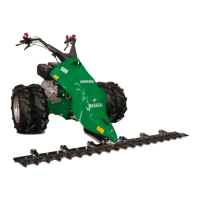

 To Next Page