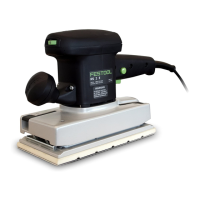
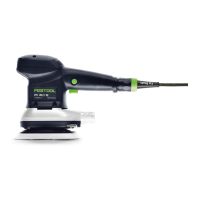
larger orbit (2.5mm), has a much larger
pad (115mm x 228mm or 4 1/2” x 9”), and
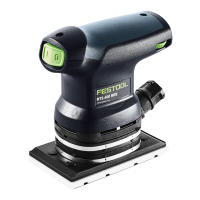
at 5.5 pounds is twice as heavy as the
DS and RS 400 sanders.
That big flat sanding pad (the right most
media pictured above) simply cannot be
beat for smoothing out large surfaces. It
is not an overly aggressive sander com-
pared to the RAS 115 we discussed ear-
lier or the RO 150 we will be discussing
shortly, but you can use it all day long
with no tingling of the hands. Since it
produces a really flat surface, there is no
worry about dips or gouges showing up
after the final finish is applied.
The weight works very much in your fa-
vor. All you need to do is guide it across
the surface. No downward pressure is
needed and none is desirable. Just glide
it along nearly vibration free and enjoy
how the surface begins to develop a
natural patina even before you apply any
finish at all. I often stop just to admire the
natural beauty of the wood itself once I
have worked up to the finer grits.
As pictured here you can see
how the large flat surface is
ideal for rail, style and panel
components where a tip of
the sander could well leave
an undesirable depression
along an edge.
The RS sander is also the
champion in my book for
sanding edges and breaking
sharp edges. I particularly
like the way it handles end
grain. The pure orbital ac-
tion seems to me to cut the
end grain fibers more
cleanly than any of the other
sanders. You can also get
right up into corners on pan-








 To Next Page