mask when dealing with woods that I
know cause an allergic reaction.
I can’t even begin to remember how
many random orbit sanders I wore out
and threw away before I began buying
Festool sanders when they first became
available in the US. No matter what
brand I tried, I always found myself lim-
ited in how long I could sand by vibration
induced tingling in my hands and by the
cloud of dust thrown off. I also was al-
ways irritated by having to replace the
hook and loop pads every few months.
Not so with the Festool units. The vibra-
tion is so minimal that I never even think
about the length of time I have been
sanding and seldom, if ever, feel that
dreaded tingling sensation in my hands.
In all the time I have used Festool sand-
ers, I have only replaced pads on two of
them: once
on a Rotex
unit that I
simply wore
out since it
was in use so
much, and
the other time
on the RAS
when I first
got it and did
not realize
just how
much heat
could be
generated by
that aggres-
sive unit (“pi-
lot error” on
my part, not a
design issue
with the ma-
chine.)
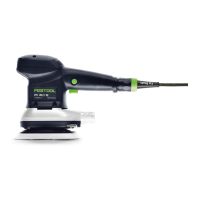
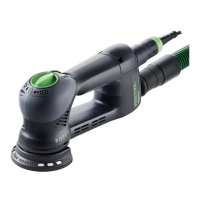
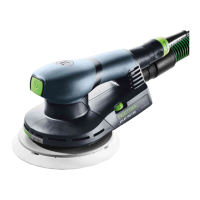
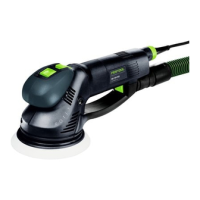
Now let’s look at what I call the “great
synthesizer” of the Festool sanders, the
dual mode Rotex sander, buffer, pol-
isher unit shown here. The previous ver-
sion is shown in the top photo and the
newer, replacement version is shown left
along side the previous version in the
lower photo.
These have the form factor of angle
grinders but that is where any compari-
son stops. The Rotex units, whether the






 To Next Page