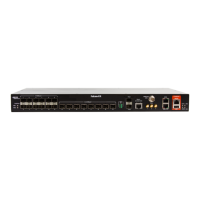
The Falcon PTP Grandmaster is a high-performance Carrier Ethernet switch designed for precise timing and synchronization in telecommunications networks. It supports ITU-T G.8275.1, G.8275.2, and G.8265.1 profiles, making it suitable for various synchronization requirements, including phase/time and frequency synchronization.
Function Description:
The primary function of the Falcon PTP Grandmaster is to act as a highly accurate timing source (Grandmaster) within a PTP (Precision Time Protocol) network. It achieves this by synchronizing to an external GNSS (Global Navigation Satellite System) antenna, then distributing this precise timing information to other network devices (slaves). This ensures that all connected devices operate with a synchronized clock, critical for modern communication systems. The device supports different PTP profiles to cater to various network architectures and synchronization needs:
- G.8275.1 Profile: Intended for phase/time synchronization in full timing support networks, this is an Ethernet multicast profile (layer 2 transport). It's designed for scenarios where all network elements are PTP-aware and contribute to timing distribution.
- G.8275.2 Profile: This UDP/IP unicast profile (layer 3 transport) is for phase/time synchronization in partial timing support networks. It's suitable when not all network elements are PTP-aware, and timing information needs to traverse IP networks.
- G.8265.1 Profile: Also a UDP/IP unicast profile (layer 3 transport), this profile is specifically for frequency synchronization. It's used in networks where only frequency accuracy is required, rather than precise phase and time.
Important Technical Specifications:
The Falcon PTP Grandmaster models are available in two form factors:
- Falcon-MX/G: A 19-inch, 1RU (Rack Unit) size device.
- µFalcon-MX/G: A ½ 19-inch, 1RU size device.
Both models require software version 7.4.22 or above for PTP Grandmaster functionality.
Falcon-MX/G (19" 1RU) Connectivity:
- Ethernet Ports:
- 24x 100/1000 BaseX ports.
- 4x 10/100/1000 BaseT ports.
- 4x 1/10G BaseX ports.
- Timing Interfaces:
- GNSS antenna TNC connector (5VDC) for external satellite synchronization.
- 1.5 / 2 Mbps BITS input/output.
- 2x Sync SMA input/output (1PPS/10 MHz).
- RJ45 input/output ToD/1PPS (Time of Day/1 Pulse Per Second).
- Management Interfaces:
- RJ45 and USB Console ports.
- Power:
- PSU1 and PSU2 (Power Supply Units) supporting AC/DC options.
- Expansion:
- Expansion module for Rubidium clock (for enhanced holdover performance).
- Indicators:
- LEDs for Link/Activity (per port).
- LEDs for PSU1/PSU2 status.
- LEDs for CPU/Alarm status.
µFalcon-MX/G (½ 19" 1RU) Connectivity:
- Ethernet Ports:
- 4x 100/1000 BaseX ports.
- 2x 10/100/1000 BaseT ports.
- 2x 1/10G BaseX ports.
- Timing Interfaces:
- GNSS antenna TNC connector (5VDC) for external satellite synchronization.
- 1.5 / 2 Mbps BITS input/output.
- 2x Sync SMA input/output (1PPS/10 MHz).
- RJ45 input/output ToD/1PPS.
- Management Interfaces:
- Power:
- Dual 20÷60 VDC inputs.
- Ground connection.
- Indicators:
- LEDs for Power/CPU/Sync/GNSS status.
- LEDs for Link/Activity (per port).
Usage Features:
- Web GUI Management: The device is configured via a user-friendly web-based graphical user interface (GUI), providing easy access to all settings.
- GNSS Synchronization: A crucial first step in setup involves ensuring a proper satellite signal. The GUI provides a dedicated GPS/GNSS monitor screen to verify module lock, absence of alarms, and visibility of satellites.
- SyncCenter Configuration: The SyncCenter feature allows users to enable and configure timing sources, typically setting source 1 to GPS for Grandmaster operation.
- PTP Clock Instance Creation: Users can create multiple PTP Clock instances, specifying the device type (Masteronly), and selecting the desired PTP profile (G.8275.1, G.8275.2, or G.8265.1).
- Port-Specific Configuration: Individual physical interfaces can be enabled or disabled for PTP operation, allowing granular control over timing distribution.
- Profile Default Settings: Each PTP profile comes with default settings for transport layer, PTP domain number, and message frame rates (Announce, Sync, Delay Response). These defaults can be modified as needed.
- Message Rate Control: For unicast profiles (G.8275.2, G.8265.1), message rates are typically requested by slave devices. However, the Grandmaster allows enforcing maximum message rates per port via the "Ports Configuration" link.
- Multicast vs. Unicast: G.8275.1 uses Multicast transmission, sending packets on any enabled port. G.8275.2 and G.8265.1 use Unicast, where message rates are requested by slave devices through dedicated signaling.
- Ethernet Port Support: All Ethernet ports (1-24 and 29-32 on Falcon, 1-8 on µFalcon models) support PTP and SyncE simultaneously.
- Management Port Exclusion: Falcon-MX/G copper ports (25-28) are designated as management ports and do not support PTP or SyncE.
- PTP Message Tagging: PTP messages can be tagged by setting the port mode to Trunk, if required for specific network configurations.
Maintenance Features:
- Status Monitoring: The GUI provides comprehensive status information, including GNSS status (locked state, time in state, date, hour, coordinates, 1PPS offset, clock offset), and GNSS alarms (Ant Open, Ant Shorted, No Satellites, PPS Not Gen).
- Satellite Status: Detailed information about visible satellites, including PRN (Pseudo-Random Noise) number, type (GPS, GLONASS), and signal level (dB-Hz), is available for troubleshooting antenna reception.
- Clock Status: The PTP Clock's configuration and status page displays current PTP time, clock adjustment method, current dataset (stpRm, offset from master, mean path delay), parent dataset (parent port ID, grandmaster ID, clock quality), and default dataset (device type, 2-step flag, clock identity, domain, clock quality).
- Configuration Save: All configurations must be explicitly saved by hitting the "Save" button in the GUI to ensure persistence across reboots.
- Technical Support: For complex or atypical configurations, Fibrolan provides contact information for technical assistance.

 Need help?
 General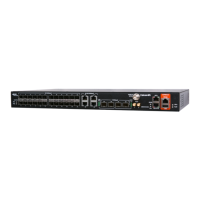

 To Next Page