Need help?
Do you have a question about the Firex i5000AC Series and is the answer not in the manual?
Do not install in garages due to combustion products from vehicle operation.
Specifies using UL-listed junction boxes, qualified electricians, and adherence to electrical codes for wiring.
Requires a 120V AC non-switchable circuit, not protected by a ground fault interrupter.
Warns against using modified sine wave inverters, as they can damage the alarm due to high peak voltages.
Provides instructions for AC Quick Connect harness, single-station, and interconnected wiring configurations.
Instructions on removing the trim ring and aligning the mounting bracket for aesthetic placement.
How to test the alarm using the Test/Hush button after installation and power connection.
Describes smoke detection, Hush feature, and low battery warning chirp functionality.
Instructions for testing the alarm's functionality weekly using the Test/Hush button.
This document describes the Firex Smoke Alarm User Guide for models i4618AC, i4718AC, and i5000AC Series. It provides comprehensive information on the alarm's function, usage, installation, maintenance, and safety guidelines.
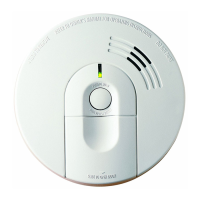
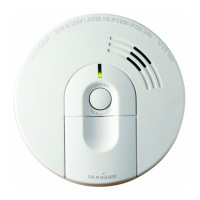
The Firex Smoke Alarm is an A.C. wire-in single and/or multiple station ionization smoke alarm with a 9-volt battery backup and a Hush™ control feature. It is designed to detect products of combustion using the ionization technique, containing 0.9 microcurie of Americium 241, a radioactive material. The alarm is listed by UL and the State Fire Marshal of California, indicating compliance with safety standards. Its primary function is to provide early warning of fire by sounding a loud (85dB) temporal alarm when smoke particles are detected in the ionization chamber. The 9-volt battery backup ensures continued operation during AC power failures. The Hush™ control feature allows for temporary desensitization of the alarm circuit for up to 8 minutes, useful for silencing nuisance alarms caused by cooking smoke. This feature can be used repeatedly until the air is clear, and pushing the Test/Hush button will end the hush period. A low battery Hush feature is also included, allowing users to silence a low battery warning chirp for approximately 13 hours.
The alarm is equipped with LED indicators: a green LED illuminates to indicate the presence of AC power, and a red LED has four modes of operation. In standby condition, the red LED flashes every 40 seconds to indicate proper operation. During an alarm condition, the red LED flashes once per second, accompanied by a pulsating alarm, until the air is cleared. In interconnected systems, only the red LED of the originating alarm (the one sensing smoke or being tested) will flash, while other interconnected units will sound an alarm without their red LEDs flashing. The alarm also features an alarm memory, where the red LED will illuminate for about 1.5 seconds every 16-20 seconds to indicate that an alarm has been activated. This memory remains active until reset by pushing the Test/Hush button or times out after 11 to 13 hours. In Hush® mode, the red LED illuminates for 1.5 seconds every 8-10 seconds.
The smoke alarm is designed for residential use and can be installed as a single unit or interconnected with up to 24 Kidde and/or FireX devices in a multiple station arrangement. The interconnect system should not exceed the NFPA interconnect limit of 12 smoke alarms and/or 18 total alarms (smoke, heat, carbon monoxide, etc.). When 18 alarms are interconnected, up to 6 remote signaling devices and/or relay modules can also be interconnected. It's important to note that when mixing models with and without battery backup, units without battery backup will not respond during an AC power failure. The maximum wire run distance in an interconnected system is 1000 feet.
Installation requires the alarm to be mounted on a U.L. listed or recognized junction box, with all connections made by a qualified electrician in accordance with relevant electrical codes. The appropriate power source is 120 Volt A.C. Single Phase from a non-switchable circuit not protected by a ground fault interrupter. The alarm is not compatible with power derived from square wave, modified square wave, or modified sine wave inverters, as these can damage the unit. For single station use, the red interconnect wire should not be connected to anything. When interconnected, all units must be powered from a single circuit.
Recommended locations for alarms include the immediate area of bedrooms, monitoring stairways, on every floor level, in every sleeping room, in rooms with electrical appliances, and in rooms where someone sleeps with the door closed. Ceiling mounting in the center of the room is preferred, at a minimum of 4 inches (10 cm) from the side wall. Wall mounting should be on an inside wall with the top edge of the alarm between 4 inches (10 cm) and 12 inches (30.5 cm) below the ceiling. For long hallways or rooms (over 30 feet), alarms should be placed at both ends. On sloped, peaked, or cathedral ceilings, alarms should be within 3 feet (0.9m) of the highest point. For mobile homes, careful location is advised to avoid thermal barriers, with inside wall mounting recommended if insulation is poor.
Locations to avoid include garages (due to combustion products from automobiles), less than 4 inches (10cm) from the peak of an "A" frame ceiling, areas where temperatures fall below 40°F (4.4°C) or rise above 100°F (37.8°C), dusty areas, very humid areas (over 95% R.H.), insect-infested areas, and within 3 feet (0.9m) of kitchen doors, bathroom doors with tubs/showers, forced air supply ducts, ventilating fans, or other high airflow areas. Kitchens may cause nuisance alarms, so an alarm with a silence feature or a photoelectric type is recommended if an alarm is desired in that area. Alarms should also not be near fluorescent lights due to electronic "noise."
The alarm features a tamper resist mechanism to prevent unauthorized removal from the mounting bracket. This is activated by breaking off four posts in the square holes of the mounting bracket, allowing a tamper resist tab to snap into place and lock the alarm. To remove the alarm when this feature is engaged, the tab must be pressed down while rotating the alarm off the bracket.
In case of an alarm, the user guide outlines a clear procedure: alert small children, leave immediately via the escape plan, check doors for heat before opening, stay close to the floor if smoky, meet at a designated outside location, call the fire department from a safe location, and do not return until fire officials deem it safe.
The smoke alarm requires a 9-volt battery for backup, and proper installation is crucial as a battery lockout feature prevents the battery door from closing if the battery is not installed correctly. The alarm will not function without a properly installed battery or if AC power is lost. The battery compartment is front-loading, and the battery can be slid out of its carrier for replacement. Polarity must match the markings inside the compartment. A missing or improperly installed battery will prevent the door from closing and lead to improper operation.
The alarm uses a 9V carbon zinc battery (alkaline batteries can also be used), which should last for one year under normal operating conditions. A low/missing battery monitor circuit will cause the alarm to "chirp" approximately every 30-40 seconds for a minimum of seven days when the battery is low. The chirp will cease once a new battery is installed. The user guide specifies acceptable 9-volt battery types, including EVEREADY 1222, GOLD PEAK 1604P/1604S, GOLDEN POWER G6F22M (carbon-zinc), and ENERGIZER 522, DURACELL MN1604/MX1604, GOLD PEAK 1604A, PANASONIC 6AM6/6AM-6/6AM-6PI/6AM6X/6LR61 (GA) (alkaline). Lithium batteries are not to be used.
Weekly testing is required by pressing and holding the Test/Hush button for a minimum of 5 seconds. This verifies the electronic circuitry, horn, and battery are working. If no alarm sounds, the fuse or circuit breaker should be checked. If the alarm still doesn't sound, the unit may have defective batteries or other failures and should be returned for service. Open flames should not be used for testing.
The alarm should be cleaned at least once a year. To clean, remove it from the mounting bracket, then use compressed air or a vacuum cleaner hose to clean the interior (sensing chamber) through the perimeter openings. The exterior can be wiped with a damp cloth. After cleaning, reinstall the alarm, verify the green LED is on, and test the alarm. If cleaning does not restore normal operation, the alarm should be replaced. A "chirp" approximately 20 seconds after the red LED flash indicates abnormal operation of the smoke-sensing chamber, requiring alarm replacement.
The device comes with a limited warranty: five years for i4618AC and i4718AC series, and ten years for i5000AC series. The warranty covers defects in material and workmanship under normal use and service, excluding the battery. It does not cover damage from misuse, alteration, or improper maintenance. For service, the unit should be returned to Kidde.
 General
| Power Source | 120V AC |
|---|---|
| Sensor Type | Ionization |
| Alarm Sound Level | 85 dB at 10 feet |
| Hush Feature | Yes |
| Standards | UL 217 |
| Operating Temperature | 40°F to 100°F (4°C to 38°C) |
| Battery Type | 9V Alkaline |
| Interconnectable | Yes, up to 18 units |
| Compliance | UL |
| Battery Backup | 9V Battery (Included) |


 To Next Page