M
odel CO614
P
rinted in Mexico
M08-0190-002
P 01/08
IMPORTANT!
P
LEASE READ CAREFULLY AND SAVE.
T
his user’s manual contains important information about your Carbon
M
onoxide (CO) Alarm’s operation. If you are installing this CO alarm for use
by others, you must leave this manual—or a copy of it—with the end user.
INTRODUCTION
BASIC SAFETY INFORMATION
•
Dangers, Warnings, and Cautions alert you to important operating
i
nstructions or to potentially hazardous situations. Pay special
attention to these items.
•
THIS IS NOT A SMOKE ALARM! This CO Alarm is designed to detect
c
arbon monoxide from ANY source of combustion. It is NOT designed
to detect smoke, fire, or any other gas.
•
This CO Alarm is approved for use in single-family residences.
It is NOT designed for marine or RV use.
• This CO Alarm will only indicate the presence of carbon monoxide gas
a
t the sensor. Carbon monoxide gas may be present in other areas.
•
The Silence Feature is for your convenience only and will not correct
a CO problem. Always check your home for a potential problem after
a
ny alarm. Failure to do so can result in injury or death.
•
This CO Alarm should receive continuous 120VAC, 60 Hz, pure sine
wave electrical power. (The battery is meant for emergency back-up
only). Do not use in an extension cord or outlet controlled by a dim-
m
er or switch. In order for the emergency battery back-up to work,
a working (fresh) battery must be properly installed.
• NEVER ignore your Carbon Monoxide Alarm if it alarms. Refer to
“
If Your CO Alarm Sounds” for more information. Failure to do so can
r
esult in injury or death.
•
Test the CO Alarm once a week. If the CO Alarm ever fails to test
correctly, have it replaced immediately! If the CO Alarm is not working
properly, it cannot alert you to a problem.
• This product is intended for use in ordinary indoor locations of family
living units. It is not designed to measure CO levels in compliance
with Occupational Safety and Health Administration (OSHA) commer-
cial or industrial standards. Individuals with medical conditions that
may make them more sensitive to carbon monoxide may consider
using warn
ing devices which provide audible and visual signals for
carbon monoxide concentrations under 30 ppm. For additional infor-
mation on carbon monoxide and your medical condition contact your
physician.
© 2008 BRK Brands, Inc., a Jar
den Corporation company (NYSE: JAH)
3901 Liberty Street Road, Aurora, IL 60504-8122
All rights reserved.
Consumer Affairs: (800) 323-9005 • www.firstalert.com
1
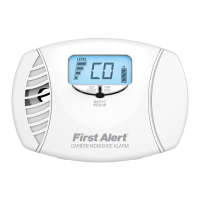
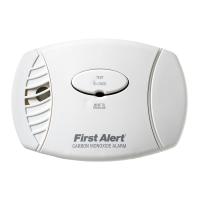
1 Test/Silence/Scroll Button:
Pr
ess and r
elease to select mode
(Test, Memory, Clear Memory);
Press and hold to activate mode,
or to silence the alarm.
2 POWER/ALARM Light (Red)
3 Digital Display
4
Air V
ents
5 Alarm Horn: 85 dB audible
alarm for test, alarm, and unit
malfunction warning
1
20V AC
~
6
0 Hz 0.09A
120V PLUG-IN CARBON MONOXIDE ALARM WITH
BATTERY BACK-UP AND TEST/SILENCE
HOW YOUR CO ALARM WORKS
GENERAL INFORMATION
Leave your CO Alarm plugged in year-round. CO problems can occur any
time during the year, and this Alarm can only alert you if it is plugged in
and receiving power.
This CO Alarm is intended for use in a standard, unswitched 120V AC wall
outlet. It is not intended for use in extension cords, power strips, or outlets
controlled by a switch or dimmer. These may not provide continuous power to
the unit. When fully powered, the unit samples the air and takes a new reading
about every second. A microchip inside the unit stores each reading, and
remembers the levels of CO it has been exposed to over time. The Alarm
sounds when it has been exposed to a “critical” level of CO (measured in
parts per million or “ppm”) within a specified time (measured in minutes). This
CO Alarm features a permanently installed sensor, an indicator light, and an
85 dB alarm hor
n. It also has a Silence Feature to temporarily quiet the alarm
horn.
MALFUNCTION WARNING
This unit performs self-diagnostic tests approximately every second. If the
Alarm malfunctions, replace it immediately.
THE COVER OF YOUR CO ALARM
R
eliable Protection, Maximum
C
onvenience!
•
Just install the battery, plug
the alarm into a regular outlet,
t
est, and it’s ready to go!
•
Battery back-up keeps alarm
working if electricity fails.
• Memory stores highest levels
o
f CO detected. Easy to
display, easy to clear!
LISTED TO
U
L 2034
USER’S MANUAL
TABLE OF CONTENTS
Intro
duction . . . . . . . . . . . . . . . . . . . . . . . . . . . . . . . . . . . . . . . . . . . . . . . . .1-2
Basic Safety Information
. . . . . . . . . . . . . . . . . . . . . . . . . . . . . . . . . . . .1
H
ow Your CO Alarm Works . . . . . . . . . . . . . . . . . . . . . . . . . . . . . . . . . .1
Understanding Your CO Alarm . . . . . . . . . . . . . . . . . . . . . . . . . . . . . . . .2
Using the Peak CO Memory . . . . . . . . . . . . . . . . . . . . . . . . . . . . . . . . .2
Installation . . . . . . . . . . . . . . . . . . . . . . . . . . . . . . . . . . . . . . . . . . . . . . . . . .2-3
Where to Install CO Alarms . . . . . . . . . . . . . . . . . . . . . . . . . . . . . . . . . .2
Where CO Alarms Should NOT Be Installed . . . . . . . . . . . . . . . . . . . . .3
How to Install Your CO Alarm . . . . . . . . . . . . . . . . . . . . . . . . . . . . . . . .3
If Your CO Alarm Sounds . . . . . . . . . . . . . . . . . . . . . . . . . . . . . . . . . . . . .3-4
If the Alarm Signal Sounds . . . . . . . . . . . . . . . . . . . . . . . . . . . . . . . . . . .3
Using the Silence Features . . . . . . . . . . . . . . . . . . . . . . . . . . . . . . . . . .4
Testing and Maintenance . . . . . . . . . . . . . . . . . . . . . . . . . . . . . . . . . . . . . . .4
Weekly Testing . . . . . . . . . . . . . . . . . . . . . . . . . . . . . . . . . . . . . . . . . . . .4
Regular Maintenance . . . . . . . . . . . . . . . . . . . . . . . . . . . . . . . . . . . . . . .4
Replacing the Battery . . . . . . . . . . . . . . . . . . . . . . . . . . . . . . . . . . . . . . .4
What You Need To Know About CO . . . . . . . . . . . . . . . . . . . . . . . . . . . . .4-5
What is CO? . . . . . . . . . . . . . . . . . . . . . . . . . . . . . . . . . . . . . . . . . . . . . .4
Symptoms of CO Poisoning . . . . . . . . . . . . . . . . . . . . . . . . . . . . . . . . . .4
Finding the Source of CO After an Alarm . . . . . . . . . . . . . . . . . . . . . . .5
Potential Sources of CO in the Home . . . . . . . . . . . . . . . . . . . . . . . . . .5
How Can I Protect My Family? . . . . . . . . . . . . . . . . . . . . . . . . . . . . . . .5
Underwriters Laboratories Inc. UL2034 . . . . . . . . . . . . . . . . . . . . . . . . . . .5
Frequently Asked Questions . . . . . . . . . . . . . . . . . . . . . . . . . . . . . . . . . . . .6
General Limitations Of CO Alarms . . . . . . . . . . . . . . . . . . . . . . . . . . . . . . . .6
Limited W
ar
ranty . . . . . . . . . . . . . . . . . . . . . . . . . . . . . . . . . . . . . . . . . . . . . .6

 Need help?
 General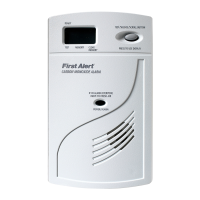

 To Next Page