35
Storage & maintenance
Read through the entire storage and maintenance instructions
before storing your board.
Fliteboard
Post Ride
Open the board lid, take care not to let it fall on the nose of the board.
(Don’t leave the lid open too far, as the lid may fall and damage the nose
of the board).
After each ride, check to see if any water has leaked into the battery cavity.
If so, check the cause of the leak which may include: sand present on
the sealing surface; a damaged or dislocated seal; damaged hinges
or latches; or something obstructing the lid when closed.
Carefully clean the board cavity and the battery with fresh water
and a cloth and then dry thoroughly.
Carefully wipe the seal down to remove any sand or salt.
Clean the data connector contacts with contact cleaner if they have
been exposed to moisture.
Regular Maintenance
Apply lubricant / WD40 to the latches and hinges every few weeks. Keep
the lubricant away from the deck grip to avoid a slippery board.
Check the board regularly for damage or cracks. If damage is present
have it repaired by a professional surfboard or sailboard repairer
Storage
Remove any sand, dirt or salt water.
Ensure the board and deck grip are dry before storage.
Take extra care not to scratch the carbon board bottom and wings.
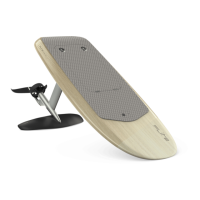
Place your Fliteboard in the provided bag, then store in a clean
and dry environment.
Keep the board and bag out of the sun.
DURING STORAGE, IF POSSIBLE, KEEP THE EFOIL ATTACHED TO
THE BOARD AND THE FLITEBOX DATA-CONNECTOR CONNECTED.
THIS WILL KEEP THE CONNECTOR PINS DRY FROM WATER, SALT,
SAND, AND CORROSION.


 To Next Page