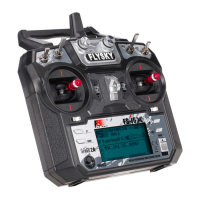
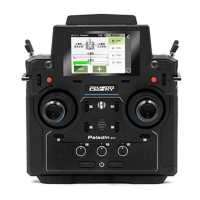
The transmitter is the handheld radio used to control the sails and the rudder of your Soling
(or any other style RC sailboat.) The transmitter sends your control input signals to the
small receiver mounted inside the hull of the boat. The receiver is connected to the sail
winch arm servo and to the rudder servo. The servo is a small motor and gearbox housed in
a plastic case that mounts inside the boat. The motor and gearbox turn a splined output
shaft. The output shaft mates to a servo arm which converts the rotational motion of the
shaft to a lateral back and forth motion.
NOTE: The receiver and servos used in this manual ARE NOT WATERPROOF!
A properly built boat stays amazingly dry inside yet a gusty day can put water over the
deck of a Soling, especially going downwind. The radio and servos are mounted high
inside the hull and away from any water that does find its way in. A small sponge is handy
while sailing to remove water from the interior of the boat. A good practice is to store your
boat with the hatch cover off to allow any moisture to evaporate.
Controls
Soling Class rules allow control of only two boat functions, the rudder and the jib & main
sails. The sail winch arm adjusts the jib and the main with one servo.
Common practice in RC sailing is to use the left stick on the transmitter for sail control,
and the right stick for rudder control. Since we are using an aircraft-style radio, the left and
right sticks are both mounted on gimbals that allow each to have up/down and left/right
motions.
The up/down motion of the left stick is not spring-loaded; it will stay (and the sails will
stay) in whatever position the sailor desires. The fully Up position allows the sails to be let
out all the way; running downwind. The fully Down position brings the sails in tight;
beating close-hauled. The left stick left/right is not used in RC sailing.
The left/right motion of the right stick is spring-loaded; it will return to center (and the
rudder will return to center) upon releasing it. Move the stick right to turn the boat to the
right (starboard.) The right stick up/down is not used.
To prevent fatigue and provide better control, a lanyard around the sailor’s neck is used to
support the radio. The radio has an attachment point on the face just for this purpose. It also
comes in really handy to keep your radio out of the lake when leaning over to launch your
boat!


 To Next Page
 Loading...