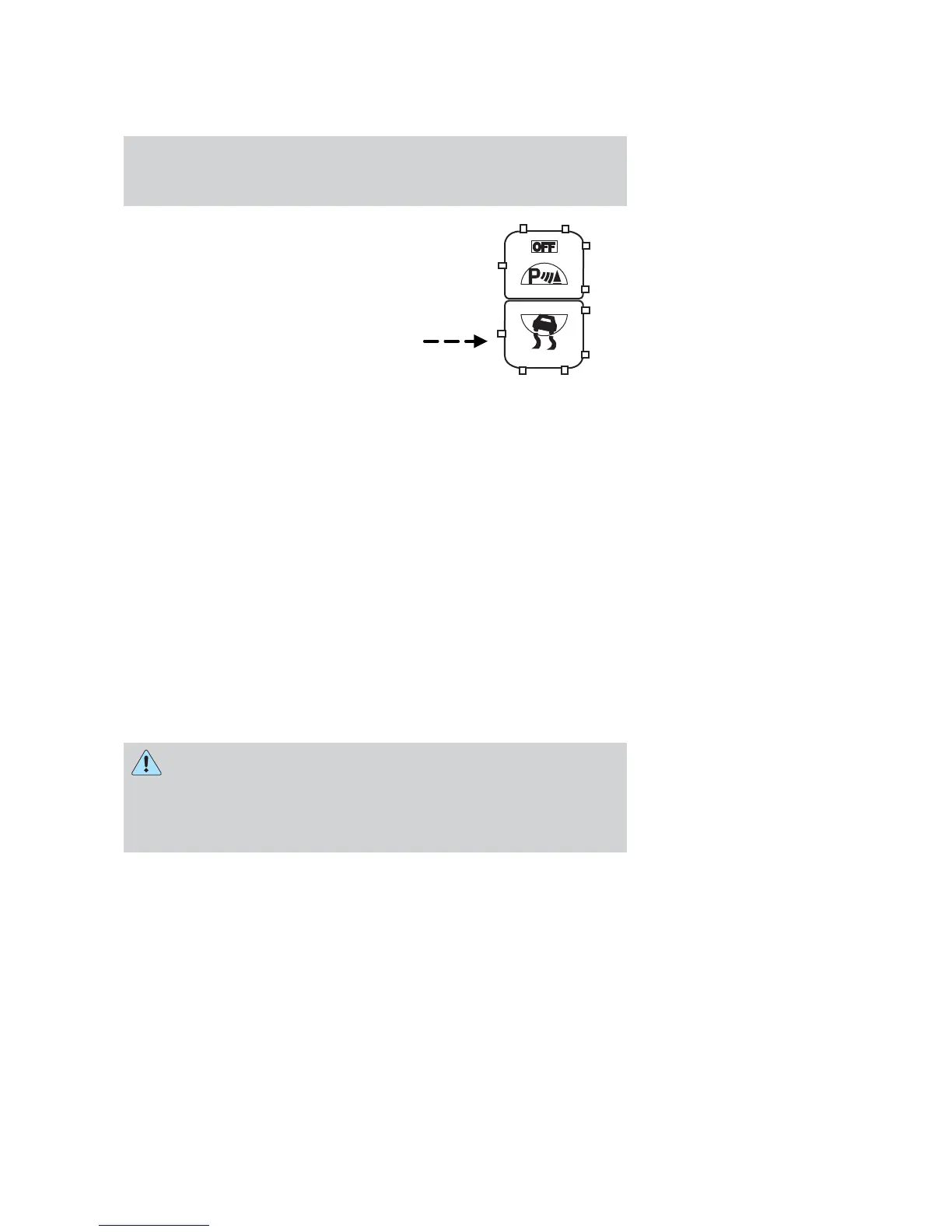
The AdvanceTrac娂 on/off control
button allows the driver to control
the availability of the Traction
Control娂 and AdvanceTrac娂
system. This is independent of the
ABS function, which can NOT be
switched off by the driver.
The AdvanceTrac娂 system status is
indicated by a “TRAC ACTIVE”
indicator light in the instrument
cluster that will illuminate when the system is active. If a failure is
detected, the “TRAC OFF” indicator light will stay ON, vehicles with a
message center (if equipped) will also display the warning “CHECK
ADVANCETRAC”, have the system serviced immediately.
The AdvanceTrac娂 system continually monitors and checks all sensors
used in improving the stability of the vehicle. Some drivers may notice a
slight movement of the brake pedal when the system checks itself.
During AdvanceTrac娂 operation you may experience the following:
• A rumble or clicking sound much like ABS or Traction Control娂
• A slight deceleration or a reduction in the acceleration of the vehicle
• The “TRAC ACTIVE” indicator light will illuminate
• If your foot is on the brake pedal, you will feel a vibration in the pedal
much like ABS. As with any vehicle equipped with four-wheel ABS, do
not pump the brakes, but instead, press firmly on the pedal.
• If your foot is not on the brake, the brake pedal will move to apply
higher brake forces. You may also hear a whoosh of air from under the
instrument panel during this kind of braking.
All these conditions are normal during AdvanceTrac娂 operation.
Aggressive driving in any road conditions can cause you to lose
control of your vehicle increasing the risk of severe personal
injury or property damage. The occurrence of an AdvanceTrac娂 event
is an indication that at least some of the tires have exceeded their
ability to grip the road and that you may lose control of the vehicle. If
you experience a severe road event, SLOW DOWN.
Driving
175












 To Next Page