EasyManua.ls Logo

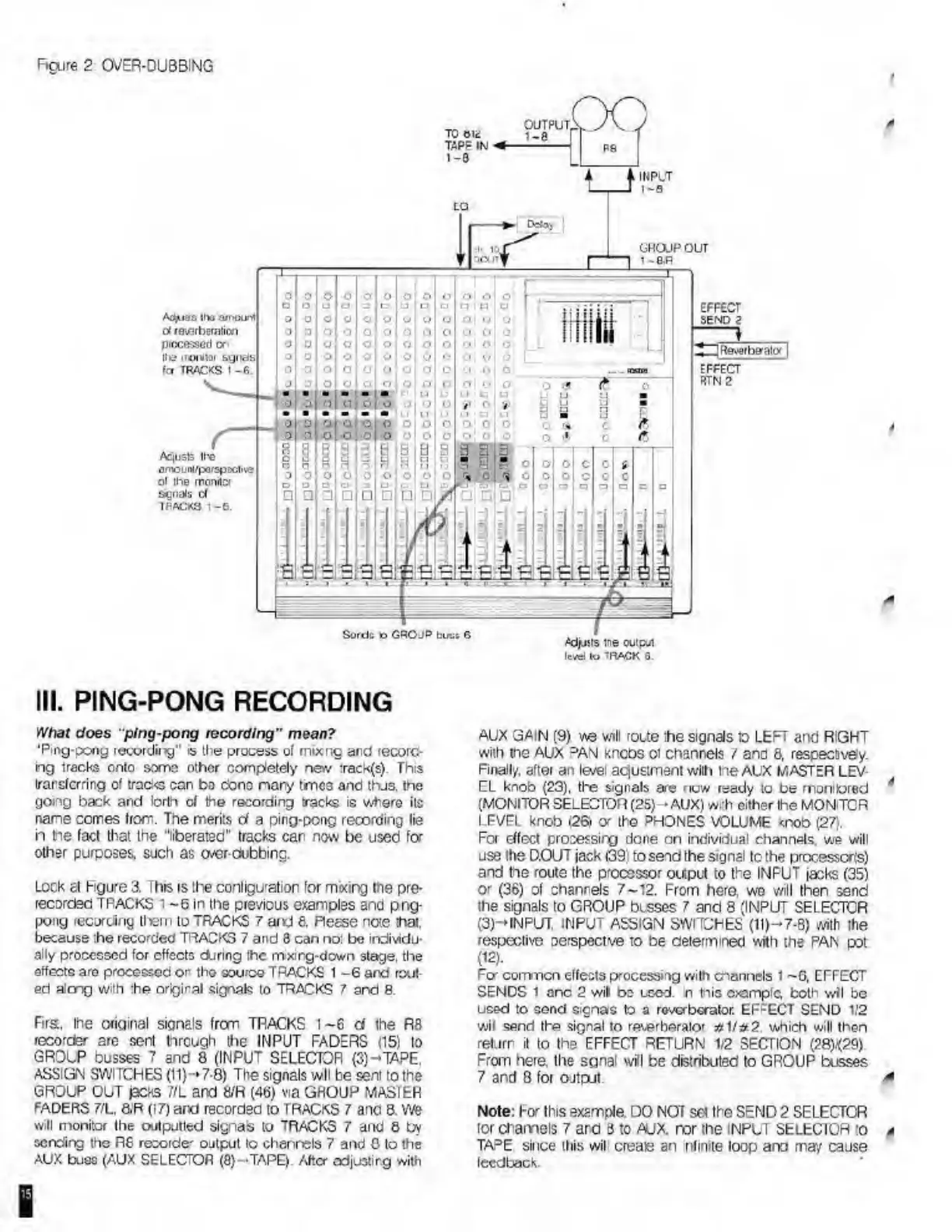
Fostex 812 - II. OVER-DUBBING

Fostex 812
22 pages
Print Icon
To Next Page IconTo Next Page
To Previous Page IconTo Previous Page
Loading...
Figure
2
OVER-DUBBING
*
OUTPUT,
i-a
INPUT
GROJP
OUT
i
-an
Ad^iaa
amount
ol
reverberation
C
jReverbgator
|
lie
ir©ni»r
sgnete
fcr
TRACES
1
-
6
.
Aqusfc
ll'c
omou
«/
(Xi
r
sp
!>clive
ol
ihe
monrtci
&gnals
d
TPfl£K3
1
-6.
Sorda
O
GROJP
bus;
6
Ajjjsts
ine
outpui
lev*!
lo
'RACK
0.
0
0
o
o
o
o
1
o
1
o
o
O
Ol
o
o
o
u
Ci
a
In
ci
n
n
p
3
o
O
o
o
o
o
o
O
O
O
0
0
'
o
O
o
o
o
o
o
o
o
3
u
o
o
o
0
0
0
o
o
o
o
O
:,
o
!
o
1
G
o
o
o
o
O
o
O
0
o
1
o
1
o
o
o
o
o
o
o
o
3
Lai
o
1
o
j
Q
I
o
|
o
|
o
°
o
o
o
.'I
s's
:
o
j
o
j
o
o
(.
,
-
III.
PING-PONG
RECORDING
What
does
"ping-pong
recording"
mean?
‘Ping-pong
recording”
is
the
process
of
mixnc
and
recorc-
ing
tracks
onto
somo
other
completely
new
:rack(s).
This
transferring
of
traci<s
can
be
Cbno
nary
tmc3
and
thj3.
Ihe
gong
back
and
forth
of
the
recording
tracks
is
where
its
name
comes
from.
The
merits
d
a
ping-pong
recording
lie
h
tie
fact
that
the
"liberated"
tracks
car
now
be
used
to¬
other
purposes,
such
as
<*erdubbinc.
Lock
at
Figure
3.
i
his
is
the
conligu'ation
tor
mixing
the
pre¬
recorded
TRACKS
1
~6
in
the
previous
examples
and
png-
pong
recording
tlxeiri
to
TRACKS
7
and
8.
Reese
note
that,
because
:he
recorded
TRACKS
7
and
8
can
no:
be
individu¬
ally
processed
for
effects
during
the
mxirg-down
stage,
the
effects
are
processed
or
thG
source
TRACKS
1
-6
and
rout¬
ed
almg
with
the
nrigiral
signal?
to
TRACKS
7
and
8.
Firs.
Ihe
original
signals
from
TRACKS
1-6
d
the
R8
records
are
sent
through
the
INPUT
FADERS
(15)
to
GROUP
busses
7
and
8
(INPUT
SELECTOR
(3)-TAPE,
ASSIGN
SWITCHES
(!1)-7-8)
The
signals
wll
be
sent
to
the
GROUP
OUT
jacks
7/L
and
m
(46)
Via
GHOUP
MASIbH
FADERS
7/L,
8.R
(17)
and
recorded
to
TRACKS
7
ano
8.
we
will
monitor
the
outputted
signab
to
TRACKS
7
and
8
by
sending
the
R6
recorde'
output
to
chenrels
7
and
0
to
the
AUX
buss
(AUX
SELECTOR
(8)—TAPE).
After
odjustirg
with
I
AUX
GAIN
(9)
w$
will
route
ihe
signals
to
LEFT
and
RIGHT
with
me
AUX
D
AN
kneos
oi
channels
/
and
8,
respectivey.
Finally,
after
an
level
aejustment
with
the
AUX
MASTER
LEV¬
EL
knob
(23),
the
signals
are
now
ready
to
be
monitored
4
(MONITOR
SELECTOR
(25)-
AUX)
with
either
the
MON
ICR
LFVFI
knob
.26.
<y
th©
PHONES
VOLUME
<nob
(27).
For
effect
processing
done
on
individual
channels
we
will
use
the
D.OUT
jack
i39;
to
send
the
signal
to
the
processors)
and
he
route
the
processor
output
to
the
INPUT
jacks
(35)
or
(36)
of
channels
7-12.
From
here,
wo
will
then
send
the
signals
to
GROUP
busses
7
and
8
(INPUT
SELECTOR
(3)—INPUT
INPUT
ASSIGN
SWITCHES
(1l)-7-8)
with
the
respective
oerspectve
to
be
determined
with
the
PAN
pot
(
12
).
Fq-
common
effects
processmg
with
channels
1
-G,
EFFECT
SENDS
1
one
2
wit
bo
used.
n
this
example,
both
wil
be
used
to
send
signas
to
a
reverberator.
EFFECT
SEND
1/2
wil
send
the
signal
to
reverberator
#
1/2
2
which
will
then
return
it
to
the
EFFECT
RETURN
1/2
SECTION
(?8)<29)
From
here.
Ihe
sgnal
will
be
distributed
to
GROUP
busses
7
and
8
for
ojtput.
*
Note:
hor
this
example.
DO
NOT
set
the
SEND
2
SELECTOR
for
enamels
7
and
3
to
AUX.
nor
the
input
SELECTOR
:o
a
TA
D
E
since
this
wil
create
an
nfimte
loop
and
may
cause
feedback.

Related product manuals