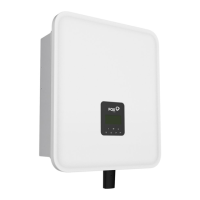
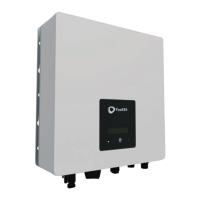
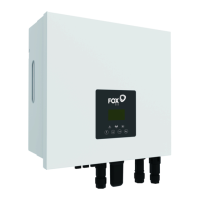
This document is a user manual for the AIO H3/AC3 SERIES energy stations from Fox ESS. It provides comprehensive instructions for the assembly, installation, commissioning, maintenance, and troubleshooting of these products. The manual is intended for qualified electricians and emphasizes safety precautions throughout.
Function Description
The AIO series energy stations are high-quality devices designed to convert solar energy into AC energy and store it in a battery. They can be used to optimize self-consumption, store energy for future use, or feed excess energy into the public grid. The operational mode depends on the available PV energy and user preferences.
Key System Advantages:
- Advanced DSP control technology: Ensures precise and efficient operation.
- Latest high-efficiency power components: Contributes to overall system efficiency.
- Advanced anti-islanding solutions: Enhances safety and grid stability.
- IP65 protection level: Suitable for outdoor installation, offering protection against dust and water.
- High efficiency: Max. efficiency up to 97.8%, EU efficiency up to 97.0%.
- Low Total Harmonic Distortion (THD): Less than 3% at rated power.
- Safety & Reliability: Transformerless design with both software and hardware protection.
- Export limitation: Supports Meter/DRM0/ESTOP for controlled energy export.
- Power factor regulation: Allows for adjustment of the power factor.
- Friendly Human-Machine Interface (HMI): Features an LCD display with four touch keys for technical data display and interaction.
- LED status indications: Provides visual cues for system status.
- PC remote control: Enables remote monitoring and control of the energy station.
Work Modes:
The energy station supports several work modes:
- Self-use (with PV Power): Prioritizes load, then battery, then grid. Excess PV energy charges batteries and then exports to the grid.
- Self-use (without PV Power): When no PV is supplied, the battery discharges for local loads first. The grid supplies power if battery capacity is insufficient.
- Feed in priority: Prioritizes load, then grid, then battery. Generated power supplies local loads, then exports to the grid, and redundant power charges the battery.
- Back up mode: When the grid is off, the system supplies emergency power from PV or battery to home loads (battery is necessary in EPS mode).
- Power station: Battery energy suppresses output power instability from the photovoltaic panel, ensuring the inverter's power output reaches the ideal curve.
- Charging time setting: Battery charging can be scheduled within a set time range across the above three modes.
Important Technical Specifications
PV Input (For AIO H3 Only):
- Models: AIO-H3-5.0, AIO-H3-6.0, AIO-H3-8.0, AIO-H3-10.0
- Max. DC Voltage: 1000V
- Nominal DC Operating Voltage: 720V
- MPPT Voltage Range: 160-950V (Full load: 210-800V for 5.0/6.0, 240-800V for 8.0, 280-800V for 10.0)
- Start-up Voltage: 180V
- No. of MPP Trackers: 2
- Strings per MPP Tracker: 1+1 (for 5.0/6.0), 2+1 (for 8.0/10.0)
- Max. Input Current (input A / input B): 14/14A (for 5.0/6.0), 26/14A (for 8.0/10.0)
- Max. Short Circuit Current (input A / input B): 16/16A (for 5.0/6.0), 32/16A (for 8.0/10.0)
Battery:
- Battery Type: Lithium battery
- Battery Voltage: 180-234V
- Rated Charge/Discharge Current: 26A
- Max. Charge/Discharge Current: 26A
- Communication Interface: CAN
- Protection: Reverse connect protection, Over-current protection, Over-temperature protection (all YES)
AC Output/Input:
- Models: AIO-H3-5.0, AIO-AC3-5.0, AIO-H3-6.0, AIO-H3-8.0, AIO-H3-10.0
- Nominal AC Power: 5000VA (5.0/AC3-5.0), 6000VA (6.0), 8000VA (8.0), 10000VA (10.0)
- Max. Apparent AC Power: 5500VA (5.0/AC3-5.0), 6600VA (6.0), 8800VA (8.0), 11000VA (10.0)
- Rated Grid Voltage: 400V/230VAC; 380V/220VAC, 3L/N/PE
- Rated Grid Frequency: 50/60 Hz, ±5
- Nominal AC Current: 7.2A (5.0/AC3-5.0), 8.7A (6.0), 11.6A (8.0), 14.5A (10.0)
- Max. AC Current: 7.9A (5.0/AC3-5.0), 9.5A (6.0), 12.7A (8.0), 15.9A (10.0)
- Power Factor: 1 (Adjustable from 0.8 leading to 0.8 lagging)
- THDI: <3%@rated power
- Max. Output Overcurrent Protection: 40.0A
EPS Output (WITH BATTERY):
- Nominal AC Power: 5000VA (5.0/AC3-5.0), 6000VA (6.0), 8000VA (8.0), 10000VA (10.0)
- Max. Apparent AC Power (60s): 7500VA (5.0/AC3-5.0), 9000VA (6.0), 12000VA (8.0), 15000VA (10.0)
- Rated Output Voltage: 400V/230VAC; 3L/N/PE
- Rated Grid Frequency: 50/60 Hz
- Switch Time: <1.5s
- THDV: <3%@rated power
Efficiency:
- MPPT Efficiency: 99.90%
- Euro-efficiency: 97.00%
- Max. Efficiency: 97.80%
- Max. Battery Charge Efficiency (PV to BAT) (@full load): 98.50%
- Max. Battery Discharge Efficiency (BAT to AC) (@full load): 97.00%
General Data:
- Dimensions (WHD): 6301662.5389 mm
- Net Weight: 97±0.5 kg
- Cooling Concept: Natural
- Topology: Non-isolated
- Communication: Meter, USB/LAN/WiFi/4G, DRM, BMS(CAN), RS485
- LCD Display: Backlight 16*4 character
- Ingress Protection: IP65 (for outdoor use)
- Protective Class: Class I
- Inverter Operating Temperature Range: -25...+60°C (derating at +45°C)
- Battery Operating Temperature Range: -10...+50°C
- Storage/Operation Relative Humidity: 0%-95% (without condensation)
- Altitude: <2000m
- Noise Emission (typical): <40 dB
Usage Features
Installation:
- Mounting: Can be wall-mounted or ground-installed. Requires a clean, stable surface, avoiding direct sunlight, flammable materials, explosive areas, and high humidity. Specific clearance distances (e.g., 400mm left, 600mm right, 300mm top) must be maintained for proper ventilation.
- Battery Installation: Batteries are inserted into the All-In-One unit after removing side brackets.
- Electrical Connection:
- PV Connection (AIO H3 Only): Supports 2-strings of PV modules. Open circuit voltage must be <1000V, and operating voltage within MPPT range. Emphasizes safety warnings regarding high voltage and not grounding PV positive/negative.
- Battery Connection: Includes power and communication cables, and a ground cable.
- AC Connection: Designed for three-phase grid (220/230/240V, 50/60Hz). Requires a micro-breaker for overcurrent protection. Specific wiring instructions for L1, L2, L3, N, and PE are provided.
- Earth Connection: A grounding screw is provided for safety.
- Communication Device Installation (Optional): Supports LAN, WiFi, 4G, RS485, and Meter for monitoring. Provides PIN definitions for Meter/RS485 and BMS interfaces.
- DRM (Demand Response Mode): Supports various demand response modes by emitting control signals.
- BMS (Battery Management System): Connects to the generator for start-up and external debugging.
- Parallel Connection:
- On-Grid Parallel Connection: Allows up to ten inverters to be connected in parallel when the grid is on. One inverter acts as the "Master" to control energy management and dispatch. Only the Master inverter needs to be connected to a meter.
- Off-Grid Parallel Connection: Similar to on-grid parallel, but for off-grid scenarios.
- Work Modes in Parallel System: Free mode (no master), Master mode (one inverter controls others), Slaver mode (inverters controlled by master).
- DIP Switch Setting: Specific DIP switch settings are required for master/slave configuration.
Operation:
- Control Panel: Features an LCD screen, indicator LEDs (Red for fault, Blue for battery connection, Green for normal state), and four function buttons (Up, Down, OK, Return) for navigation and selection.
- Function Tree: Provides a hierarchical menu structure for accessing various settings and data, including battery, solar, grid, EPS, temperature, statistics, and system settings.
Maintenance Features
Alarm List:
The manual provides a comprehensive list of fault codes and their corresponding solutions. These include:
- Grid-related faults: Grid Lost, Grid Volt, Grid Freq, PLL_OverTime, 10min Volt.
- Inverter-related faults: SW Inv Cur, DCI, HW Inv Cur, SW Bus Vol, Inv EEPROM, SCI, MDSP SPI, MDSP Smpl, Res Cur HW.
- PV-related faults: Pv Volt, SW Pv Cur, PvCon Dir, HW Pv Cur.
- Battery-related faults: Bat Volt, SW Bat Cur, Bat Relay Open/Short, Bat Buck, Bat Boost, Bat Power Low, HW Bus Vol, BatCon Dir, Bms Volt High/Low, Bms ChgCur High/DchgCur High, Bms Temp High/Low, BmsCellImbalance, Bms HW Protect, BmsCircuit, Bms Insul, BmsVoltsSen, BmsTempSen, BmsCurSen, Bms Relay, Bms Type Unmatch, Bms Ver Unmatch, Bms Mfg Unmatch, Bms SwHw Unmatch, Bms M&S Unmatch, Bms ChgReq NoAck.
- EPS-related faults: Eps Over Load, Eps Relay.
- Communication faults: Meter Lost, BMS Lost, Bms Ext, Bms Int.
- Other faults: Iso, Temp, Ground, Over Load, Grid Relay, RDSP SPI, RDSP Smpl, ARM EEPROM.
Troubleshooting and Routine Maintenance:
- Troubleshooting Steps: Check fault messages on the control panel, attempt solutions from the alarm list, and verify installation conditions (cleanliness, ventilation, cable sizing, connections, settings, communication cables).
- Safety Check: A qualified technician should perform a safety check every 12 months, recording data in an equipment log.
- Maintenance Checking List: Regular examinations by a responsible person are recommended, including:
- Cleaning cooling fins periodically.
- Checking indicator status and display every 6 months.
- Inspecting input/output wires for damage or aging every 6 months.
- Cleaning energy station panels and checking security every 6 months.
- Firmware Upgrading: Firmware can be upgraded via a U-disk (USB2.0, under 32G, FAT16 or FAT32 format). The process involves downloading update files, inserting the U-disk into the USB port, selecting the upgrade option on the LCD, and confirming.
Decommissioning:
- Dismantling: Disconnect DC and AC inputs, wait 5 minutes for de-energization, then disconnect communication wirings and remove the energy station from its bracket.
- Packaging: Use original packaging if possible, or an equivalent box suitable for loads over 30 kg, with a handle, and fully closed.
- Storage and Transportation: Store in a dry place between -40°C and +70°C. Stack no more than 4 cartons. Disposal must comply with local waste handling regulations.

 Need help?

 To Next Page
 General