EasyManua.ls Logo

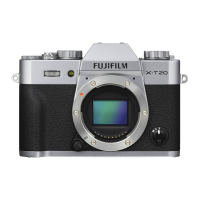
FujiFilm X-T20 - User Manual

FujiFilm X-T20
356 pages
Print Icon
To Next Page IconTo Next Page
Loading...
Owners Manual
BL00004889-202
EN

Table of Contents

Other manuals for FujiFilm X-T20

Questions and Answers

  • J
    Joseph HartAug 16, 2025
    Why my FujiFilm X-T20 Digital Camera does not turn on?
    • S
      Sharon HoffmanAug 16, 2025
      Your FujiFilm Digital Camera might not be turning on due to several reasons: the battery could be exhausted (charge it or insert a fully-charged spare), inserted incorrectly (reinsert it correctly), or the battery-chamber cover might not be latched (latch it properly).
  • C
    colleendavisAug 18, 2025
    What to do if my FujiFilm X-T20 doesn't take a picture when I press the shutter button?
    • T
      Thomas WilsonAug 19, 2025
      If your FujiFilm Digital Camera isn't taking pictures, consider these possibilities: the memory card might be full (insert a new one or delete pictures), not formatted (format it), have dirty contacts (clean them with a soft, dry cloth), or be damaged (insert a new card). Also, ensure the camera is turned on. If you're using a third-party mount adapter, select ON for SHOOT WITHOUT LENS. Finally, if the indicator lamp was orange when attempting to record a panorama, wait until it turns off.
  • E
    Elizabeth MooreAug 22, 2025
    Why does the battery of my FujiFilm X-T20 Digital Camera run down so quickly?
    • R
      Ronnie AcostaAug 22, 2025
      The battery of your FujiFilm Digital Camera might be draining quickly if it's cold (warm it in a pocket before use), has dirty terminals (clean them with a soft, dry cloth), or has reached the end of its charging life.
  • M
    Meghan DavidsonAug 25, 2025
    Why does my FujiFilm Digital Camera turn off suddenly?
    • D
      Debbie MorrisAug 26, 2025
      Your FujiFilm Digital Camera may be turning off suddenly because the battery is exhausted. To resolve this, charge the battery or insert a fully-charged spare battery.
  • R
    Rachel JamesAug 28, 2025
    What to do if my FujiFilm Digital Camera is unresponsive?
    • S
      Sierra DoughertyAug 28, 2025
      If your FujiFilm Digital Camera is unresponsive, it could be due to a temporary malfunction (remove and reinsert the battery), an exhausted battery (charge it or insert a spare), or connection to a wireless LAN (end the connection).
  • S
    Samuel StewartAug 30, 2025
    Why is the monitor blank on my FujiFilm X-T20?
    • J
      Jenny MackAug 30, 2025
      The monitor on your FujiFilm Digital Camera might be blank because the camera is connected to a TV. In this case, pictures will be displayed on the TV instead of the camera monitor.
  • J
    Jason WardSep 3, 2025
    Why doesn't my FujiFilm X-T20 focus?
    • T
      Travis AdkinsSep 3, 2025
      Your FujiFilm Digital Camera may not be focusing because the subject is not suited to autofocus. In this case, use focus lock or manual focus.
  • H
    hartkevinSep 5, 2025
    How to fix a FujiFilm Digital Camera flash that does not fire?
    • L
      Lisa JohnsonSep 6, 2025
      If the flash on your FujiFilm Digital Camera isn't firing, it could be disabled (adjust the settings), lowered (raise the flash), or the battery might be exhausted (charge it or insert a spare).
  • S
    Steven HartSep 8, 2025
    Why is there no sound during movie playback on my FujiFilm Digital Camera?
    • D
      Deborah MooreSep 8, 2025
      If there's no sound during movie playback on your FujiFilm Digital Camera, check if the playback volume is too low (adjust it). Also, ensure the microphone wasn't obstructed during recording and the speaker isn't obstructed during playback. Lastly, confirm that SOUND & FLASH is set to ON.
  • E
    Eric MorganSep 12, 2025
    How to turn on the monitor of FujiFilm Digital Camera?
    • D
      Derek ShawSep 12, 2025
      To activate the monitor on your FujiFilm Digital Camera, press the shutter button halfway.

Summary

Introduction

For the Latest Information

Access the latest product information, including manuals and sample color photographs online.

Before You Begin

Parts of the Camera Overview

Detailed identification of camera components and their functions.

Camera Displays and Indicators

Explanation of indicators shown on the electronic viewfinder and LCD monitor during shooting.

Choosing and Customizing Display Modes

Guidance on selecting display modes and customizing standard display items.

Using Camera Menus and Touch Controls

Instructions for navigating menus and using touch screen controls for shooting and playback.

First Steps

Attaching Camera Strap and Lens

Step-by-step instructions for securely attaching the camera strap and a lens.

Charging and Inserting Battery

Procedures for charging the battery and inserting it along with memory cards.

Turning Camera On and Checking Battery

Guide to powering the camera on/off and checking the battery level indicator.

Basic Camera Setup and Language

Initial setup including language selection and setting the camera clock.

Basic Photography and Playback

Taking Photographs (Mode P)

Instructions for taking pictures using the Program AE (P) shooting mode.

Viewing and Deleting Pictures

How to view pictures in full-frame and delete unwanted images from the camera.

Movie Recording and Playback

Recording and Adjusting Movies

Steps for recording movies and adjusting settings like frame size and rate.

Viewing Movies on Camera

How to play back movies recorded on the camera, including playback controls.

Taking Photographs

Choosing a Shooting Mode

Guide to selecting shooting modes like P, S, A, M, and AUTO for optimal exposure.

Autofocus System and Modes

Explanation of autofocus modes (S, C, Manual) and focus point selection.

Exposure Compensation and Lock

How to adjust exposure compensation and use focus/exposure lock.

Bracketing and Continuous Shooting

Information on bracketing types (AE, ISO, WB) and continuous shooting modes.

Advanced Filters and Panoramas

Using advanced filters, multiple exposures, and creating panoramas.

The Shooting Menus

Image Quality Settings

Adjusting image size, quality, RAW recording, film simulation, and grain effect.

AF;MF Setting Options

Configuration for autofocus modes, custom settings, focus points, and assist features.

Shooting Settings and Scene Position

Adjusting shooting options, drive settings, self-timer, and scene position modes.

Flash Settings Configuration

Adjusting built-in flash settings including red-eye removal and TTL lock.

Movie Settings and Options

Settings for movie recording, including AF modes, output, and audio levels.

Playback and the Playback Menu

Playback Display Indicators

Understanding the indicators displayed during picture playback.

Using the DISP;BACK Button

Controls for managing the display of indicators during playback.

Playback Menu Options

Managing playback settings like RAW conversion, erase, crop, and resize.

Image Protection and Rotation

Protecting pictures from deletion and rotating images for correct orientation.

Red-Eye Removal and Slide Shows

Removing red-eye from portraits and viewing pictures in an automated slide show.

Photobook Assist and PC Auto Save

Creating photobooks and uploading pictures to a computer using PC AutoSave.

Print Order (DPOF) and Instax Printing

Creating digital print orders and printing pictures to instax SHARE printers.

The Setup Menus

User Settings Configuration

Adjusting basic camera settings like format, date/time, and language.

Sound Settings Adjustment

Controlling beep volumes for AF, self-timer, operation, shutter, and playback.

Screen Settings and Display Options

Adjusting EVF/LCD brightness, color, image display duration, and auto-rotation.

Button and Dial Customization

Assigning roles to camera buttons and dials for personalized control.

Power Management Settings

Configuring auto power off timing and performance settings for battery life.

Save Data and Copyright Information

Managing file numbering, saving original images, editing file names, and copyright info.

Connection Settings and Wireless Networks

Setting up connections for wireless networks, PC auto save, and instax printers.

Shortcuts and Customization

Shortcut Options and Q Menu

Customizing camera controls and accessing the Quick Menu (Q menu).

Function (Fn) Button Assignments

Understanding and assigning roles to function buttons for quick access to features.

Peripherals and Optional Accessories

External Flash Units and Settings

Information on mounting and adjusting settings for external flash units.

Lens Types and Handling

Details on lens parts, removing caps, attaching hoods, and aperture rings.

Connections

HDMI Output and Device Connection

Connecting the camera to HDMI devices for shooting and playback displays.

Wireless Transfer and Smartphone Connectivity

Accessing wireless networks and connecting to smartphones for image transfer.

Computer Connectivity via USB

Copying pictures to computers via USB using MyFinePix Studio.

Instax SHARE Printer Connection

Establishing connection and printing pictures to instax SHARE printers.

Technical Notes

FUJIFILM Optional Accessories

Listing of optional accessories including batteries, chargers, lenses, and flashes.

Product Care and Cleaning

Guidelines for cleaning the camera body, image sensor, and general product care.

Firmware Updates and Version Checking

Information on updating product firmware and checking the current firmware version.

Troubleshooting Common Issues

Solutions for common problems related to power, menus, shooting, and playback.

Warning Messages and Displays

Explanation of various warning messages and their descriptions that appear on the display.

Memory Card Capacity and Specifications

Table showing recording time/pictures available and detailed camera specifications.

For Your Safety

Important Safety Instructions

Essential safety guidelines for operating and handling the product.

Battery and Power Supply Safety

Proper use and handling of batteries, charging, and power adapters.

Handling and Usage Precautions

Precautions for using the camera, handling liquid crystal, and avoiding hazards.

Regulatory and Disposal Information

EU directives, FCC compliance, software export notices, and product disposal guidelines.

FujiFilm X-T20 Specifications

General IconGeneral
Megapixels24.3 MP
ISO Range200-12800 (expandable to 100-51200)
Continuous Shooting Speed8 fps
Weight383 g (including battery and memory card)
Image ProcessorX-Processor Pro
Wireless ConnectivityWi-Fi
BatteryNP-W126S Li-ion battery
Dimensions118.4 x 82.8 x 41.4 mm
SensorAPS-C X-Trans CMOS III
Autofocus Points91 points
Screen3.0-inch tilting LCD (1.04M dots)
Viewfinder0.39-inch OLED (2.36M dots)
Video Resolution4K at 30 fps, Full HD at 60 fps
Battery LifeApprox. 350 shots
Shutter Speed1/4000 sec to 30 sec

Related product manuals