
 Need help?
Do you have a question about the Galanz GLR10TWEF and is the answer not in the manual?
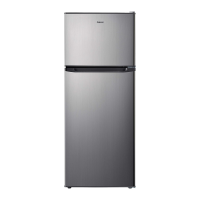
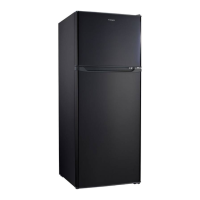
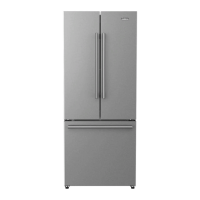
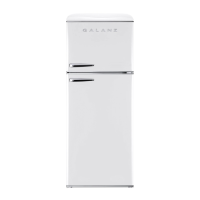
This document is an instruction manual for Galanz refrigerators, covering models GLR10TWEF, GLR10TBKF, GLR10TS5F, GLR12TBKF, GLR12TWEF, and GLR12TS5F. It provides comprehensive information on the appliance's function, installation, usage, maintenance, and troubleshooting.
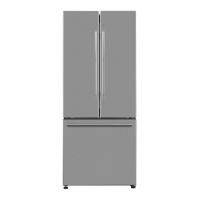
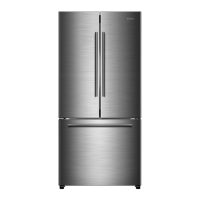
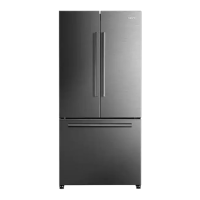
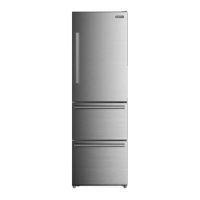
The Galanz refrigerator is designed for household and similar applications, including staff kitchen areas, farmhouses, hotels, motels, bed and breakfast environments, and catering applications. Its primary function is to store food and beverages, keeping them cool and fresh. The refrigerator features separate compartments for fresh food and a freezer for frozen items.
The manual lists several important technical specifications for the different models:
Models: GLR10TWEF/GLR10TBKF/GLR10TS5F and GLR12TWEF/GLR12TS5F/GLR12TBKF
The refrigerant used is R600a, which is flammable, so care must be taken not to damage the cooling system during transport and installation.
Installation: The refrigerator should be placed on a completely flat surface, with 5-10 cm clearance on each side from the wall and 30 cm from the top to the ceiling for proper ventilation. It should be located away from direct sunlight, high temperatures, or humidity. The appliance has adjustable legs in the front bottom to ensure stability and a slight backward slope for tight door closure.
Door Reversal: The manual provides detailed instructions for reversing the door opening direction (from right to left or vice versa), requiring a Phillips screwdriver, a small screwdriver, and potentially an additional person for assistance. This process involves removing protective covers, screws, hinges, and then reassembling them on the opposite side.
Operation:
Cleaning: The appliance should be maintained and cleaned frequently. Before cleaning, the power plug must be disconnected.
Defrost: The refrigerator features automatic defrosting. Defrost water flows into a vaporization plate and is evaporated by the compressor's heat. The drain tube must be kept clean. Mechanical devices or other means to accelerate defrosting, other than those recommended by the manufacturer, should not be used.
Disconnection:
User Notifications:
Troubleshooting Tips: The manual provides solutions for common issues such as the refrigerator not working, inefficient cooling, unusual noise, compressor running for long periods, odors, water leaks, and heavy frost. It also clarifies that certain occurrences like moisture on the exterior, refrigerant flow noise, and warm sides/frame are normal and not malfunctions. If the supply cord is damaged, it must be replaced by the manufacturer or a qualified service agent to avoid hazards.
 General
| Brand | Galanz |
|---|---|
| Model | GLR10TWEF |
| Category | Refrigerator |
| Type | Top Freezer |
| Color | White |
| Energy Star Rated | Yes |
| Weight | 90 lbs |
| Capacity | 10 cu. ft. |


 To Next Page