© 2001 General Electric Company
PC30391 Pub. No. 49-40211
Part No. 16403370P184
Cookware Tips
BAKE
Metal Pans
are recommended for all types of baked products,
but especially where browning is important.
Dark or dull finish metal pans are best for breads and pies because
they absorb heat and produce crisper crust.
Shiny aluminum pans are better for cakes, cookies or muffins because they
reflect heat and help produce a light tender crust.
Glass or Glass-Ceramic casserole or baking dishes are best suited for egg and
cheese recipes due to the cleanability of the glass.
FAST BAKE
Glass or Glass-Ceramic
baking containers are recommended. Be sure not to
use items with metal trim as they may cause arcing (sparking) with oven wall or
oven shelf. This can damage the cookware, the shelf or the oven.
Heat-Resistant Plastic microwave cookware (safe to 450°F.) may be used,
but it is not recommended for foods requiring all-around browning, because
plastic is a poor conductor of heat.
Select Cooking Mode
Recipe Conversions
Use the following guide to select the best method of cooking. Recipes can be adapted using the guidelines below to determine the appropriate cooking mode.
Cookware and Food Placement Suggestions
■ In Microwave mode the food should always be cooked on the glass turntable
tray. Microwave mode should not be used with the metal shelf in the oven.
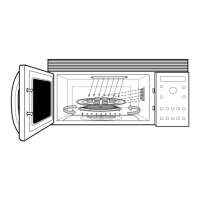
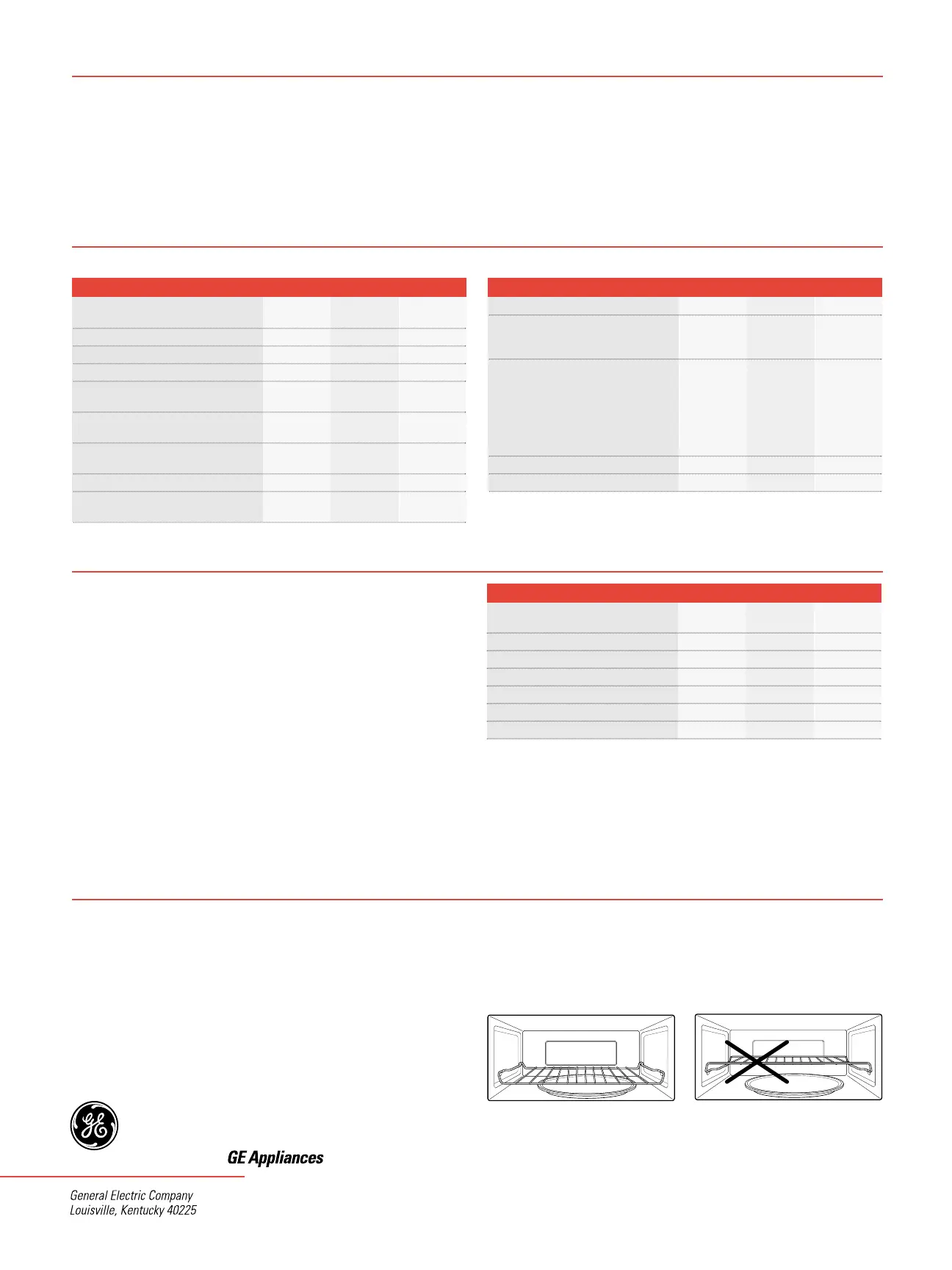
■ The metal shelf should always be used when cooking in Bake or Fast Bake
modes so that heated air will brown the bottom of the food. The glass turntable
can be left in place in Bake and Fast Bake modes.
■ For best cooking performance in Bake or Fast Bake modes, leave at least a
1 inch gap between the cooking dish and the sides of the oven.
■ For best cooking performance in Bake or Fast Bake modes, always place the
shelf in the “low” position.
■ Placing the shelf in the “high” position will cause the top of the food to
brown/cook much faster than the interior and bottom of the food. See the
illustration below for correct shelf position.
Cookware Microwave Bake Fast Bake
Heat-Resistant Glass, Glass-Ceramic
(Pyrex
®
, Fire King
®
, Corning Ware
®
, etc.) Yes Yes Yes
Metal No Yes No
Non Heat-Resistant Glass No No No
Microwave-Safe Plastic Yes No Yes*
Plastic Films and Wraps Yes No No
Paper Products Yes No No
Straw, Wicker and Wood Yes No No
*Use only microwave cookware that is safe to 450°F.
Correct Shelf Position Incorrect Shelf Position
Foods Microwave Bake Fast Bake
Appetizers: Dips and Spreads ✓
Pastry Snacks ✓✓ ✓
Beverages ✓
Sauces and Toppings ✓
Soups and Stews ✓
Meats: Defrosting ✓
Roasting ✓✓
Poultry: Defrosting ✓
Roasting ✓✓ ✓
Fish and Seafood: Defrosting ✓
Cooking ✓✓ ✓
Casseroles ✓✓ ✓
Eggs and Cheese: Scrambled and Omelets ✓✓
Quiche and Souffles ✓✓
Foods Microwave Bake Fast Bake
Vegetables ✓
Breads: Quick ✓
Yeast ✓
Muffins and Coffee Cake ✓✓
Desserts: Cakes, Layer and Bundt ✓
Angel Food and Chiffon ✓
Custard and Pudding ✓
Bar Cookies ✓✓
Fruit ✓
Pies and Pastries ✓
Candy ✓
Blanching Vegetables ✓
Frozen Convenience Foods ✓✓ ✓
BAKE
When using the BAKE mode to cook baked goods such as cakes, brownies,
cookies, pizzas, pies, rolls, etc., reduce the oven temperature 25ºF from the
recipe to prevent over browning on the top of baked goods.
For example: A recipe states to bake brownies for 25-30 minutes at 400°F.
400°F - 25°F = 375°F
So the new bake temperature in BAKE mode will be:
375°F.
FAST BAKE
When using the FAST BAKE mode reduce the recipe cook time by 25%
For example:
A recipe states to cook a roast for 60 minutes at 400°F.
60 minutes x 0.25 = 15 minutes saved.
So the new cook time in FAST BAKE mode will be:
60 minutes - 15 minutes =
45 minutes.


 To Previous Page
 Loading...