Need help?
Do you have a question about the GEZE TS 4000 and is the answer not in the manual?
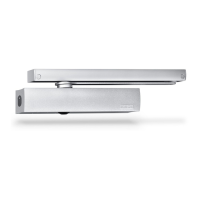
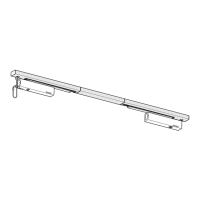
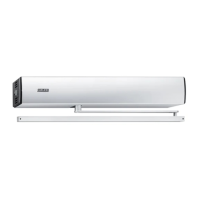
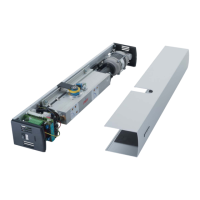
Visual guide to GEZE door closer components and their functions.
Identifies causes like obstacles, low force, or draught, and suggests remedies.
Addresses issues like obstructed closing, low force, or draught.
Covers problems with closing speed, latching action, and oil leaks.
Examines low closing/latching force or a sluggish lock mechanism.
Covers sluggish doors, incorrect closer size, or draught issues.
Addresses strong latching action or back check settings.
Points to an overly strong back check setting.
Troubleshoots unactivated or incorrectly angled hold-open units.
Identifies damaged valve or adjustment screws as the cause.
Provides phone numbers, email, and web addresses for GEZE UK services.
This document serves as a troubleshooting manual for GEZE door closers, providing an overview of potential faults and their rectification. It's designed to help users identify and address common issues with their GEZE door technology systems.
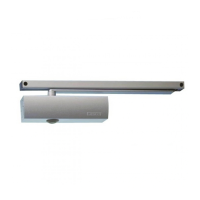
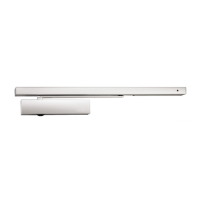
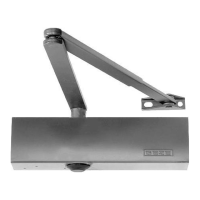
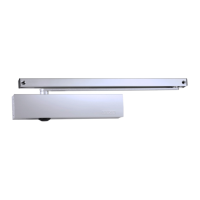
A GEZE door closer is a mechanical device that automatically closes a door after it has been opened. Its primary function is to ensure that doors are consistently closed, which is crucial for maintaining security, fire safety, and climate control within a building. The door closer operates through a hydraulic system, which allows for precise control over the door's movement. Key adjustable features include the closing force, closing speed, latching action, back check, and delayed action. These adjustments enable the door closer to be customized for various door types, weights, and operational requirements. The closing force, for instance, determines the power with which the door closes, while the closing speed dictates how quickly the door moves through its closing arc. The latching action provides an extra burst of force at the very end of the closing cycle to ensure the door fully engages with the lock. Back check acts as a damping mechanism to prevent the door from being flung open too forcefully, protecting both the door and the surrounding structure. Delayed action, available on certain models, holds the door open for a short period before it begins to close, which can be useful for accessibility or moving objects through the doorway.
The GEZE door closer offers several adjustable features to optimize its performance for different applications. Users can adjust the door closer size/closing force (1) to match the door's weight and dimensions, ensuring the door closes effectively without being too difficult to open. This adjustment is critical for both heavy fire doors and lighter internal doors. The closing speed (2) can be regulated to control how quickly the door moves from its fully open position to the point where the latching action begins. A slower closing speed might be preferred in areas with high foot traffic or where quiet operation is desired, while a faster speed might be necessary for security reasons.
For models like the TS 5000 and TS 4000 S, the latching action (3) can be fine-tuned. This feature provides an additional surge of power in the final degrees of the door's closing arc, ensuring that the door latch fully engages with the strike plate. This is particularly important for doors with tight seals or those that require a secure lock. The manual illustrates how to set the latching action for the GEZE TS 4000, showing configurations for both with and without latching action.
The back check (4) feature is designed to prevent the door from opening too quickly or forcefully, especially when subjected to strong winds or accidental impacts. It provides hydraulic damping when the door is opened beyond a certain angle (typically around 80 degrees), protecting the door, frame, and hinges from damage.
For advanced models like the TS 4000 S and TS 5000 S, delayed action (5) is available. This feature allows the door to remain open for a predetermined period before the closing cycle begins. This can be beneficial in environments where people need more time to pass through the doorway, such as hospitals or areas with frequent movement of goods.
Finally, the closing force display (6) provides a visual indication of the current closing force setting, making it easier for users to verify and adjust the door closer to the correct specification.
The manual emphasizes that adjustment screws should be used with great care and the right tools. For doors on fire protection, rescue, and escape routes, it is strongly recommended to call a qualified technician for any adjustments to ensure compliance with safety regulations.
While the GEZE door closer is designed for durability and long-term performance, proper maintenance and timely troubleshooting are essential. The manual provides a comprehensive guide to common problems and their remedies, empowering users to address minor issues themselves.
Common problems and their solutions include:
The manual advises users to contact GEZE UK, GEZE Service 24/7, or GEZE Technical Support if problems persist, providing contact details for prompt assistance. This ensures that complex issues or those requiring specialized knowledge can be handled by qualified professionals, particularly for critical applications like fire protection doors. Regular checks of the door's movement and prompt attention to any deviations from normal operation can help prevent more significant problems and extend the lifespan of the door closer.
 General
| Closing force | EN 1-6 |
|---|---|
| Max. door width | 1400 mm |
| Closing speed | Adjustable |
| Backcheck | Adjustable |
| Type | Overhead door closer |
| Adjustable Latching Action | Yes |
| Opening Angle | Up to 180° |
| Opening speed | Adjustable |
| Latching speed | Adjustable |
| Hold-open function | Optional |
| Application | Single leaf doors |

 To Next Page