Page 6
stainless steel surfaces. Wipe the appliance dry with a clean cloth.
Never use water jets to clean the appliance.
6.2 Using the appliance
6.2.1 Operating controls
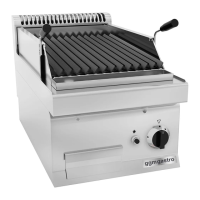
By way of example, below are represented 2 of the most comprehensive appliances in this family.
6.2.2 Turning the burners on and off
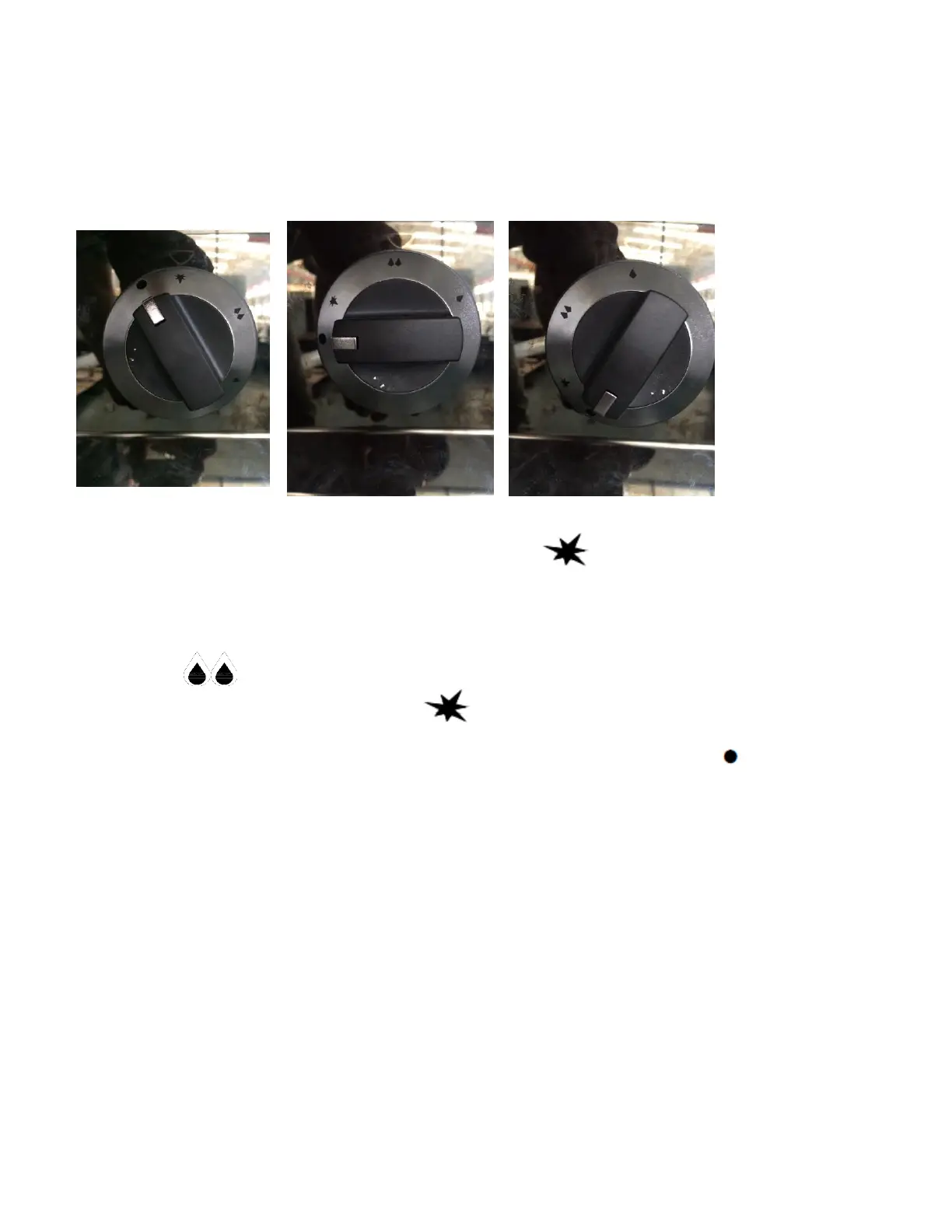
1. Press the knob and turn it anti-clockwise to the position “ ”. (Fig 1)
2. Hold down the knob and at the same time press the pulse igniter to light pilot.
3. After lighting the pilot, hold down the knob for 15 more seconds to allow the thermocouple to heat.
4. If the pilot flame goes out when you release the knob, repeat the item 1 to 3 specified above.
5. “Full Flame” can now be achieved by depressing and rotating the gas control knob anti-clockwise to the
position “ ”. (Fig 2)
6. Turn the knob clockwise to the position “ ”. The burner shall extinguish and the pilot shall remain
alight.
7. To turn off the appliance completely, turn the knob fully clockwise to the position “ ”.
NOTICE:
An unpleasant smell the very first time it is operated can be considered as completely normal.
6.3 After-use care
6.3.1 Cleaning
Before cleaning, turn off the appliance, shut off gas supply upstream of it.
General information
The main causes for stainless steel wear or corrosion are:
1) Using abrasive or acid detergents, especially chlorine-based products such as hydrochloric acid or sodium
hypochlorite (bleach). Therefore, before buying a detergent product, make sure it does not corrode stainless
steel
2) Stagnation of ferrous deposits (such as those created by rust dissolved in the water flowing through the
piping, especially after the appliance has remained idle for some time). Therefore, avoid such stagnation; do
not use wire wool pads to remove the most stubborn food residues. Use, rather, pads or spatulas made of
stainless steel or softer, non-ferrous materials;


 To Next Page
 Loading...