- Pag. 8. -
Entire description.
Do as follows:
1. Try the air pump on the valve and make sure the air pressure opens the valve, air goes into the air
chamber and does not stay in the pump hose.
2. Try to find out your exact body weight including cycling gear (clothing, helmet, shoes, cycling
bag…….).
3. Check the following table to find the correct air pressure, depending on the position of the rear shock
and your weight:
Position “2”
3¾” travel
Position “1”
3” travel
Body Weight Air pressure Air pressure
50 kg. / 110 lbs. 125 psi 60 psi
55 kg. / 121 lbs. 130 psi 70 psi
60 kg. / 132 lbs. 135 psi 80 psi
65 kg. / 143 lbs. 140 psi 90 psi
70 kg. / 154 lbs. 145 psi 100 psi
75 kg. / 165 lbs. 150 psi 110 psi
80 kg. / 176 lbs. 155 psi 120 psi
85 kg. / 187 lbs. 160 psi 130 psi
90 kg. / 198 lbs. 165 psi 140 psi
95 kg. / 209 lbs. 170 psi 150 psi
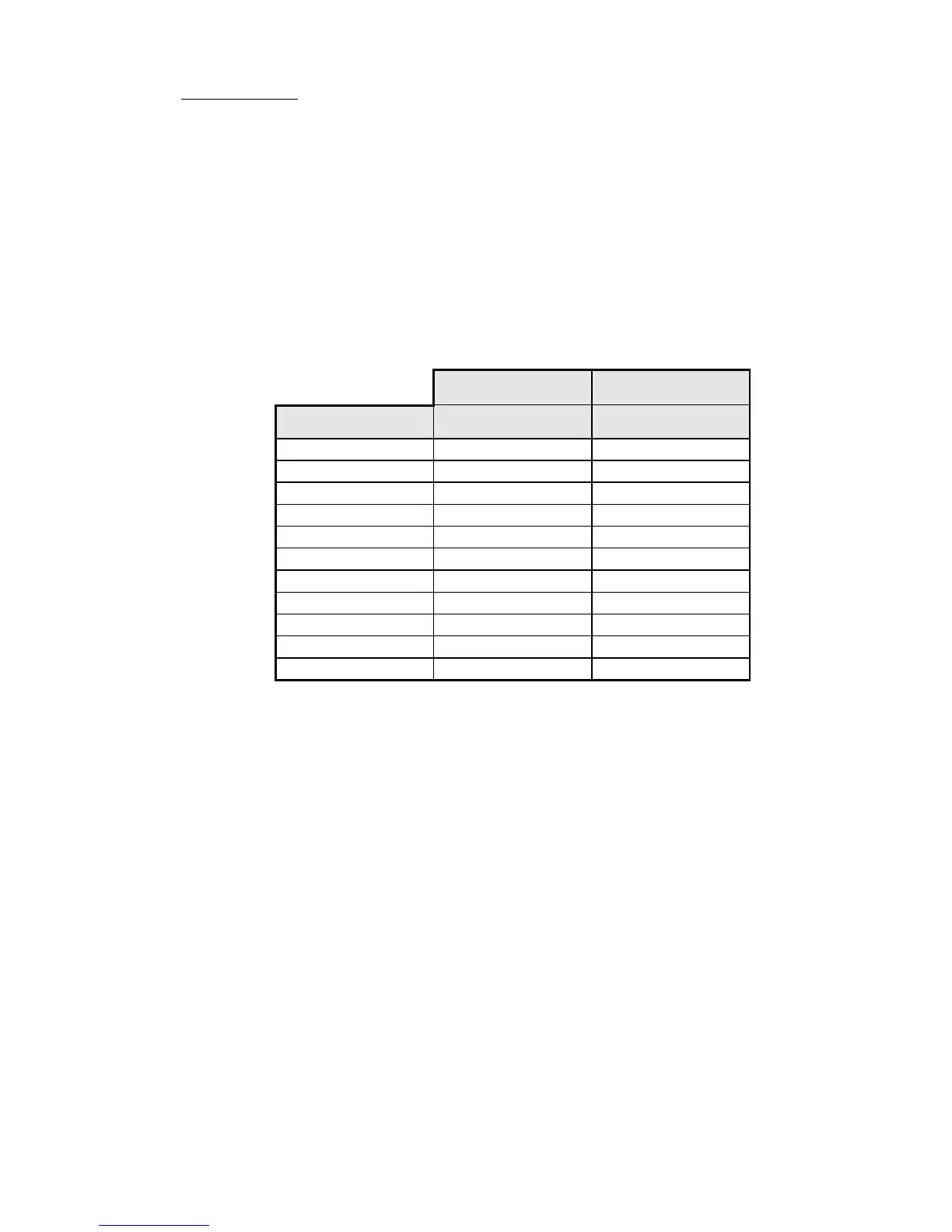
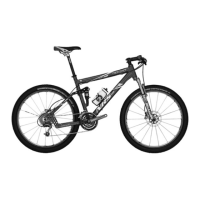
NRS™ bikes
with Giant NRS™ Air shock
100 kg. / 220 lbs. 175 psi 160 psi
4. Inflate the air chamber until the correct pressure has been reached.
5. This shock pressure enables you to set up the shock 95% correctly. It is impossible to take into
consideration deviations in the air pump gauge and the rear shock. Therefore we suggest making the
following simple steps, which offer two more ways to achieve the 100% correct setting.
The finishing touch to get to the “zero-SAG” setting will give the optimal efficiency and the best
performance.
It is important to understand that the shock should be delicately set on the edge of “zero-SAG” and
not with too high air pressure. Therefore this procedure goes from a little bit too low air pressure to
just enough air pressure to achieve “zero-SAG”.
6. Put the bike against a wall and make sure there is a zip tie or O-ring around the rear shock piston.
7. Sit on the bike (during stand still). Pull the zip tie or O-ring against the stop of the rear shock piston.
Sit still on the saddle, without bobbing. Make sure you sit on the bike like you normally would.
Push gently one of the pedals, like you would do during real riding (while keeping the front wheel
locked with the front brake).
8. Shift your body weight gently from the saddle to the front fork and try to dismount without causing too
much movement in the bike.


 To Next Page