
 Need help?
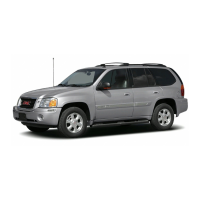
Do you have a question about the GMC 2004 Envoy and is the answer not in the manual?
Describes the operation and adjustment of front seats, including power seats and lumbar support.
Explains how to adjust head restraints for optimal safety and neck injury reduction in a crash.
Discusses the proper use, importance, and legal requirements of safety belts for all occupants.
Covers the proper use and installation of child restraint systems for older children and infants.
Explains the function, location, and safety precautions related to frontal and side impact air bag systems.
Advises on inspecting and replacing restraint system parts, including belts and air bags, after a collision.
Explains the function and anchoring requirements of top straps (tethers) for child restraints.
Describes the LATCH system for easier child restraint installation using vehicle anchors and attachments.
Provides step-by-step instructions for installing child restraints using the LATCH anchorages and top tethers.
Details how to secure child restraints using lap-shoulder belts in rear outside seating positions.
Covers installing child restraints in the front passenger seat, emphasizing air bag risks and proper procedures.
Recommends rear seat positions for child restraints, explaining risks of front seat placement due to airbags.
Advises on the proper use of vehicle safety belts for older children who have outgrown booster seats.
Stresses the need for appropriate restraints for infants and young children, and legal requirements.
Describes infant car beds and their proper use for restraining infants on a flat surface.
Details the conditions and impact speeds at which frontal and side impact air bags are designed to deploy.
Explains the sensing system and gas release mechanism that triggers air bag inflation during a crash.
Introduces the OnStar® system, its services, and contact information for subscriptions and support.
Explains how the four-wheel drive system provides extra traction and its proper operation.
Provides steps for shifting into PARK, emphasizing safety precautions with four-wheel drive and parking brake.
Provides a diagram and labels for the main components of the instrument panel.
Details the cruise control buttons located on the turn signal lever for setting and resuming speed.
Provides steps to turn on cruise control, set speed, and engage the system.
Covers the dual climate control system for managing heating, cooling, and ventilation for the vehicle.
Provides modes (Defog, Front Defrost) to clear fog or frost from windshields and side windows.
Details the dual automatic climate control system for personalized temperature, airflow, and fan speed settings.
Explains how the AUTO button automatically controls temperature, airflow mode, and fan speed for optimal comfort.
Describes the function of various warning lights and gauges that signal vehicle status or potential problems.
Explains the instrument panel cluster's design for displaying vehicle running information like speed and fuel.
Explains the air bag readiness light on the instrument panel that indicates system status and potential malfunctions.
Details the brake system warning light and chime, indicating potential brake problems or parking brake issues.
Explains the ABS warning light and what it signifies regarding the anti-lock brake system's function.
Explains the Service Engine Soon/Check Engine light, indicating potential problems with emission control systems.
Introduces the DIC display and buttons for accessing vehicle information and personalization settings.
Explains how the DIC displays information, warnings, and service messages, and how to acknowledge them.
Covers programming features to preferred settings for up to two people, displayed on the DIC.
Lists possible DIC messages that notify the driver of vehicle status changes or required actions.
Emphasizes defensive driving techniques and the dangers of drinking and driving.
Provides advice on anticipating other drivers' actions, maintaining following distance, and avoiding distractions.
Highlights the severe risks associated with drinking and driving, affecting judgment, coordination, and attentiveness.
Explains the three systems controlling vehicle movement: brakes, steering, and accelerator, and their interaction with road conditions.
Details braking action involving perception and reaction time, and factors affecting stopping distance.
Describes the ABS system's function to prevent braking skids and its interaction with the Dynamic Rear Proportioning system.
Explains the TAS system that limits wheel spin in slippery conditions by reducing engine power.
Explains the three types of skids (braking, steering, acceleration) and how to handle them.
Provides guidance and tips for safer and more enjoyable off-road driving, emphasizing terrain hazards.
Provides important safety tips for loading cargo in the vehicle for off-road use, focusing on weight distribution and securing loads.
Offers advice for driving in challenging conditions like mud, sand, snow, or ice, emphasizing reduced traction.
Provides caution and advice for driving through water, including flash floods and deep standing water.
Provides advice for freeway driving, emphasizing keeping pace with traffic, lane usage, and merging.
Offers tips for driving on steep hills and mountains, including knowing how to go down hills safely.
Provides special steps for safely driving up hills, emphasizing low gear and maintaining steady speed.
Offers advice for driving downhill, considering steepness, surface conditions, and obstacles.
Explains how to decide whether to drive across an incline and the risks involved, including rollovers.
Offers tips for preparing the vehicle and driving safely in winter conditions, including emergency supplies.
Provides advice for driving on slippery surfaces like snow or ice, emphasizing reduced traction and caution.
Warns about the dangers of deep standing water and advises against driving through it.
Warns about the dangers of flowing water and advises against driving through it.
Covers important aspects of towing, including trailering capacity, preparation, and safety rules.
Emphasizes knowing vehicle weight capacity and lists labels showing weight information.
Explains the tire and loading label, detailing vehicle capacity weight and seating positions.
Provides a step-by-step method to calculate the available cargo and luggage load capacity.
Describes the certification label on the door edge, showing tire size, inflation pressures, GVWR, and GAWR.
Provides crucial advice and warnings about towing a trailer safely, including equipment and driving techniques.
Explains how trailer tongue load affects vehicle weight and towing capacity, and provides calculations.
Stresses the need for adequate trailer brakes for trailers over 1,500 lbs and how they can integrate with the vehicle's system.
Offers advice for driving with a trailer, including awareness of CO fumes, handling, and braking.
Provides advice for driving on grades, recommending lower gears for downhill descents and proper lane usage uphill.
Gives instructions on how to safely park a vehicle with a trailer on a hill, using brakes and chocks.
Recommends using GM dealers for service and genuine GM parts for optimal vehicle maintenance.
Stresses the importance of using recommended fuel for proper vehicle maintenance and performance.
Provides safety precautions for refueling, including turning off the engine and avoiding sparks.
Warns against filling portable fuel containers inside a vehicle due to static electricity risk.
Highlights the importance of checking fluids and parts under the hood, warning against flammable items.
Provides diagrams identifying key components in the engine compartments for L6 and V8 engines.
Details how to check engine oil level, when to add oil, and the correct type of engine oil to use.
Details when to check and change automatic transmission fluid, including proper checking procedures and fluid types.
Explains the cooling system, coolant types (DEX-COOL®), and how to add coolant if levels are low.
Discusses engine overheating, steam hazards, and actions to take if the engine overheats.
Covers brake fluid, brake wear indicators, pedal travel, and adjustment procedures.
Explains brake fluid type (DOT-3), reservoir location, and precautions when adding fluid.
Details the safe procedure for jump starting a vehicle with a dead battery using another vehicle.
Discusses tire maintenance, warranty information, and safety precautions for tire usage.
Provides tips on what to expect and do if a tire experiences a blowout or slow leak.
Details the safe procedure for changing a flat tire, including vehicle support and wheel block placement.
Emphasizes safety when using cleaning products and provides tips for cleaning interior and exterior surfaces.
Explains the Vehicle Identification Number (VIN) and its location, as well as engine identification codes.
Explains how fuses and circuit breakers protect wiring circuits from short circuits and fires.
Stresses the importance of keeping engine oil at the proper level and changing it as recommended.
States that intervals, checks, parts, and fluids prescribed in the manual are necessary for good working condition.
Describes service intervals based on the CHANGE ENGINE OIL light, outlining Maintenance I and Maintenance II schedules.
Lists services to be performed at specific mileage intervals, including fuel system, exhaust, and filter replacements.
Lists owner checks and services to be performed at specified intervals to ensure safety and dependability.
Lists recommended fluids and lubricants by name, part number, or specification for various vehicle systems.
Provides contact information and procedures for customer satisfaction and assistance.
Outlines a step-by-step process for resolving concerns, starting with dealership management.
Explains the automatic enrollment in GMC Roadside Assistance and the services provided during the warranty period.
Lists services like fuel delivery, lock-out assistance, emergency tow, and jump starts covered by the program.
Provides information on reporting safety defects to the U.S. and Canadian governments and General Motors.
 General
| Brand | GMC |
|---|---|
| Model | 2004 Envoy |
| Category | Automobile |
| Language | English |


 To Next Page