Page 7
Rear wheels
Keep wheel nuts tight and correctly adjusted. Ensure both wheels spin freely with the bearings
correctly adjusted. Keep spokes tight and check the rims are straight and true.
Handlebar and headstem
Make sure the minimum insertion line is not visible and ensure the headstem binder bolt and the stem
expander bolt are tightening securely (20-23Nm 176-202in-lb) Refer page 4 Fig 1
Replace worn grips making sure they are fitted correctly and are tight with finger holes down.
Do not use soap or lubricants as these agents may cause the grips to move even after long periods of
use. Light household contact cement is recommended.
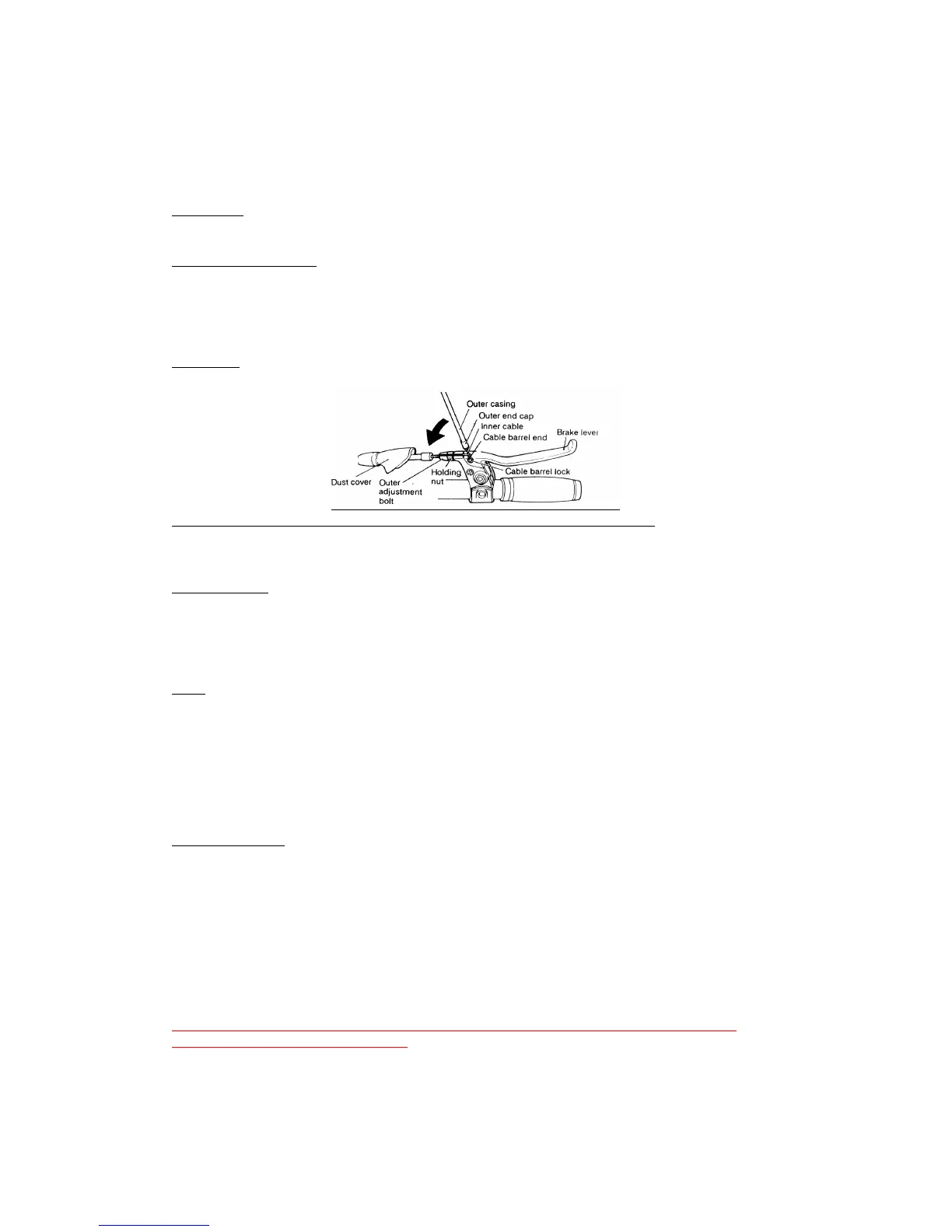
Brake lever
Minor adjustments can be made to the operation and effectiveness of your front brake as shown.
Chain (Coaster and internal geared model 2 x1/8”) (External geared model 1 x 3/32”))
Chain should be inspected regularly for damage or stiff links. Ensure the chain joiner is securely
fastened on coaster and internal geared models.
Lubricate the chain regularly with light machine oil. Use the oil sparingly and wipe off any excess oil.
Seat adjustment.
Ensure the minimum insertion line on the seat post is not visible.
Ensure the seat binder bolt is always tight 20-23Nm(176-202in-lb)
Position the angle of the seat to suit the rider and safe riding conditions and ensure the saddle clamp
bolt is tight 15-19Nm(133-169in-lb)
Align the direction of the saddle for the safety of the rider.
Tyres
Ensure all tyres are inflated according to the pressures indicated on the tyre wall. Frame or foot pump
should be used at all times. Unregulated air pumps must not be used as their volume readings will not
agree with the tricycle volume readings indicated on the tyre wall.
Inspect regularly all tyres to ensure they are correctly seated on the rims.
If a tyre becomes completely flat lift the wheel off the ground before pumping the tyre to correct
pressure to assist in keeping the tyre correctly seated in the rim.
Wet weather riding
All braking effectiveness is compromised during wet weather.
Ensure you allow a longer braking distance to stop.
Increased front brake lever pressure may be required under wet weather conditions.
It is important to take care when applying front brake levers at any time but especially during wet
weather.
Stopping distances can double or even triple in wet conditions.
Adjust your brakes when performance is less efficient than normal.
Avoid skidding and take extra care going downhill.
Ride more slowly in wet conditions than you normally would in dry conditions and avoid sudden stops
or quick manoeuvres.
Remember tricycles due to their particular design, can at times be unstable if turning left or right
abruptly or not planned well in advance.
Take care when riding over metal grates, traffic markers and kerbs.
Visibility is greatly reduced especially in the rain.
Use the same precautions when riding in the rain as you would riding at night.
Refer to the safety instructions listed on page 7.


 To Next Page
 Loading...