
 To Next Page
E
Erin SwansonSep 6, 2025
What to do if my Goodman Air Conditioner thermostat is improperly located?
- CColleen MurphySep 6, 2025
If your Goodman Air Conditioner thermostat is improperly located, relocate the thermostat.

What to do if my Goodman Air Conditioner thermostat is improperly located?
If your Goodman Air Conditioner thermostat is improperly located, relocate the thermostat.
What to do if my Goodman Air Conditioner has a loose connection?
If your Goodman Air Conditioner has a loose connection, inspect the connection and tighten it.
What to do if my Goodman Air Conditioner has recirculation of condensing air?
If your Goodman Air Conditioner has recirculation of condensing air, remove any obstruction to the airflow.
What to do if my Goodman Air Conditioner has too much air across the indoor coil?
If there is too much air across the indoor coil of your Goodman Air Conditioner, reduce the blower speed.
What to do if my Goodman Air Conditioner doesn't have enough air across the indoor coil?
If there's not enough air across the indoor coil in your Goodman Air Conditioner, speed up the blower and check the duct static pressure.
What to do if my Goodman Air Conditioner has an undersized suction line?
If your Goodman Air Conditioner has an undersized suction line, replace the line.
What to do if my Goodman Air Conditioner has an undersized liquid line?
If your Goodman Air Conditioner has an undersized liquid line, replace the line.
What to do if my Goodman Air Conditioner has a restricted liquid line?
If your Goodman Air Conditioner has a restricted liquid line, replace the restricted part.
What to do if my Goodman Air Conditioner has noncondensibles?
If your Goodman Air Conditioner has noncondensibles, recover the charge, evacuate, and recharge.
What to do if my Goodman Air Conditioner has a shortage of refrigerant?
If your Goodman Air Conditioner has a shortage of refrigerant, test for leaks and add refrigerant.
Disconnect ALL power before servicing due to high voltage risks.
Specifies minimum technician qualifications for using this manual.
Warns about refrigerant being heavier than air and potential asphyxiation.
Provides safety guidelines for handling refrigerant cylinders to prevent explosion.
Details the steps for evacuating the refrigerant system to remove air and moisture.
Emphasizes disconnecting all power before electrical servicing.
Guides on opening service valves correctly to avoid refrigerant loss.
Warns against overcharging or operating the unit in a vacuum.
Details adjusting refrigerant charge for cooling based on temperature.
A table correlating symptoms with possible causes, tests, and remedies.
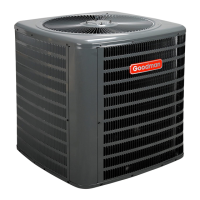
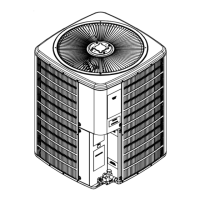
This document describes the Condensing Unit, a single/three-phase heat pump for installation and service. It is designed for outdoor installations and is crucial for both heating and cooling systems.
The Condensing Unit is a key component of a heating and air conditioning system. It operates as a heat pump, capable of both heating and cooling. The unit is shipped with a nitrogen/helium holding charge and must be evacuated and charged with the specified refrigerant (listed on the serial rating plate) according to installation instructions. These units are primarily intended for component replacement in existing systems (pre-2010 installed systems) and are not for use in new systems or newly constructed homes due to EPA regulations regarding R-22 refrigerant.
Percentage Voltage Unbalance = 100 x (Max. Voltage Deviation From Average Voltage / Average Voltage).
 General