EasyManua.ls Logo

Gradient syncFURNACE mOD-200-14L - User Manual

Default Icon
81 pages
Print Icon
To Next Page IconTo Next Page
Loading...
syncFURNACE OD Instruction & Installation Manual Rev 09 Pg. 1 of 81
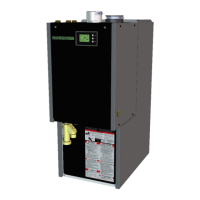
Combination Gas-Fired Water Heater / Central Air Fan-coil Unit
Model >
IMPORTANT:
Be sure to read these instructions and fully understand prior to
installing this product.
The wetted surface of this product contacted by consumable water
contains less than one quarter of one percent (0.25%) of lead by
weight.
After installation, keep instructions near product for future reference.
This product must be installed and serviced by a properly trained &
licensed professional heating contractor FAILURE TO COMPLY
WILL VOID ALL PRODUCT WARRANTY
It is the responsibility of the installation contractor (upon completion
of the installation) to explain to the Owner or Operator of the heating
system how to correctly use as per these instructions and local code
requirements. Be sure that they are familiar with all heating system
equipment as well as safety devices, shut-down procedure(s) and
the need for professional service annually before the heating season
begins.
CAUTION:
After installation is complete it is the responsibility of the Owner or
Operator to ensure vent terminal(s) is cleared from snow, ice and/or
other debris.
Installation & Operation
Manual
www.gradientthermal.com
mOD-200
ANSI Z21.10.3 | CSA 4.3
UL 1995 | CSA C22.2 No. 236
Heating and Cooling Equipment
FURNACE + WATER HEATER

Table of Contents

Questions and Answers

Summary

Installation & Operation Manual

Important Safety and Installation Notes

Covers critical safety warnings, cautions, and mandatory installation requirements for safe operation.

Safety Precautions Before Operation

What to Do If You Smell Gas

Provides emergency steps to take if a gas leak is detected.

Operating Instructions

Details the procedure for starting and stopping the appliance.

General Safety and Installation Requirements

Danger and Warning Statements

Highlights severe risks including explosion, fire, injury, or death.

General and Safety Instructions

Handling Product Damage and Safety

Covers post-transport inspection, contractor qualifications, and general safety consciousness.

Installation Requirements

Minimum Installation Clearances

Specifies required clearances for front, back, sides, top, and bottom.

Mechanical Room and Air Supply Needs

Details requirements for the installation space and combustion air.

General Venting Requirements

Venting System Design

Covers sealed combustion, sidewall, and vertical venting system designs.

Venting Installation Guidelines

Provides detailed instructions and code references for venting.

Acceptable Venting Configurations and Materials

Venting Configuration Types

Describes direct vent and direct exhaust configurations.

Venting Length and Material Limitations

Vent Material Warnings

Lists prohibited vent materials and insulation use.

Combustion Air Supply

Room Dependent Combustion Air

Explains setup requirements for drawing combustion air from the room.

Connecting Vent Pipe to Unit

Vent Pipe Connection Procedure

Details how to connect flue gas and combustion air pipes to the unit.

Venting Installation Safety Notes

Includes notes on swing joints, clamps, burrs, and support.

Venting Termination Options

Horizontal and Vertical Termination Diagrams

Illustrates common vent termination setups for horizontal and vertical.

Venting Termination Guidelines

Termination Placement and Spacing

Specifies rules for termination placement, spacing, and multiple vents.

Termination Safety Precautions

Warns about snow blockage and moisture entry into intake.

Venting Termination Clearances

Combustion Air Inlet Clearances

Specifies minimum distances required for air intake terminations.

Flue Gas Outlet Clearances

Details required clearances for exhaust vent terminations.

Mandatory Venting Pre-Fire Procedure

Pre-Fire Procedure Steps

Outlines steps for plastic venting systems before initial burner firing.

Condensation Trap and Drainage

Gas Line Connection

Gas Connection Safety and Pressure Limits

Warns about pressure limits and leak testing procedures.

Plumbing Connections

Plumbing Connections and Safety

Fan-Coil Unit Integration

Purging Air from the System

Low-Voltage Control Wiring

Control Wiring Safety Precautions

Warns against applying external voltage and emphasizes power disconnection.

Main Power Wiring (115 VAC)

Electrical Wiring and Grounding Standards

Covers compliance with codes and conductor selection for wiring.

Main Power Supply Connection

Connecting 115 VAC Power Wire

Shows how to connect the main power supply and service switch.

Fan-Coil Installation

Duct Distribution and Safety

Carbon Monoxide Risk from Negative Pressure

Warns about flue gas backdraft and CO formation due to room negative pressure.

Controller Setup and Interface

Navigating the Controller Interface

Controller Setup Menu Navigation

Fan Coil Setup and Configuration

Domestic Hot Water Recirculation Setup

Burner Setup and Commissioning

Commissioning Procedures

Pre-Operation Checks

Lists essential checks for venting, traps, gas, and wiring.

Testing Water Pressure and Leaks

Details the process for leak testing the plumbing system.

Testing No Gas Safety Function

Describes safety checks for gas detection and ignition lockout.

Gas Inlet Pressure Testing

Measuring Static Gas Pressure

Explains how to measure static gas pressure using a manometer.

Gas Inlet Pressure Testing (Continued)

CO Measurement and Safety

Emphasizes CO measurement during testing and related safety.

Gas Leak Testing Precautions

Warns against using open flames for leak detection.

Gas Inlet Pressure Testing - Running Pressure

Measuring Running Gas Pressure

Details steps for measuring gas pressure under load (high fire).

Gas Pressure Adjustment and Verification

Covers making adjustments and verifying gas pressure readings.

Combustion Testing Procedure

Measuring Combustion Performance at High Input

Steps for testing combustion at maximum burner input.

Measuring Combustion Performance at Low Input

Steps for testing combustion at minimum burner input.

Combustion Adjustment and Verification

Adjusting CO2% and Gas;Air Ratio

Explains how to adjust the burner for optimal CO2% and combustion.

Maintenance and Service

Refractory Ceramic Fibers (RFC) Safety

Covers precautions and PPE for handling hazardous refractory materials.

Combustion Chamber and Condensate System Cleaning

Annual Maintenance Tasks

Troubleshooting Fault Codes

Fault Code Descriptions

Lists potential fault codes (ALM 1-6, NO FLOW, LOW PRES) and their descriptions.

Corrective Actions for Faults

Provides steps to resolve specific fault codes like ALM 1, 2, 3.

Troubleshooting Fault Codes (Continued)

Corrective Actions for ALM 4, ALM 5, ALM 6

Detailed corrective actions for fault codes related to gas valve and ignition.

Corrective Actions for NO FLOW and LOW PRES

Troubleshooting steps for no flow and low pressure detection faults.

Troubleshooting Specific Faults

Corrective Actions for LOW PRES and NO FLAME

Specific steps for resolving low pressure and no flame detection faults.

Internal Wiring Diagram

Burner Ignition Cycle Flow-Chart

Handling Refractory Cement Fibers (RFC)

Gradient syncFURNACE mOD-200-14L Specifications

General IconGeneral
BrandGradient
ModelsyncFURNACE mOD-200-14L
CategoryWater Heater
LanguageEnglish

Related product manuals