GB - 16
• Do not modify the fuel system to use
different fuels.
• Never mix oil and gasoline.
NOTE: All gasoline is not the same. If the
engine experiences starting or performance
problems after using a new gasoline, switch
to a different fuel provider or fuel brand.
IMPORTANT: Excessively oxygenated or
reformulated fuels (fuels blended with
alcohols or ethers) can damage the fuel
system or cause performance problems. If
any undesirable operating problems occur,
use a gasoline with a lower percentage of
alcohol or ether.
Fuel Stabilizer
Gasoline left in the fuel system for extended
periods without a stabilizer will deteriorate,
resulting in gum deposits in the system.
These deposits can damage the carburetor
and the fuel hoses, filter and tank. Prevent
deposits from forming in the fuel system
during storage by adding a quality fuel
stabilizer to the fuel. Follow the
recommended mix ratio found on the fuel
stabilizer container.
PRIOR TO STARTING THE UNIT
1. Check Safety Interlock System
If this system does not function as described
do not operate until repairs are made.
2. Check Air Cleaner
Check air filter for dirt. Clean as required.
Follow Engine Manual for maintenance
schedule.
3. Check Engine Fuel and Engine Oil
Check and add fuel if required. Check that
engine oil level is within operating range.
Follow Engine Manual for maintenance
schedule.
NOTE: If unit runs out of fuel on diesel
models (992156, 160), the engine must be
primed prior to starting the engine. Refer to
Engine Manual for detailed instructions.
4. Check Tire Pressure
See SPECIFICATIONS on page 38 for
correct tire pressure.
5. Check Hydraulic Fluid Level
See Checking Hydraulic Oil Level on
page 31.
6. Adjust Seat
Be sure all controls can be reached safely
from operator’s position.
7. Set Cutting Height
Make sure the deck is set to the correct
cutting height.
8. Check Radiator Screen (992152,
156, 159, 160, 176)
Check radiator screen for debris see
MAINTENANCE SCHEDULE on page 18
and refer to Engine Manual for detailed
instructions.
STOPPING IN AN EMERGENCY
Bring steering levers back to neutral, set
parking brake, and turn off engine.
STARTING AND SHUTTING OFF
ENGINE
NOTE: DO NOT operate starter more than 15
seconds per minute, as overheating and
damage can occur. If engine will not start, see
TROUBLESHOOTING on page 33 or refer to
Engine Manual.
NOTE: The engine will not start unless the
steering control levers are in the neutral
position, the PTO switch is in the off position,
and parking brake is engaged.
NOTE: If unit runs out of fuel on diesel
models (992156, 160), the engine must be
primed prior to starting the engine. Refer to
Engine Manual for detailed instructions.
To Start Gas Units (992150, 152, 154, 159,
161, 162, 163, 164, 165, 166, 167, 168, 170,
175, 176):
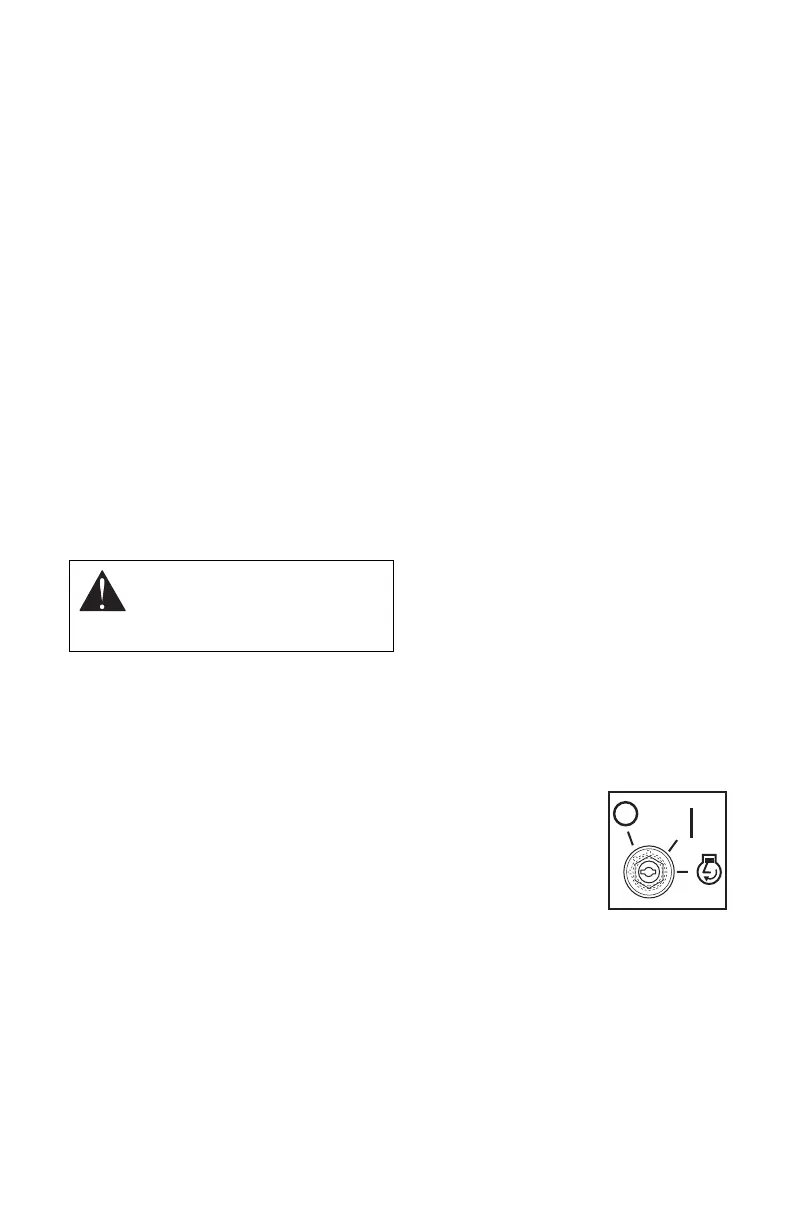
1. Insert ignition key.
2. Move choke control to the on position.
3. Move the throttle to 3/4 fast position.
4. Turn ignition key
to Start (3)
position.
NOTE: If engine does
not start in five
seconds, release
ignition key, wait, and
then repeat. Once
engine has started,
ignition key will return to the Run (2) position.
5. Move the choke control to the off
position when engine has warmed up.
CAUTION: Make sure all
hardware is tight, all safety
devices are in place and all
adjustments are made correctly.



 To Next Page