EasyManua.ls Logo

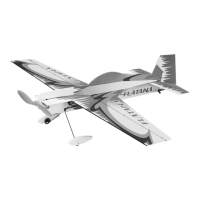
GREAT PLANES FlatOuts Extra 300S ARF - User Manual

GREAT PLANES FlatOuts Extra 300S ARF
24 pages
Print Icon
To Next Page IconTo Next Page
Loading...
WARRANTY
Great Planes
®
Model Manufacturing Co. guarantees this kit to be free from defects in both material and workmanship at the date of
purchase. This warranty does not cover any component parts damaged by use or modification. In no case shall Great Planes’ liability
exceed the original cost of the purchased kit. Further, Great Planes reserves the right to change or modify this warranty without notice.
In that Great Planes has no control over the final assembly or material used for final assembly, no liability shall be assumed nor accepted
for any damage resulting from the use by the user of the final user-assembled product. By the act of using the user-assembled product,
the user accepts all resulting liability.
If the buyer is not prepared to accept the liability associated with the use of this product, the buyer is advised to return this kit
immediately in new and unused condition to the place of purchase.
To make a warranty claim send the defective part or item to Hobby Services at the address below:
Hobby Services
3002 N. Apollo Dr., Suite 1
Champaign, IL 61822 USA
Include a letter stating your name, return shipping address, as much contact information as possible (daytime telephone number, fax
number, e-mail address), a detailed description of the problem and a photocopy of the purchase receipt. Upon receipt of the package the
problem will be evaluated as quickly as possible.
READ THROUGH THIS MANUAL BEFORE STARTING
CONSTRUCTION. IT CONTAINS IMPORTANT WARNINGS
AND INSTRUCTIONS CONCERNING THE ASSEMBLY
AND USE OF THIS MODEL.
GPMZ0173 for GPMA1114 V1.0© Copyright 2005
Champaign, Illinois
(217) 398-8970, Ext 5
airsupport@greatplanes.com
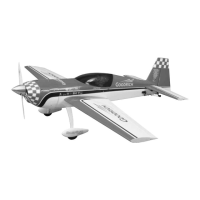
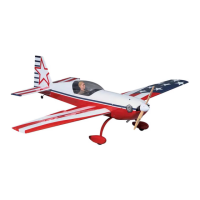
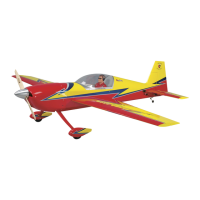
Wingspan: 35.5 in [915mm]
Length: 29.5 in [750mm]
Weight: 7.5 – 9 oz [215 – 255 g]
Wing Area: 207 sq in [13 dm
2
]
Wing Loading: 4.5 – 5.8 oz/sq ft [15 – 18 g/dm
2
]
Radio: 4-channel w/3 micro servos and 10-Amp ESC
Power System: Included ElectriFly T-370 ferrite motor with gearbox, or optional direct-drive RimFire Brushless motor.
By Great Planes
INSTRUCTION MANUAL
Question and Answer IconNeed help?

Do you have a question about the GREAT PLANES FlatOuts Extra 300S ARF and is the answer not in the manual?

Summary

Introduction

Safety Precautions

Decisions You Must Make

Transmitter

Recommends a four-channel transmitter, with options for computer radios.

Servos

Specifies required sub-micro servos, weight, and torque ratings for optimal performance.

Receiver

Recommends a lightweight four-channel receiver compatible with chosen servos.

Battery

Specifies 3-cell Li-Po battery requirements and recommended models for performance.

Speed Control

Details required electronic speed control (ESC) for 7A minimum continuous current.

Charger

Lists compatible chargers for 3-cell Li-Po batteries and warnings about improper charging.

Glue

Recommends foam-safe CA glue and warns against using regular CA.

Build the Airplane

Assemble the Horizontal Tail

Instructions for cutting, hinging, and joining the horizontal stabilizer and elevator halves.

Assemble the Fuselage

Steps for cutting fuselage parts and gluing them together with tubes and servo mounts.

Assemble the Wing

Instructions for attaching control horns, hinges, and tubes to the wing panels.

Final Airframe Assembly

Steps for joining the wing to the fuselage and installing wing struts and landing gear supports.

Finish the Landing Gear

Instructions for installing axles, wheel collars, and landing gear legs.

Radio Setup

Guides for mounting servos, connecting clevises, and setting up control surfaces.

Get the Model Ready to Fly

Check the Control Directions

Steps to verify control surface direction, throttle, and servo centering.

Set the Control Throws

Guidance on setting high-rate and low-rate control throws for optimal flight performance.

Balance the Model (C.G.)

Critical procedure for determining and setting the correct center of gravity (C.G.) for stable flight.

Preflight

Identify Your Model

Instructions for marking the model with ownership information for identification.

Charge the Batteries

Guidelines for charging transmitter and flight batteries, emphasizing Li-Po safety.

Range Check

Procedure for checking radio system range to ensure safe operation before flight.

Motor Safety Precautions

AMA Safety Code (Excerpts)

General

Excerpts from the AMA Safety Code covering general flying conduct and airworthiness.

Radio Control

Excerpts from the AMA Safety Code related to radio control operations and flying sites.

Check List

Flying

Hand Launch

Instructions for performing a hand launch, including recommended technique and throttle settings.

Rise-Off-Ground (ROG) Takeoffs

Guidance for performing takeoffs from a smooth surface using the model's power.

Flight

Tips for flying the model, including throttle management and control stick sensitivity for 3-D maneuvers.

Landing

Advice on performing landings, emphasizing using power and a 3-point attitude.

Summary

Introduction

Safety Precautions

Decisions You Must Make

Transmitter

Recommends a four-channel transmitter, with options for computer radios.

Servos

Specifies required sub-micro servos, weight, and torque ratings for optimal performance.

Receiver

Recommends a lightweight four-channel receiver compatible with chosen servos.

Battery

Specifies 3-cell Li-Po battery requirements and recommended models for performance.

Speed Control

Details required electronic speed control (ESC) for 7A minimum continuous current.

Charger

Lists compatible chargers for 3-cell Li-Po batteries and warnings about improper charging.

Glue

Recommends foam-safe CA glue and warns against using regular CA.

Build the Airplane

Assemble the Horizontal Tail

Instructions for cutting, hinging, and joining the horizontal stabilizer and elevator halves.

Assemble the Fuselage

Steps for cutting fuselage parts and gluing them together with tubes and servo mounts.

Assemble the Wing

Instructions for attaching control horns, hinges, and tubes to the wing panels.

Final Airframe Assembly

Steps for joining the wing to the fuselage and installing wing struts and landing gear supports.

Finish the Landing Gear

Instructions for installing axles, wheel collars, and landing gear legs.

Radio Setup

Guides for mounting servos, connecting clevises, and setting up control surfaces.

Get the Model Ready to Fly

Check the Control Directions

Steps to verify control surface direction, throttle, and servo centering.

Set the Control Throws

Guidance on setting high-rate and low-rate control throws for optimal flight performance.

Balance the Model (C.G.)

Critical procedure for determining and setting the correct center of gravity (C.G.) for stable flight.

Preflight

Identify Your Model

Instructions for marking the model with ownership information for identification.

Charge the Batteries

Guidelines for charging transmitter and flight batteries, emphasizing Li-Po safety.

Range Check

Procedure for checking radio system range to ensure safe operation before flight.

Motor Safety Precautions

AMA Safety Code (Excerpts)

General

Excerpts from the AMA Safety Code covering general flying conduct and airworthiness.

Radio Control

Excerpts from the AMA Safety Code related to radio control operations and flying sites.

Check List

Flying

Hand Launch

Instructions for performing a hand launch, including recommended technique and throttle settings.

Rise-Off-Ground (ROG) Takeoffs

Guidance for performing takeoffs from a smooth surface using the model's power.

Flight

Tips for flying the model, including throttle management and control stick sensitivity for 3-D maneuvers.

Landing

Advice on performing landings, emphasizing using power and a 3-point attitude.

GREAT PLANES FlatOuts Extra 300S ARF Specifications

General IconGeneral
Skill LevelIntermediate
Radio System4-channel
Control Throws-Rudder1.5 in (38 mm) left/right
Radio4+ channel
ConstructionBalsa and plywood

Related product manuals