
 Need help?
Do you have a question about the GREAT PLANES Giant Extra 330L and is the answer not in the manual?
Details on choosing the right engine for the model's performance.
Guidance on selecting an appropriate in-cowl muffler for the chosen engine.
Considerations for 3D aerobatics and necessary modifications for enhanced performance.
List of essential parts and materials needed for building and flying the model.
List of recommended optional items for enhanced building and customization.
Key advice on using screws and understanding fitting instructions during construction.
Glossary of common terms and acronyms used in the manual.
Identification of wood types used in the model construction.
Conversion factors for measurements between inches and millimeters.
Instructions for joining balsa sheets to create stab sheeting panels.
Detailed steps for constructing the stabilizer and elevator components of the aircraft.
Final steps for assembling and finishing the elevator halves.
Completing the stab panels, including leading edge and trailing edge work.
Instructions for creating the sheeting for the fin and rudder components.
Detailed steps for constructing the vertical fin assembly.
Detailed steps for constructing the rudder component of the aircraft.
Instructions for building the necessary jigs for wing assembly.
Detailed steps for constructing the left and right wing panels.
Calculating the correct angle for engine mounting to ensure proper thrust.
Constructing the main internal structure of the fuselage.
Joining the fuselage center box sides to form the core structure.
Mounting the firewall which supports the engine.
Attaching the main and tail landing gear assemblies to the fuselage.
Adding stringers to the outer fuselage shell for structural support.
Applying balsa sheeting to the fuselage for scale appearance and strength.
Constructing and sheeting the front deck area of the fuselage.
Attaching the engine cowl to the fuselage.
Constructing the turtle deck structure behind the cockpit.
Installing the cockpit interior and the model's canopy.
Ensuring the model is balanced side-to-side for stable flight characteristics.
Steps to prepare the model's surfaces for covering with film.
Instructions for painting the exposed wood parts of the model.
Installing various hardware components like fuel systems and control linkages.
Final steps for installing servos, receiver, and battery.
Adjusting control surface movements for optimal flight performance.
Critically important steps for setting the correct Center of Gravity (CG).
Final assembly steps for attaching wings and tail surfaces.
Regular checks and maintenance procedures for the model.
Procedures for charging the transmitter and receiver batteries before flying.
Importance of propeller balancing to prevent vibration and damage.
Guidance on selecting appropriate and safe locations for flying the model.
Essential pre-flight checks of the radio installation and engine operation.
Critical safety measures related to engine operation and fuel handling.
Performing a radio range check to ensure reliable control.
Procedures for performing a safe and controlled takeoff.
Techniques for executing a normal landing approach and touchdown.
Advice for getting acquainted with the model and basic flight maneuvers.
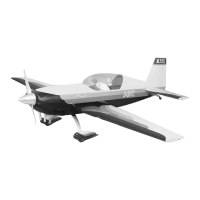
 General
| Construction | Balsa and plywood |
|---|---|
| Manufacturer | Great Planes |
| Weight | 14-16 lb (6.35-7.26 kg) |
| Engine Size | 1.60 cu in (26cc) 2-stroke or 2.1 cu in (35cc) 4-stroke |
| Radio System | 4-channel minimum |
| Skill Level | Advanced |
| Type | Aerobatic |



 To Next Page