EasyManua.ls Logo

GREAT PLANES Matt Chapman Cap 580 - User Manual

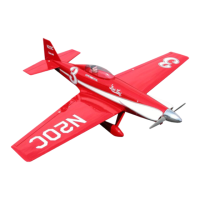
GREAT PLANES Matt Chapman Cap 580
28 pages
Print Icon
To Next Page IconTo Next Page
Loading...
WARRANTY
Great Planes
®
Model Manufacturing Co. guarantees this kit to be free from defects in both material and workmanship at the date of
purchase. This warranty does not cover any component parts damaged by use or modification. In no case shall Great Planes’ liability
exceed the original cost of the purchased kit. Further, Great Planes reserves the right to change or modify this warranty without notice.
In that Great Planes has no control over the final assembly or material used for final assembly, no liability shall be assumed nor
accepted for any damage resulting from the use by the user of the final user-assembled product. By the act of using the user-assembled
product, the user accepts all resulting liability.
If the buyer is not prepared to accept the liability associated with the use of this product, the buyer is advised to return this
kit immediately in new and unused condition to the place of purchase.
To make a warranty claim send the defective part or item to Hobby Services at the address below:
Hobby Services
3002 N. Apollo Dr. Suite 1
Champaign IL 61822 USA
Include a letter stating your name, return shipping address, as much contact information as possible (daytime telephone number, fax
number, e-mail address), a detailed description of the problem and a photocopy of the purchase receipt. Upon receipt of the package
the problem will be evaluated as quickly as possible.
READ THROUGH THIS MANUAL BEFORE STARTING
CONSTRUCTION. IT CONTAINS IMPORTANT WARNINGS
AND INSTRUCTIONS CONCERNING THE ASSEMBLY
AND USE OF THIS MODEL.
GPMZ0280 for GPMA1285 V1.0© Copyright 2005
Champaign, Illinois
(217) 398-8970, Ext 5
airsupport@greatplanes.com
INSTRUCTION MANUAL
Wingspan: 99.5 in [2525mm]
Wing Area: 1885 sq in [121.6 dm
2
]
Weight: 29-32 lb [13150-14520g]
Wing Loading: 35-39 oz/sq ft [107-119 g/dm
2
]
Length: 95 in [2415 mm]
Engine: 4.2-7.2 cu in [70-120cc]
Question and Answer IconNeed help?

Do you have a question about the GREAT PLANES Matt Chapman Cap 580 and is the answer not in the manual?

Summary

Introduction to the Great Planes CAP 580 ARF

Join the Academy of Model Aeronautics (AMA)

International Miniature Aerobatics Association (IMAA) Information

Essential Safety Precautions for Model Operation

Key Decisions Before Starting Construction

Radio Equipment Requirements

Specify 6+ channel radio and servo types.

Engine Recommendations for CAP 580

Choose engine within the recommended size range.

Required Hardware, Adhesives, and Tools

Hardware and Accessories List

List of necessary hardware and accessories.

Adhesives and Building Supplies

Recommended glues and building materials.

Optional Supplies and Tools

Helpful optional tools for building the model.

Covering Tools Overview

Tools for applying model covering film.

Key Considerations for Model Construction

Screw Types and Identification

Understanding sheet metal and machine screw designations.

Using the Test Fit Procedure

Temporarily position parts for best fit before gluing.

Epoxy Usage Guidelines

Recommendations for using 30-minute and 6-minute epoxy.

MonoKote Covering Information

Details on patching and applying MonoKote film.

Commonly Used Abbreviations in the Manual

Kit Inspection and Product Support

Detailed List of Kit Components

Photographed Kit Components

Visual identification of included parts.

Unphotographed Kit Components

List of parts not visually represented.

How to Order Replacement Parts

Locating Hobby Dealers and Online Stores

Finding sources for purchasing parts.

Ordering Directly from Hobby Services

Information for mail-order and phone orders.

Replacement Parts List by Order Number

Catalog of available parts with order codes.

Assembling the Horizontal Stabilizer

Attach the Elevators to the Stab

Hinging and securing the elevator halves.

Prepare the Servo Arms for Elevator Control

Drilling and attaching ball links to servo arms.

Mount the Elevator Servos to the Stab

Securing servos and aligning control horns.

Install Elevator Control Horns and Pushrods

Connecting control horns and pushrods for elevator.

Assembling the Wings and Ailerons

Attach Ailerons to the Wing

Hinging ailerons to the wing panels.

Install Aileron Servos and Y-Harness

Mounting servos and connecting wiring.

Assembling the Fuselage Components

Install the Tail Gear Assembly

Mounting the tail wheel and steering arm.

Attach the Rudder to the Fuselage

Hinging the rudder using the specified procedure.

Install Rudder Servos and Linkage

Mounting servos and connecting rudder pushrods.

Install the Main Landing Gear

Attaching axles, wheels, and wheel pants.

Mounting the Aircraft Engine

Prepare Firewall for Engine Mounting

Cutting template and drilling mounting holes.

Engine Mounting Procedure

Securing engine to firewall with spacers.

Installing the Throttle Servo and Pushrod

Throttle Servo Installation Precautions

Use plastic pushrods to prevent radio noise.

Route Throttle Pushrod Tube

Glued plastic pushrod tube for throttle control.

Connect Throttle Servo to Engine

Attaching pushrods and clevises for throttle control.

Installing the Servo-Operated Kill Switch

Prepare Kill Switch Mounting Holes

Drilling holes for kill switch and servo.

Connect Kill Switch Pushrod

Attaching pushrod to kill switch and servo.

Wire Kill Switch and Ignition System

Connecting the kill switch to the ignition system.

Fuel Tank Assembly and Installation

Assemble Fuel Tank Stopper and Tubes

Soldering brass tubes and attaching clunks.

Mount the Fuel Tank in the Fuselage

Securing the tank tray and fuel lines.

Mounting the Engine Cowl

Trim and Fit the Engine Cowl

Cutting the cowl for proper engine fitment.

Final Assembly Steps for the Model

Mount the Stabilizers to the Fuselage

Sliding and securing stab tubes and halves.

Install Elevator Servo Extensions

Connecting extensions to elevator servos.

Checking and Setting the Center of Gravity (CG)

Determine Wing Mounting Location

Finding the correct wing position for balance.

Mark CG Points on Wingtips

Precisely marking the CG location on the wingtips.

Mounting the Wing to the Fuselage

Slide Wing onto Wing Tube

Inserting the wing onto the central tube.

Secure Wing to Fuselage

Fastening the wing using the provided bolt.

Completing the Radio System Installation

Mount Receiver and Battery

Securing radio components with foam and Velcro.

Connect All Servos and Switch

Plugging in servos and mounting controls.

Preparing the Model for First Flight

Check Control Surface Directions and Trims

Ensuring correct response and centering of controls.

Attach the Canopy and Instrument Panel

Securing the canopy and pilot to the frame.

Apply Model Decals

Positioning and applying water-slide decals.

Set Control Throws

Adjusting control surface movement ranges.

Balancing the Model for Optimal Flight

Mark CG Points on Wingtips

Precisely marking the CG location on the wingtips.

Perform CG Balance Check

Lifting the model to check balance point.

Adjusting for CG Balance Issues

Relocating components or adding ballast for balance.

Ensuring Lateral Balance of the Model

Lateral Balance Check Procedure

Checking for equal wingtip height.

Pre-Flight Checks and Procedures

Identify Your Model with Contact Information

Marking the model with owner's details.

Charge Aircraft Batteries

Following manufacturer's battery charging guidelines.

Balance Propellers for Vibration Reduction

Ensuring propeller is balanced for smooth operation.

Perform Ground Check After Engine Break-in

Verifying engine and systems after break-in.

Conduct Radio Range Check

Testing radio control range before flight.

Engine Safety Precautions for Operation

Fuel Handling and Storage Safety

Safe practices for flammable fuel.

Engine Operation Safety Guidelines

Safe practices for starting and running engines.

Propeller Safety Zone

Keeping clear of the rotating propeller.

Gasoline Engine Kill Switch Usage

Importance of kill switches for gasoline engines.

Academy of Model Aeronautics (AMA) Safety Code

General Safety Rules for Flying

Airworthiness, altitude, and reckless flying guidelines.

Radio Control Safety Rules

Ground checks, spectator lines, and frequency use.

International Miniature Aerobatics Association (IMAA) Safety Code

Definition of Giant-Scale Aircraft

Criteria for classifying giant-scale models.

Flight Testing and Safety Review

Requirements for proving aircraft airworthiness.

Emergency Engine Shut Off (Kill Switch)

Manual and transmitter-based engine stop methods.

Radio Requirements and Recommendations

Servo ratings, battery capacity, and anti-glitch devices.

Pre-Flight and Construction Checklist

Fuelproofing Areas

Protecting surfaces from fuel and exhaust residue.

CG Check and Component Mounting

Verifying balance and secure mounting of components.

Verify Control Directions and Throws

Confirming correct control response and movement.

Secure Fuel Lines and Propeller

Ensuring fuel lines are not kinked and propeller is tight.

Range Check at Flying Field

Performing radio range check before flight.

Flying the Great Planes CAP 580

Fuel Mixture Adjustments for Cowled Engines

Adjusting fuel mixture for optimal engine cooling.

Takeoff Procedure and Considerations

Ground handling, throttle control, and initial climb.

Flight Handling and Trim Adjustments

Getting acquainted with flight characteristics and trim.

Landing Approach and Flare Technique

Executing smooth landings and go-arounds.

GREAT PLANES Matt Chapman Cap 580 Specifications

General IconGeneral
BrandGREAT PLANES
ModelMatt Chapman Cap 580
CategoryToy
LanguageEnglish

Related product manuals