EasyManua.ls Logo

Guild BMS210G - User Manual

Guild BMS210G
20 pages
Print Icon
To Next Page IconTo Next Page
Loading...
GUILD
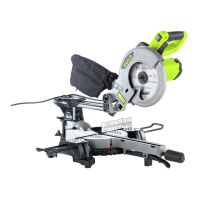
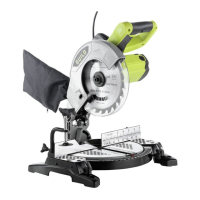
1200W Compound Mitre Saw
Instruction Manual
Important - Please read these instructions fully before operating or maintaining your Guild compound mitre saw
These instructions contain important information that will help you get the best from your guild
compound mitre saw, ensuring it remains safe to operate.
If you need help or have damaged or missing parts, call the Customer Helpline on 0333 3201989
After Sales Support
BMS210G
UK/Ireland 0333 3201989
Help@guildpowertools.co.uk
Question and Answer IconNeed help?

Do you have a question about the Guild BMS210G and is the answer not in the manual?

Overview

The GUILD 1200W Compound Mitre Saw (model BMS210G) is a stationary electric power tool designed for making straight lengthways and crossways cuts in wood. It is capable of horizontal mitre angles from -45° to +45° and vertical bevel angles from 0° to +45°. This tool is intended for domestic use only.

Important Safety Information:

Before operating or maintaining the saw, it is crucial to read the instruction manual thoroughly. The manual highlights several warning symbols:
  • General Warning: Indicates potential hazards.
  • Read Instruction Manual: Emphasizes the need to read the manual to reduce the risk of injury.
  • Wear Ear Protection: Advises the use of hearing protection to prevent noise-induced hearing loss.
  • Wear Eye Protection: Recommends wearing safety glasses to protect eyes.
  • Wear Dust Mask: Suggests using a dust mask when operations create dust to reduce inhalation of harmful dust.
  • Double Insulation: Indicates that the tool has double insulation for electrical safety.
  • Recycle Waste Electrical Products: Reminds users to dispose of electrical products responsibly by recycling them where facilities exist.

General Power Tool Safety Warnings:

  • Work Area: Keep the work area clear and well-lit. Do not use tools in damp or wet locations or in the presence of flammable liquids or gases.
  • Electrical Safety: Guard against electric shock by avoiding body contact with earthed or grounded surfaces.
  • Keep Others Away: Do not allow persons, especially children, not involved in the work to touch the tool or extension cord.
  • Store Idle Tools: Store tools in a dry, locked-up place, out of reach of children when not in use.
  • Do Not Force Tool: Use the right tool for the job; it will perform better and safer at its intended rate. Do not use small tools for heavy-duty tasks or for purposes not intended (e.g., cutting tree limbs with a circular saw).
  • Dress Properly: Avoid loose clothing or jewelry that can get caught in moving parts. Non-skid footwear and protective hair covering are recommended.
  • Use Protective Equipment: Always use safety glasses and a face or dust mask if dust is generated.
  • Dust Extraction: Connect and properly use dust extraction and collecting equipment if provided.
  • Cord Care: Do not abuse the cord; keep it away from heat, oil, and sharp edges. Never yank the cord to disconnect it.
  • Secure Work: Use clamps or a vice to hold the work whenever possible, as it is safer than using your hand.
  • Do Not Overreach: Maintain proper footing and balance at all times.
  • Maintain Tools: Keep cutting tools sharp and clean. Follow lubrication and accessory changing instructions. Inspect tool cords and extension cords regularly for damage and have them repaired by an authorized service facility. Keep handles dry, clean, and free from oil and grease.
  • Disconnect Tools: Disconnect tools from the power supply when not in use, before servicing, or when changing accessories.
  • Remove Adjusting Keys/Wrenches: Always check that keys and adjusting wrenches are removed from the tool before turning it on.
  • Avoid Unintentional Starting: Ensure the switch is in the "off" position when plugging in.
  • Outdoor Use: Use only extension cords intended and marked for outdoor use when operating the tool outdoors.
  • Stay Alert: Pay attention to what you are doing, use common sense, and do not operate the tool when tired.
  • Check Damaged Parts: Before further use, check for proper operation, alignment of moving parts, binding, breakage, mounting, and any other conditions that may affect its operation. Have damaged guards or parts repaired or replaced by an authorized service center. Do not use the tool if the switch does not turn it on and off.
  • Accessories: Only use accessories or attachments recommended in the instruction manual to avoid personal injury.
  • Qualified Repairs: Repairs should only be carried out by qualified persons using original spare parts.
  • Supply Cord Replacement: If the supply cord is damaged, it must be replaced by the manufacturer or its agent to avoid a safety hazard.
  • Water Supply (if applicable): Keep water clear of electrical parts and away from persons in the working area.

Mitre Saw Specific Safety Instructions:

  • Do not use damaged or deformed saw blades.
  • Replace the table insert when worn.
  • Use only saw blades recommended by the manufacturer conforming to EN 847-1.
  • Do not use saw blades manufactured from high-speed steel.
  • Wear suitable personal protective equipment, including hearing protection, eye protection, and respiratory protection.
  • Wear gloves for handling saw blades and rough material.
  • Connect the saw to a dust collecting device when sawing wood.
  • Select the correct saw blade for the material to be cut.
  • Do not cut materials other than those recommended by the manufacturer.
  • Follow lifting and transportation information, including warnings not to use guards for this purpose.
  • Do not use the saw without guards in position, in good working order, and properly maintained.
  • Ensure the arm is securely fixed when bevelling.
  • Keep the floor area around the machine level, well-maintained, and free of loose materials.
  • Provide adequate general or localized lighting.
  • Ensure the operator is adequately trained in the use, adjustment, and operation of the machine.
  • Use correctly sharpened saw blades and observe the maximum speed marked on the blade.
  • Ensure any spacers and spindle rings used are suitable as stated by the manufacturer.
  • If fitted with a laser, no exchange with a different type of laser is permitted. Repairs should only be carried out by the laser manufacturer or an authorized agent.
  • Follow blade replacement procedures correctly.
  • Refrain from removing cut-offs or other parts of the workpiece from the cutting area while the machine is running and the saw head is not in the rest position.
  • Always clamp workpieces to the saw table.
  • Ensure the machine is stable before each cut; fix it to a workbench if needed.
  • Support long workpieces with appropriate additional supports if needed.
  • Replace the table insert when worn.

In The Box (Parts):

  1. Handle
  2. Safety release lever
  3. Carbon brush cap
  4. Retractable safety guard
  5. Fence
  6. Rotary table
  7. Rotary table locking knob
  8. Rotary table slot
  9. Rotary table mitre angle scale
  10. Mounting hole
  11. Work clamp securing knob
  12. Work clamp
  13. Dust bag
  14. Upper blade guard
  15. Transportation handle
  16. Dust extraction port
  17. Support stand
  18. Trigger switch
  19. Bevel lock lever
  20. Bevel scale
  21. Spindle lock

Accessories:

  • Work clamp (1pc)
  • Dust bag (1pc)
  • Wrench (1pc)

Assembly Instructions:

  • Important: Always assemble all parts before connecting the saw to the power supply. The saw should never be connected to power when assembling, adjusting, installing, or removing blades.
  • Dust Extraction Port (16): Clip the dust bag over the extraction port on the upper blade guard. To empty, remove the bag, unzip the fastener, and empty when it's approximately 2/3 full for optimal dust collection.
  • Support Stand (17): Pull the support stand to its extreme out position and keep it there during use.
  • Work Clamp: Can be fitted on either side of the saw and is adjustable. Do not operate the saw without clamping the workpiece. Ensure securing screws are tightened.
  • Mounting Holes (10): The saw can be fixed to a firm, level surface using 4 mounting bolts (not supplied). Mark the mounting locations, drill holes, align the saw, and install bolts, washers, and hex nuts.

Operating Instructions:

  • Releasing the Saw Head: When stored or transported, the saw head is locked down. To release, apply downward pressure, pull out the lock pin (a), and the head will gently raise to the upper position.
  • Starting the Saw: Press the trigger switch (18). Allow the motor to reach full speed. Unlock the blade guard by operating the safety release lever (2) with your thumb.
  • Chop Cut: Used for narrow pieces. Tighten the slide rod lock screw and lower the head assembly to cut.
    1. Connect to power outlet, ensuring the mains cable is clear of the blade and base plate.
    2. Position and firmly clamp the material on the rotary table.
    3. Ensure the rotary table locking knob (7) and bevel lock lever (19) are tightened.
    4. Press the trigger switch (18) and allow the blade to reach full speed.
    5. While holding the trigger, press the safety release lever (2) with your thumb.
    6. Push the saw head down smoothly by the handle, applying gentle pressure on the downward stroke.
  • Cross Pull Cut: A mitre cut is made at 0° bevel and any mitre angle from 45° left to 45° right. It can also be made as a chop cut.
  • Mitre Cut: The saw is equipped with mitre detents for common angles (Left: 45°, 30°, 22.5°, 15°, 0°; Right: 0°, 15°, 22.5°, 30°, 45°).
    • To adjust the mitre angle, loosen the rotary table locking knob (7) counter-clockwise, hold the handle (1) firmly, rotate the saw head to the desired position, then tighten the knob clockwise.
    • For bevel cuts (0° to 45° left), loosen the bevel lock lever (19), tilt the saw head to the left until the desired angle is reached on the bevel scale (20), then re-tighten the bevel lock lever.

Maintenance:

  • Warning: Always remove the plug from the socket before any adjustment, servicing, or maintenance.
  • Ensure all keys, wrenches, screws, bolts, and other fittings are securely tightened after adjustments.
  • No user-serviceable parts in the power tool. Do not use water or chemical cleaners; wipe clean with a dry cloth.
  • Store the power tool in a dry place. Keep motor ventilation slots clean and all working controls free of dust. Sparks through ventilation slots are normal.
  • If the supply cord is damaged, it must be replaced by a specially prepared cord from the service.
  • Precision Setting of Angles:
    • Check the 0° setting of the rotary table and the 90° perpendicular setting of the tilt (ensure power is disconnected).
    • To confirm the 0° rotary table setting, set the table at 0° and tighten the locking knob. Check the angle between the straight guide and the blade with a try square (b). If adjustment is needed, loosen the locking screws for the straight guide, align the fence against the try square, and re-tighten the screws.
    • Similarly, check the blade angle to the face of the rotary table at 90°. If necessary, loosen the bevel lock (19) and adjust the 0° bevel adjustment screw (c) to align the blade with the square. Loosen the head screw (c) holding the pointer of the bevel scale (20) and adjust the pointer position to accurately indicate zero. Re-tighten the screw and the bevel lock (20).
  • Changing the Saw Blade:
    • Disconnect from power supply.
    • Remove the screw with a screwdriver.
    • Press the blade spindle lock (21) and rotate the blade until it locks.
    • Loosen and remove the blade securing bolt and the outer flange with the socket wrench in a clockwise direction (note: blade securing bolt has a left-hand thread).
    • Remove the blade (use a stout glove). Clean any saw dust and debris from the arbor and securing flanges.
    • To refit, follow the procedure in reverse order.
    • Caution: Always install the blade with the teeth and the arrow printed on the side of the blade pointing down at the front of the saw. The direction of blade rotation is also stamped with an arrow on the upper blade guard.
  • Replacing the Carbon Brushes:
    • Check regularly. Replace in pairs if worn down to about 4mm (new set not supplied).
    • Turn the cap anti-clockwise with a slotted screwdriver until the carbon brush is released. Replace the brush, ensuring it locates well and is secured within the brush retainer.
  • Moving the Saw:
    • When transporting, ensure the saw head is locked in the lower position.
    • The rotary table locking knob, bevel lock lever, and slide rod securing knob must all be securely tightened.
    • Use the transportation handle (15) to lift the saw. Do not lift by the switch handle.

Technical Specifications:

  • Rated voltage: 230-240V~50Hz
  • Rated Input power: 1200W
  • No load speed: 4500/min
  • Bevel capacity: 0-45°
  • Mitre capacity: 0-45° L&R
  • Blade size: 210 mm
  • Protection class: II (Double insulated)
  • Machine weight: 6.26 kg

Cutting Capacity:

  • Max cutting mitre/bevel 0°/90°: 120*55mm
  • Max cutting mitre/bevel 45°/90°: 120*32mm
  • Max cutting mitre/bevel 0°/45°: 80*55mm

Noise Information:

  • A weighted sound pressure (LpA): 91dB(A)
  • A weighted sound power (LwA): 104dB(A)
  • Uncertainty (KA & KwA): 3.0dB(A)
  • Wear ear protection when sound pressure is over: 80dB(A)

Environmental Protection:

  • Waste electrical products must not be disposed of with household waste. Recycle where facilities exist and check with local authorities or retailers for advice.

Guarantee:

  • This product is for DOMESTIC USE ONLY and is guaranteed against manufacturing defects for 24 months.
  • The guarantee does not cover misuse, abuse, use in contravention of instructions, unauthorized modifications, alterations, or commercial use.
  • In case of an inherent defect within the guarantee period, return the item to the store for replacement. Statutory rights remain unaffected.

Declaration of Conformity:

  • The Guild 1200W Compound Mitre Saw (BMS210G) complies with Machinery Directive 2006/42/EC, Electromagnetic Compatibility Directive 2004/108/EC (before 2016/04/20) and 2014/30/EC (since 2016/04/20), RoHS Directive 2011/65/EU, and harmonized EU standards EN 61029-1:2009/A11:2010, EN 61029-2-9:2012/A11:2013, EN 55014-1:2006 + A1:2009 + A2:2011, EN 55014-2: 1997 + A1:2001 + A2:2008, EN 61000-3-2: 2014, EN 61000-3-3: 2013.
  • Declaration made by Argos Ltd, 489/499 Avebury Boulevard, Milton Keynes, MK9 2NW.
  • Issued: 20/10/2015, signed by the Category Technical Manager.

Plug Replacement (UK & Ireland Only):

  • Important: If replacing the fitted plug, follow these instructions.
  • Wiring Code: Blue - Neutral (N), Brown - Live (L).
  • Connect the blue wire to the terminal marked N. Connect the brown wire to the terminal marked L.
  • Warning: Never connect live or neutral wires to the earth terminal of the plug. Only fit an approved BS1363/A plug and the correct rated fuse (13 Amp fuse approved to BS1362).
  • Note: If a moulded plug is removed, destroy it to prevent accidental engagement into a socket.
  • Ensure the outer sleeve is firmly clamped by the cable grip.

Guild BMS210G Specifications

General IconGeneral
BrandGuild
ModelBMS210G
CategorySaw
LanguageEnglish

Related product manuals