TIRES
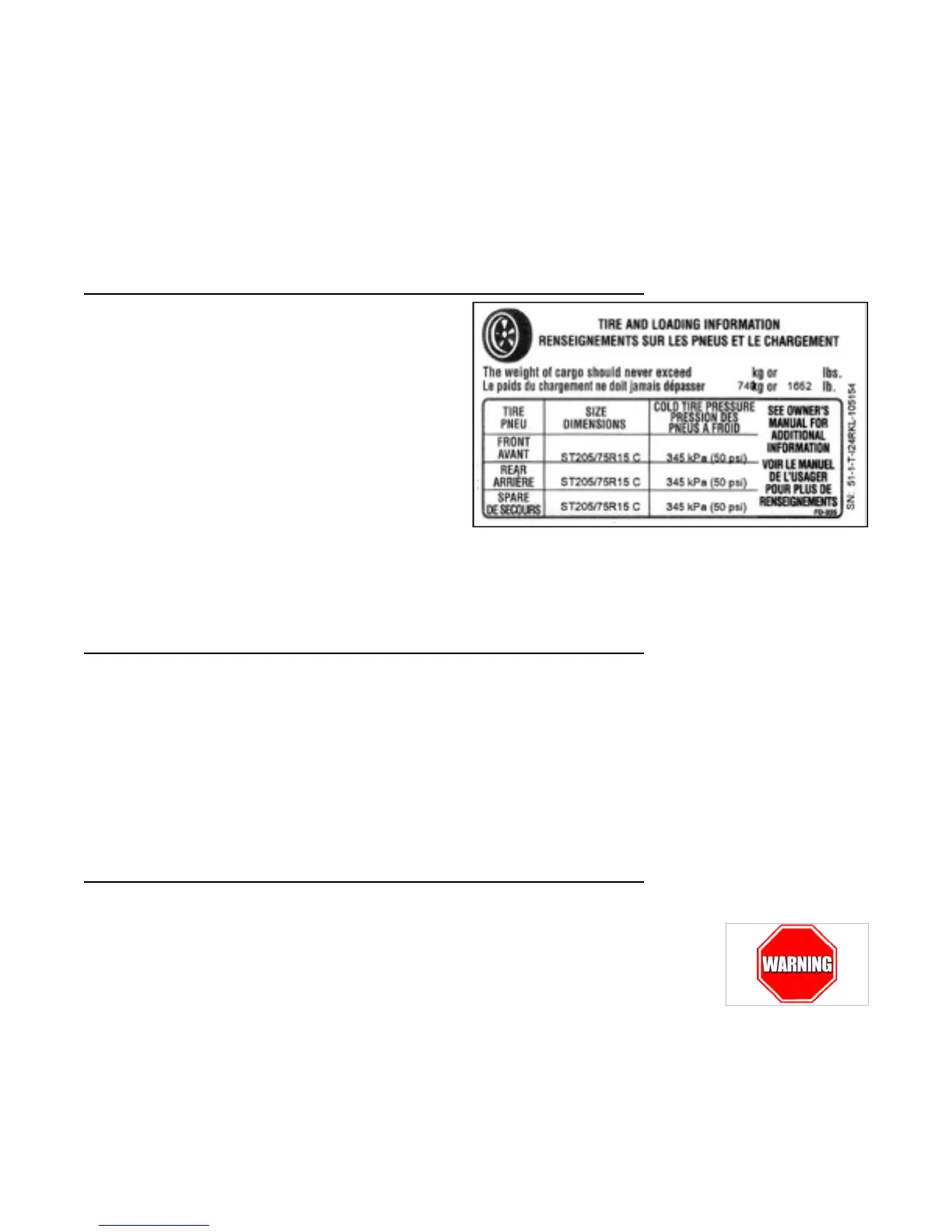
The tires installed on your vehicle have been pre-selected as the
proper size and weight by the chassis manufacturer for the type
and weight of the travel trailer built. The Tire and Loading
Information label located on the side of the trailer will show the
proper tire size for your coach and the recommended air pressures.
When replacing tires, make sure that those guidelines are followed.
Tire Markings
Sample tire size: ST205/75R15 C
• ST reflects the “Trailer” usage. Trailer
tires should be used on trailers and
never on passenger cars or trucks.
• 205 indicates the “contact patch” width -
The amount of tire surface that actually
comes into contact with the pavement.
In this sample, the width is 205 mm wide.
• 75 indicates the tire height to width ratio
• R identifies the construction type of the
tire: R - Radial, B - Bias belted, D -
Diagonal Bias.
• 15 is the rim size (measured in inches).
• C is the load range.
Tire Load Ratings
Load ratings for tires go up as the corresponding letter changes.
For example, load range “E” tires have a heavier rating than load
range “D” tires. Load capabilities of tires change as the psi (air
pressure) is lowered. As much as 220 lbs. of load carrying capacity
is lost per tire for each 5 psi below the recommended inflation. This
decreased load amount varies from one tire manufacturer to the
next, therefore it is recommended that you contact your tire
manufacturer for further information in this regard.
Tire Air Pressure
WARNING: PROPER TIRE AIR PRESSURE IS CRITICAL FOR
SAFE OPERATION OF THIS VEHICLE! IT IS REQUIRED THAT
THE TIRE AIR PRESSURE IS CHECKED PRIOR TO EACH USE
OF THIS VEHICLE.
When checking air pressures, if the tire has been driven more than
6 miles, you can add 4 to 6 psi to the rated maximum “cold” inflation
recommendations. For example, if the tire has a maximum rating of
90 psi cold, you can inflate the tire to 96 psi after being driven on.
Under inflation generates excessive heat (a tire’s worst enemy!),
increases tread wear in the shoulder area, and reduces your
vehicle’s fuel economy."



 To Next Page