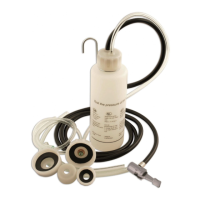
Gunson Eezibleed 5
Important Notes:
– please read before continuing
Bleeding the brakes by pumping the brake pedal repeatedly has one big disadvantage: the
piston inside the master cylinder can travel past the slight lip on the bore that has formed
with normal usage, possibly damaging the seal. This does not happen with a pressure
system such as the Gunson Eezibleed as the master cylinder piston will not be moving.
If new components have been fitted, or the fluid is contaminated, the system must be
bled. Manufacturers recommend changing brake fluid every two years.
• Choose the correct supplied reservoir cap adaptor D, E F, or G (refer to Figure 1); the
kit is supplied with a selection of reservoir caps which will fit most vehicles with screw-
cap type fluid reservoirs. If necessary, the Multi-purpose cap can be used.
• Before using this device the system should be pressure tested at a slightly higher
pressure than used for bleeding - without fluid in it.
• It is recommended that no more than 20 psi is used for bleeding (10psi for older
systems).
• The pressure vessel cap should not be over tightened. Make sure the seal is flat in the
cap before use. Screw the cap on until contact with the seal is felt then no more than
1/8” turn more.
• Fresh fluid of the correct grade should be used.
• Clean off any dirt or corrosion around the bleed nipples and it is a good idea to squirt
some penetrating oil onto the threads of the nipples. Then connect the bleed tube to
the first nipple to be bled.
• You will need a container to catch the fluid drained from the system. A wide based jar
is ideal.
• Dirt, cleaning solvents, mineral oils or water will damage or impair the performance of
your brakes or clutch. Contact with these substances should be avoided.
• Brake fluid is harmful to paintwork. To avoid damage ensure the pressure vessel
and container catching the old fluid is placed safely and vertically and away from
paintwork. Also that caps are screwed on sufficiently (without over tightening) to seal
correctly. Clean off any spills immediately with clean water.
• It is recommended to adjust the brake shoes before bleeding. Consult your handbook
or workshop manual for manufacturer’s recommendations.
Additional Notes:
NOTE: The pressure vessel should hold enough fluid to complete the bleeding operation.
If the level in the pressure vessel approaches the minimum level line, disconnect from the
tyre and refill, then proceed again.
When all the brake lines have been bled in this way, disconnect the airline from the spare
tyre BEFORE removing the cap from the master reservoir. Remember to replace the
original cap back on to the reservoir.
Finally replace the master reservoir cap after making sure that the air hole is clear.


 To Next Page
 Loading...