The SUN Series Grid Tie Power Inverter, available in G2 (Generation 2) models, is a technologically advanced solution for utility-interactive solar power systems. This integrated system is designed to maximize energy harvest, enhance system reliability, and simplify both the design and management of solar installations. It's particularly well-suited for small-scale grid-tie applications, allowing users to efficiently convert solar energy into AC power and feed it into the home's utility grid.
Function Description:
The core function of the SUN Series Grid Tie Power Inverter is to convert the DC power generated by solar panels into AC power that is synchronized with the home's utility grid. This process involves monitoring the voltage, frequency, and phase of the home utility grid to produce a pure sine wave AC output that matches these parameters. The inverter's output voltage is designed to be slightly higher than the grid's, and a current-controlled Pulse Width Modulation (PWM) system regulates the power output to the grid.
When sunlight strikes the PV panel, it generates DC voltage, which the grid tie inverter then transforms into AC voltage. This AC power is then fed into the home's electrical system. If the total power consumed by appliances in the house is greater than the power produced by the inverters, the inverter's output will be consumed within the house, effectively slowing down the power meter. Conversely, if the inverter's output power exceeds the total power consumed by appliances, the surplus power will be fed back into the utility grid. The inverter also features a "limit function" that allows users to prevent the system from feeding excess power back to the grid if desired.
Usage Features:
The SUN Series Grid Tie Power Inverter offers several key usage features that contribute to its efficiency and user-friendliness:
- Low Cost and Easy Installation: The system is designed for quick and easy installation, making it suitable for various building surfaces that receive sunlight. It requires minimal maintenance, contributing to overall cost-effectiveness.
- Free Combination (Stackable System): Multiple inverters can be connected in parallel to create larger capacity systems. This "stackable system" approach allows users to scale their solar power system according to their needs, from small setups to multi-kilowatt installations. For instance, a 2KW system can be achieved by stacking two 1KW grid tie systems. This flexibility extends to mixing different capacity grid tie power systems to achieve a desired total capacity.
- Independent MPPT Functionality: Unlike traditional solar grid tie systems where multiple panels are connected in series and the Maximum Power Point Tracking (MPPT) is based on the entire array, each SUN Series Grid Tie Inverter in an SGPV system has its own MPPT function. This means that if the performance of one solar panel degrades (due to leaves, bird droppings, dust, or shadow), it only affects the output of that specific inverter, not the entire solar power system. This independent optimization ensures that every panel operates at its maximum power point, significantly improving the overall efficiency of the system.
- Low Power Consumption: The inverters utilize digital ICs and low-power MCUs, resulting in low power consumption. Even with an increased number of grid tie inverters in a larger system, the overall power consumption of the entire system remains low.
- Three-Phase Utility Grid Integration: For larger capacity grid tie power systems, the inverters can be installed across three phases of the utility grid. This allows for balancing the fed power and prevents unbalance in the three-phase utility grid. For example, a 3KW system can be separated into three 1KW units, with each unit connected to a different phase.
- Comprehensive Display and Monitoring: The inverter features an LCD display that provides a wealth of information, including real-time power output, PV input voltage, internal temperature, date, and time. It also shows the real-time grid waveform, grid voltage, and frequency. The "Energy Menu" displays daily and total power generation curves, allowing users to track their system's performance over time.
- Internal and External Limiter Functions: The inverter integrates both internal and external limiter functions. When the internal limiter mode is selected, the inverter's output power is determined by the load power, preventing excess power from being fed to the public grid. For the external limiter mode, an external limiter module is required to work with the inverter, offering more advanced control options.
- Clock and Date Setting: Users can easily set the clock and date on the inverter's display, with settings saved before exiting.
Maintenance Features:
While the SUN Series Grid Tie Inverter is designed for reliability, certain aspects relate to its maintenance and troubleshooting:
- Self-Diagnostic and Error Reporting: The inverter's LCD displays status information and reports errors in red letters, making it easy for users to identify potential issues. Common error messages include "Overtemperature," "Input Voltage Too Low," "Input Voltage Too High," "Grid Error," "Dumping Load Shorted," and "Starting Voltage Too Low." These messages provide clear indications of the problem, guiding users toward appropriate troubleshooting steps.
- Over Temperature Protection: The inverter is designed to stop working if its internal temperature reaches 75°C, protecting the device from damage due to overheating. Proper installation in a well-ventilated area is crucial to prevent this.
- Over Current Protection: The inverter includes over current protection to safeguard against excessive current.
- Reverse Polarity Protection: This feature protects the inverter from damage if the DC input wires are connected with incorrect polarity.
- Anti-Island Protection: This critical safety feature ensures that the inverter disconnects from the grid if the utility grid loses power, preventing the inverter from feeding power into a de-energized grid, which could be hazardous for utility workers.
- Non-User Serviceable Parts: It is important to note that the Sunshine Grid Tie Inverter contains no user-serviceable parts. Any attempts to repair or open the inverter will void the warranty. In case of failure, users are instructed to contact customer service to obtain an RMA number and initiate the replacement process. This emphasizes the importance of professional support for maintenance and repairs.
- Installation Guidelines for Longevity: The manual provides detailed installation procedures, including selecting appropriate solar panels, cables, and connectors, as well as proper grounding. Adhering to these guidelines ensures optimal system performance and longevity, minimizing the need for frequent maintenance. For instance, ensuring no shadows fall on solar panels and using strong brackets for fixation are crucial for consistent power production and safety.
- Safe Disconnection Procedures: The manual explicitly warns against disconnecting DC wire connectors under load and advises covering PV modules with opaque material before disconnection to prevent sparking. These safety protocols are essential for protecting both the user and the equipment during any maintenance or modification of the PV array.

 Need help?
 General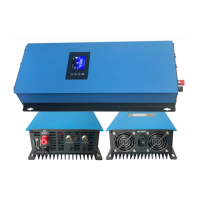

 To Next Page
