EasyManua.ls Logo

HART BPH001 - User Manual

HART BPH001
8 pages
Print Icon
To Next Page IconTo Next Page
Loading...
1 - English
Always remove battery pack from your tool when you
are assembling parts, making adjustments, cleaning,
or when not in use. Removing battery pack will prevent
accidental starting that could cause serious personal
injury.
Always remove battery pack before storing the device.
When battery becomes fully charged, unplug the
charger from the power supply and remove the battery
pack from the charger.
Always wear eye protection with side shields marked
to comply with ANSI Z87.1. Failure to do so could result
in objects being thrown into your eyes and other possible
serious injuries.
Keep battery pack dry, clean, and free from oil and
grease. Always use a clean cloth when cleaning. Never
use brake fluids, gasoline, petroleum-based products, or
any solvents to clean battery pack.
Do not use a battery pack that is damaged or modified.
Damaged or modified batteries may exhibit unpredictable
behavior resulting in fire, explosion or risk of injury.
Do not modify or attempt to repair a battery pack that
has been damaged.
Do not expose a battery pack or appliance to fire or
excessive temperature. Exposure to fire or temperature
above 265°F (130°C) may cause explosion.
Have servicing performed by a qualified repair person
using only identical replacement parts. This will ensure
that the safety of the product is maintained.
Follow all charging instructions and do not charge the
battery pack or appliance outside of the temperature
range specified in the instructions. Charging improperly
or at temperatures outside of the specified range may
damage the battery and increase the risk of fire.
Save these instructions. Refer to them frequently and
use them to instruct others who may use this tool. If you
loan someone this tool, loan them these instructions also.
OPERATION
LITHIUM-ION BATTERY PACKS
Lithium-ion batteries deliver fade free power for their entire
run time. Lithium-ion tools will not gradually lose power
due to decreasing battery charge. Instead, power from the
battery pack will drop from full to zero once the full charge
has been drained from the battery. Once this happens,
recharging of the battery is required. It is not necessary to
drain the battery pack completely before recharging.
BATTERY PROTECTION FEATURES
Lithium-ion battery packs are designed with features that
protect the lithium-ion cells and maximize battery life.
If the tool stops during use, release the trigger to reset and
resume operation. If the tool still does not work, the battery
needs to be recharged.
SAFETY RULES
WARNING!
READ AND UNDERSTAND ALL INSTRUCTIONS.
Failure to follow all instructions listed below, may result
in electric shock, fire and/or serious personal injury.
Battery tools do not have to be plugged into an
electrical outlet; therefore, they are always in operating
condition. Be aware of possible hazards when not
using your battery tool or when changing accessories.
Following this rule will reduce the risk of electric shock,
fire, or serious personal injury.
Do not place battery tools or their batteries near fire
or heat. This will reduce the risk of explosion and possibly
injury.
Do not crush, drop or damage battery pack. Do not
use a battery pack or charger that has been dropped
or received a sharp blow. A damaged battery is subject
to explosion. Properly dispose of a dropped or damaged
battery immediately.
Batteries can explode in the presence of a source
of ignition, such as a pilot light. To reduce the risk of
serious personal injury, never use any cordless product
in the presence of open flame. An exploded battery can
propel debris and chemicals. If exposed, flush with water
immediately.
Charge only with HART
20V battery chargers. Use
of other chargers may result in personal injury, fire,
or damage.
Do not charge in an area of extreme heat or cold. It
will work best at normal room temperature. To reduce
the risk of serious personal injury, do not store outside or
in vehicles.
Under extreme usage or temperature conditions,
battery leakage may occur. If liquid comes in contact
with your skin, wash immediately with soap and water.
If liquid gets into your eyes, flush them with clean water
for at least 10 minutes, then seek immediate medical
attention. Following this rule will reduce the risk of serious
personal injury.
When battery pack is not in use, keep it away from
other metal objects like: paper clips, coins, keys, nails,
screws, or other small metal objects that can make a
connection from one terminal to another. Shorting the
battery terminals together may cause sparks, burns, or a
fire.
To register your HART
product, please visit:
https://HARTtools.com/register
Use this battery pack for HART
20 V cordless products
only. Refer to the Operator’s Manual provided with product.
Always mention the model number above when communi-
cating with us regarding this battery pack.
BPH001/BPH002/BPH004 20V
1.5Ah/2.0Ah/1.3Ah
Li-ion Battery Pack
Question and Answer IconNeed help?

Do you have a question about the HART BPH001 and is the answer not in the manual?

Overview

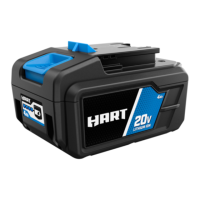
The HART BPH001/BPH002/BPH004 20V Li-ion Battery Pack is designed for use with HART 20V cordless products. It is available in 1.5Ah, 2.0Ah, and 1.3Ah capacities. Users are encouraged to register their product at https://HARTtools.com/register and to refer to the Operator's Manual provided with their product for specific instructions. When communicating about the battery pack, always mention the model number.

Safety Rules

WARNING! Users must read and understand all instructions to prevent electric shock, fire, and/or serious personal injury.

  • Battery Tool Operation: Battery tools are always in operating condition as they do not need to be plugged into an electrical outlet. Users should be aware of potential hazards when not using the tool or changing accessories.
  • Fire and Heat: Do not place battery tools or their batteries near fire or heat, as this can lead to explosion and injury.
  • Physical Damage: Do not crush, drop, or damage the battery pack. Do not use a battery pack or charger that has been dropped or received a sharp blow. A damaged battery is prone to explosion and should be disposed of immediately.
  • Ignition Sources: Batteries can explode near ignition sources like a pilot light. To reduce injury risk, never use cordless products near open flames. An exploded battery can propel debris and chemicals; flush exposed areas with water immediately.
  • Charging: Only charge with HART 20V battery chargers. Using other chargers may cause personal injury, fire, or damage.
  • Temperature Extremes: Do not charge in extreme heat or cold. The battery performs best at normal room temperature. Do not store outdoors or in vehicles.
  • Battery Leakage: Under extreme usage or temperature conditions, battery leakage may occur. If liquid contacts skin, wash immediately with soap and water. If liquid gets into eyes, flush with clean water for at least 10 minutes and seek medical attention.
  • Storage: When not in use, keep the battery pack away from metal objects (paper clips, coins, keys, nails, screws, etc.) that could short-circuit the terminals, causing sparks, burns, or fire.
  • Tool Assembly/Maintenance: Always remove the battery pack from the tool when assembling parts, making adjustments, cleaning, or when not in use to prevent accidental starting.
  • Storage Preparation: Always remove the battery pack before storing the device.
  • Charging Completion: Once fully charged, unplug the charger from the power supply and remove the battery pack.
  • Eye Protection: Always wear eye protection with side shields marked to comply with ANSI Z87.1 to prevent serious eye injuries from thrown objects.
  • Cleaning: Keep the battery pack dry, clean, and free from oil and grease. Use a clean cloth for cleaning; never use brake fluids, gasoline, petroleum-based products, or solvents.
  • Damaged/Modified Batteries: Do not use a damaged or modified battery pack, as it may exhibit unpredictable behavior leading to fire, explosion, or injury. Do not attempt to modify or repair a damaged battery pack.
  • Temperature Exposure: Do not expose the battery pack or appliance to fire or excessive temperatures (above 265°F / 130°C) as this may cause an explosion.
  • Servicing: Have servicing performed by a qualified repair person using identical replacement parts to maintain product safety.
  • Charging Instructions: Follow all charging instructions and do not charge the battery pack or appliance outside the specified temperature range to prevent damage and fire risk.
  • Instruction Retention: Save these instructions for frequent reference and to instruct others who may use the tool.

Operation

Lithium-Ion Battery Packs Lithium-ion batteries provide fade-free power throughout their entire run time. Unlike other battery types, lithium-ion tools do not gradually lose power as the charge decreases. Instead, power drops from full to zero once the battery is drained. Recharging is then required. It is not necessary to completely drain the battery pack before recharging.

Battery Protection Features HART lithium-ion battery packs are designed with features to protect the cells and maximize battery life. If the tool stops during use, release the trigger to reset and resume operation. If it still doesn't work, the battery needs recharging.

Cold Weather Operation The lithium-ion battery pack can be used in temperatures down to 14°F (-10°C). To use in cold conditions, place the battery pack on a tool and use it in a light-duty application. After about a minute, the pack will warm up and begin operating normally.

Charging the Battery Pack Battery packs are shipped in a low charge condition and should be charged prior to first use. If the charger does not charge the battery pack under normal circumstances, return both the battery pack and charger to an Authorized Service Center for electrical check.

  • Charge only with the recommended HART 20V battery chargers.
  • Refer to the charger operator's manual for specific charging instructions.

Charging a Hot Battery Pack If the battery pack becomes hot from continuous use, it can be placed directly onto the charger port. However, charging will not begin until the battery temperature cools to within an acceptable range. The charger may indicate the pack is not ready to charge. Once the battery cools, the charger will automatically begin charging.

Charging a Cold Battery Pack A cold battery pack can also be placed directly onto the charger port. Charging will not begin until the battery temperature warms to within an acceptable range. The charger may indicate the pack is not ready to charge. Once the battery warms, the charger will automatically begin charging.

Maintenance

Batteries These batteries are designed for maximum trouble-free life but will eventually wear out. Do not disassemble the battery pack or attempt to replace the batteries. Handling these batteries, especially while wearing rings and jewelry, can result in serious burns.

Battery Pack Storage (longer than 30 days):

  • Store the battery pack where the temperature is below 80°F (27°C) and away from moisture.
  • Store battery packs in a 30%-50% charged condition.
  • Every six months of storage, charge the pack as normal.

Battery Pack Removal and Preparation for Recycling To preserve natural resources, recycle or dispose of batteries properly. This product contains lithium-ion batteries. Local, state, or federal laws may prohibit disposal of lithium-ion batteries in ordinary trash. Consult your local waste authority for recycling/disposal options.

WARNING! Upon removal, cover the battery pack's terminals with heavy-duty adhesive tape. Do not attempt to destroy or disassemble the battery pack or remove any of its components. Batteries must be recycled or disposed of properly. Never touch both terminals with metal objects and/or body parts as short circuits may result. Keep away from children. Failure to comply with these warnings could result in fire and/or serious injury.

Service/Replacement Parts

Customer Support/Technical Support/Authorized Service Center Locations Do not return this product to the store for missing parts or accessories. When calling for service, provide the model and serial number located on the product data plate. Model numbers may have additional letters at the end, which designate manufacturing information and should be provided when calling for service.

  • Register your product at https://HARTtools.com/register.
  • Warranty details are available at www.HARTtools.com.
  • Proof of purchase is required to validate the 3-year limited Warranty.
  • HART, the HART logo, and H logo are trademarks of Techtronic Cordless GP.

WARNING: Corrosive or Conductive Fluids Never immerse or expose the battery pack, tool, or charger to corrosive or conductive fluids, or allow these fluids to flow inside these items. Corrosive or conductive fluids (e.g., seawater, chlorine, industrial chemicals, bleach) can cause a short circuit in the battery pack. If exposed, do not use or charge the battery pack. Immediately perform the following steps:

  • Wear appropriate personal protective equipment, including eye protection and rubber gloves.
  • Place the exposed battery pack in a large bucket (e.g., 5-gallon) and fill with regular tap water. Do not place more than two packs in the bucket.
  • Locate the bucket outdoors in an area inaccessible to children and pets, and away from all buildings, garages/sheds, structures, vehicles, and combustible/flammable materials.
  • Leave the battery pack(s) in the bucket filled with tap water and call Customer Service at 1-800-776-5191 for additional instructions on proper disposal. Failure to follow these steps can result in smoke/fire, serious personal injury, and/or property damage.

HART BPH001 Specifications

General IconGeneral
BrandHART
ModelBPH001
CategoryBattery Pack
LanguageEnglish

Related product manuals