4
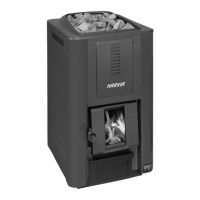
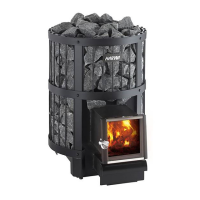
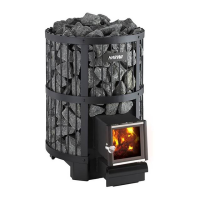
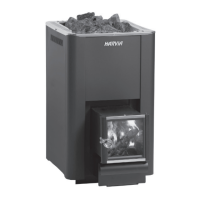
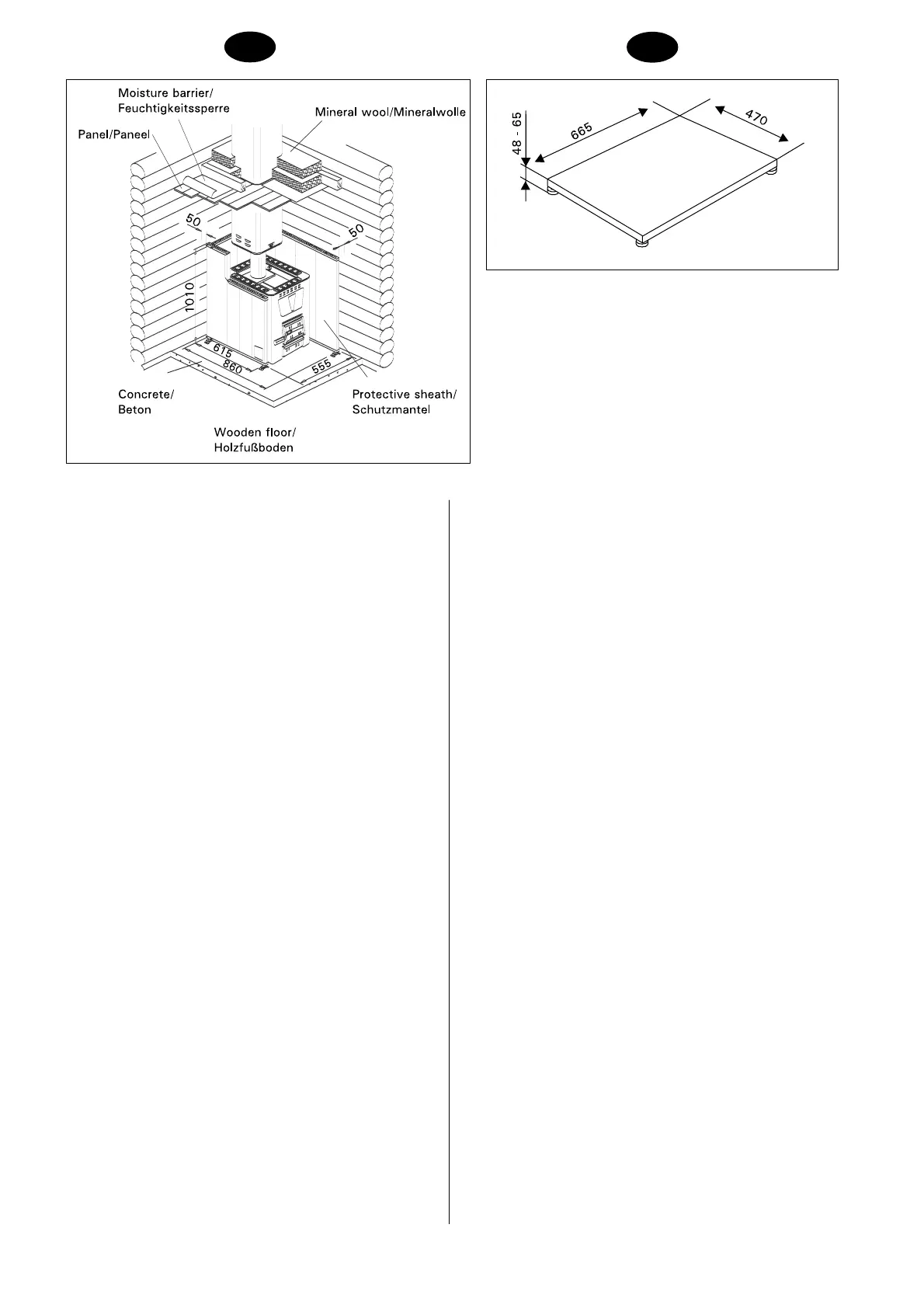
Figure 4. Protective bedding of the heating chamber
(additional equipment). Note! These instructions comply
with the safety distance requirements for combustible
floor material only if a protective sheath is used.
Abbildung 4. Schutzplatte für die Ofenstelle (Zubehör).
Achtung! Die Sicherheitsabstandsbestimmung wird nur
bei Verwendung zusammen mit einem Schutzmantel
erfüllt, wenn der Fußboden aus brennbarem Material
besteht!
Figure 3.
Abbildung 3.
EN
DE
Blackening of the sauna walls
Wooden material in a sauna, such as panels, blackens with
age. The blackening process is sped up by sunlight and the
heat from the stove. If the wall surfaces have been
processed with protective panel agents, the blackening of
the surface of the wall above the stove can be seen quite
quickly depending on the protective agent used.
The blackening is due to the fact that the protective agents
have less resistance to heat than unprocessed wood do.
This has been proven in practical tests. The micronic
mineral aggregate that crumbles from the stones on the
stove may blacken the wall surface near the stove.
When following the manufacturer’s approved guidelines
in the installation of the sauna stove, the stove will not heat
up enough to endanger the flammable material in the sauna
room. The maximum temperature allowed in the wall and
ceiling surfaces of the sauna room is +140 degrees
Celsius.
Sauna stoves equipped with CE signs meet all of the
regulations for sauna installations. Proper authorities
monitor that the regulations are being followed.
Protecting the floor
If the stove is installed on a floor made of combustible material
(wood, plastic or equivalent) a slab of concrete should be cast
to protect the floor from excessive heat. The slab should
extend, sideways, to the distance of about 300 mm and, in
front of the stove, to the distance of about 400 mm. If the
floor is made of wood, in order to keep it dry the slab should
be supported to keep it off the surface of the floor.
Instead of the slab of concrete, a protective bedding of
Harvia heating chamber that has the equivalent protective
properties can be used together with the protective sheath of
Harvia heating chamber (Figure 4). Ask your supplier for a
separate brochure.
If the stove is placed on a tiled floor, the poor thermal
resistance of the tile glue and grout may cause the tiles to
loosen. Hydro insulation materials used under tiles do not
tolerate the stove’s heat radiation very well and may push
through the tile seams. The best option for tiled floors is to
use Harvia’s protective bedding or similar heat radiation
protection keeping in mind the safety distance requirements
for combustible materials.
No special protection is required if the stove is placed on
a specially cast concrete platform with a minimum thickness
of 60 mm, provided that the platform also meets the
sideways safety distance requirements.
Please note! No electric devices or wires are allowed within
Verfärbung der Saunawände
Die Holzmaterialien in der Sauna, wie z.B. die
Holzverkleidungen, verfärben sich mit der Zeit dunkel.
Dieser Prozess wird durch das Sonnenlicht und die Hitze
des Saunaofens beschleunigt. Wurden die
Wandverkleidungen mit einem speziellen Schutzmittel
behandelt, kann die Verfärbung der Wand über dem Ofen je
nach verwendetem Schutzmittel relativ schnell beobachtet
werden. Diese Verfärbungen entstehen dadurch, dass die
Schutzmittel eine geringere Hitzebeständigkeit aufweisen
als unbehandeltes Holz. Dies hat sich in Praxistests
herausgestellt.Die Mikromineralstoffe, die sich von den
Steinen auf dem Ofen ablösen, können die Wandoberfläche
in der Nähe des Ofens dunkel verfärben.
Wenn Sie bei der Installation des Saunaofens die vom
Hersteller empfohlenen Richtlinien einhalten, erhitzt sich der
Saunaofen nur so weit, dass keine Gefahr für die brennbaren
Materialien der Saunakabine besteht. Die zulässige
Höchsttemperatur für die Wand- und Deckenoberflächen der
Saunakabine beträgt +140 Grad Celsius.
Saunaöfen, die über ein CE-Symbol verfügen, erfüllen alle
Bestimmungen für Saunaanlagen. Die entsprechenden Behörden
kontrollieren, ob diese Bestimmungen eingehalten werden.
Schutz des Fußbodens
Wird der Saunaofen auf einem Fußboden aus brennbarem
Material (Holz, Kunststoff oder ähnliches) installiert, muß als
Wärmeschutz eine mindestens 60 mm dicke Betonplatte
gegossen werden. Die Platte muß in Seitenrichtung auf einen
Abstand von mindestens 300 mm und nach vorn auf mindestens
400 mm hinausreichen. Die Bodenplatte sollte etwas über der
Fußbodenoberfläche abgestützt werden, damit das Holzmaterial
des Fußbodens trocken bleibt.
Die Betonplatte kann durch die Schutzplatte der Harvia-
Feuerstelle ersetzt werden, die gleichen vorgeschriebenen
Schutzvoraussetzungen, zusammen mit dem Schutzmantel der
Harvia-Feuerstelle, erfüllt (Abbildung 4). Fragen Sie Ihren Händler
nach der gesonderten Broschüre.
Wenn der Saunaofen auf einem gefliesten Boden montiert
wird, können sich die Fliesen aufgrund der schlechten
Hitzebeständigkeit des Fliesenleims und -mörtels von ihrem
Untergrund lösen. Auch Materialien zur Wasserabdichtung,
die unter den Fliesen zur Anwendung kommen, halten der
Wärmestrahlung des Saunaofens nicht stand und können
an den Fugen der Fliesen hervortreten. Am sichersten ist es
daher, auf gefliesten Fußböden z.B. eine Harvia
Schutzplatte für die Feuerstelle oder einen anderen
entsprechenden Wärmestrahlungsschutz zu verwenden,
unter Berücksichtigung der Bestimmungen über die
seitlichen Sicherheitsabstände zu brennbarem Material.


 To Next Page
 Loading...