operating lever, the clutch will start to slip. On
later models fitted with the verto type clutch, the
assembly is self-adjusting and the following
procedure will not be necessary.
1 To carry out the adjustment, first disconnect
the clutch operating lever return spring.
2 Pull the operating lever away from the
engine until all the free play is eliminated.
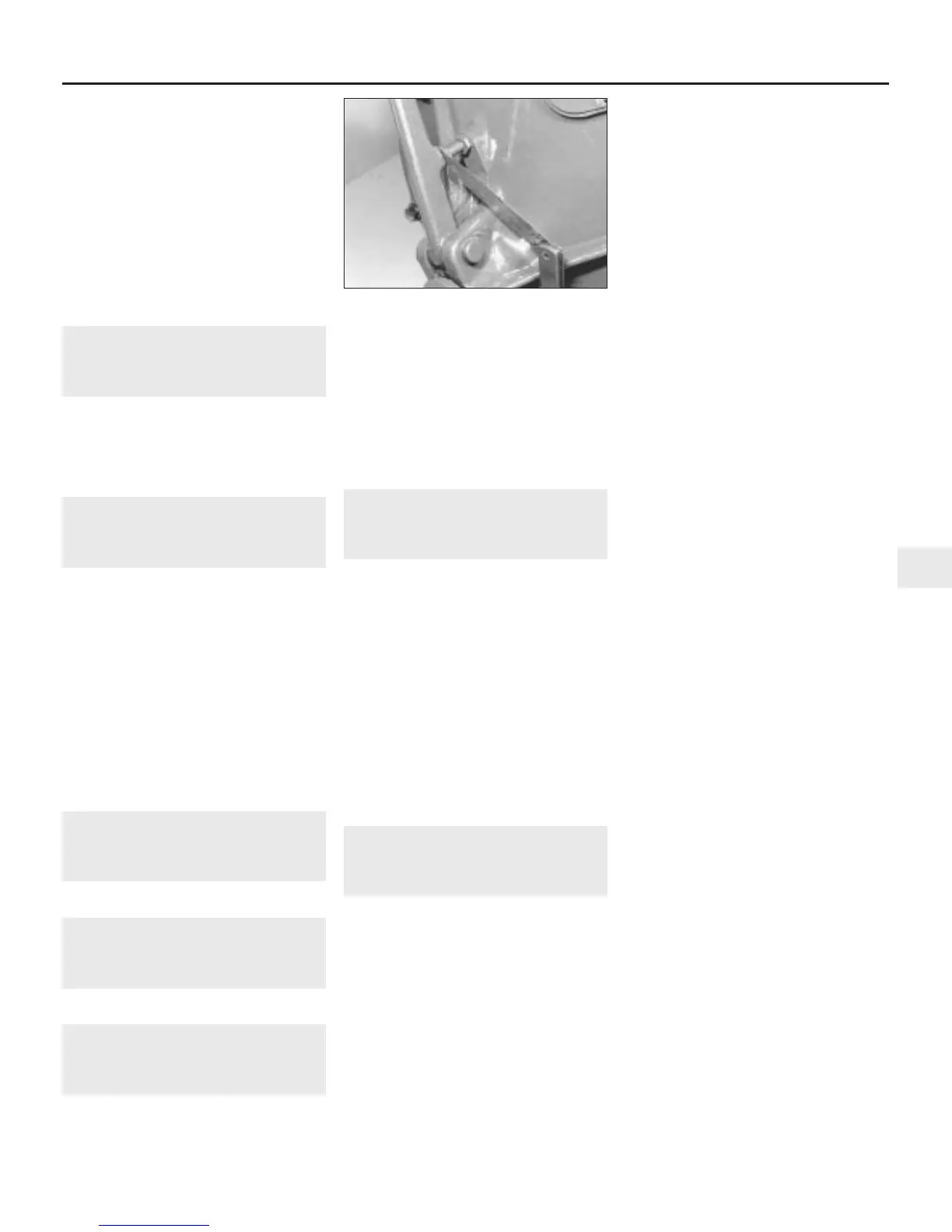
3 Hold the lever in this position and measure
the gap between the lever and the head of the
stop using feeler blades (see illustration).
4 If necessary, slacken the locknut and adjust
the stop bolt until the specified gap is
achieved. Then tighten the locknut.
23 Dynamo check and
lubrication
1
Dynamo checks and lubrication consist
simply of checking the fan belt condition and
tension (Section 8) and adding a few drops of
engine oil to the dynamo rear bearing
lubricating hole.
24 Control box cleaning and
inspection
1
On dynamo equipped models, remove the
control box cover and check the cut-out and
regulator contacts. If they are dirty or rough or
burnt, place a piece of fine glasspaper (do not
use emery paper or carborundum paper)
between the cut-out contacts, close them
manually, and draw the glasspaper through
several times.
Clean the regulator contacts in exactly the
same way, but use emery or carborundum
paper and not glasspaper. Carefully clean
both sets of contacts from all traces of dust
with a rag moistened in methylated spirit. Refit
the cover on completion.
25 Ignition timing check and
adjustment
3
Refer to Chapter 5B.
26 Carburettor idle speed and
mixture adjustment
3
Refer to Chapter 4A.
27 Door, boot and bonnet
check and lubrication
1
1 Check that the doors, bonnet and boot lid
close securely. Check that the bonnet safety
catch operates correctly. Check the operation
of the door check straps.
2 Lubricate the hinges, door check straps,
the striker plates and the bonnet catch
sparingly with a little oil or grease.
3 If any of the doors, bonnet or boot lid do not
close effectively or appear not to be flush with
the surrounding panels, carry out the adjustment
procedures contained in Chapter 11.
28 Bodywork, paint and exterior
trim check
1
1 The best time to carry out this check is after
the car has been washed so that any surface
blemish or scratch will be clearly evident and
not hidden by a film of dirt.
2 Starting at one front corner check the
paintwork all around the car, looking for minor
scratches or more serious dents. Check all
the trim and make sure that it is securely
attached over its entire length.
3 Check the security of all door locks, door
mirrors, badges, bumpers, front grille and
wheel trim. Anything found loose, or in need of
further attention should be done with reference
to the relevant Chapters of this manual.
4 Rectify any problems noticed with the
paintwork or body panels (see Chapter 11).
29 Road test
1
Check the operation and
performance of the braking
system
1 Make sure that the vehicle does not pull to
one side when braking, and that the wheels
do not lock when braking hard.
2 Check that there is no vibration through the
steering when braking.
3 Check that the handbrake operates
correctly, without excessive movement of the
lever, and that it holds the vehicle stationary
on a slope.
4 With the engine switched off, test the
operation of the brake servo unit (where fitted)
as follows. Depress the footbrake four or five
times to exhaust the vacuum, then start the
engine. As the engine starts, there should be a
noticeable “give” in the brake pedal as vacuum
builds up. Allow the engine to run for at least
two minutes, and then switch it off. If the brake
pedal is now depressed again, it should be
possible to detect a hiss from the servo as the
pedal is depressed. After about four or five
applications, no further hissing should be heard,
and the pedal should feel considerably harder.
Steering and suspension
5 Check for any abnormalities in the steering,
suspension, handling or road “feel”.
6 Drive the vehicle, and check that there are
no unusual vibrations or noises.
7 Check that the steering feels positive, with
no excessive sloppiness or roughness, and
check for any suspension noises when
cornering and driving over bumps.
Drivetrain
8 Check the performance of the engine,
transmission and driveline.
9 Check that the engine starts correctly, both
when cold and when hot.
10 Listen for any unusual noises from the
engine and transmission.
11 Make sure that the engine runs smoothly
when idling, and that there is no hesitation
when accelerating.
12 On manual transmission models, check
that all gears can be engaged smoothly
without noise, and that the gear lever action is
not abnormally vague or “notchy”.
13 On automatic transmission models, make
sure that the drive seems smooth without
jerks or engine speed “flare-ups”. Check that
all the gear positions can be selected with the
vehicle at rest.
Clutch
14 Check that the clutch pedal moves
smoothly and easily through its full travel, and
that the clutch itself functions correctly, with
no trace of slip or drag. If the movement is
uneven or stiff in places, check the system
components with reference to Chapter 6.
Instruments and electrical
equipment
15 Check the operation of all instruments
and electrical equipment.
16 Make sure that all instruments read
correctly, and switch on all electrical
equipment in turn, to check that it functions
properly.
17 Test the operation of the brake failure
warning system (where fitted) by pressing the
test switch located next to the heated rear
window switch. When pressed, the switch
should light and go out when released.
18 If the light should come on when driving,
the brake fluid level should be checked (and
topped up, if necessary), as soon as possible.
Every 6000 miles or 6 months 1•17
1
22.3 Using feeler blades to measure the
clutch return stop clearance


 To Next Page
 Loading...