5 Withdraw the valve through the combustion
chamber.
6 It is essential that each valve is stored
together with its collets, retainer and spring(s).
The valves should also be kept in their correct
sequence, unless they are so badly worn that
they are to be renewed. If they are going to be
kept and used again, place each valve
assembly in a labelled polythene bag or
similar small container (see illustration). Note
that No 1 valve is nearest to the timing chain
end of the engine.
Cleaning
7 Thoroughly clean all traces of old gasket
material and sealing compound from the
cylinder head mating surfaces. Use a suitable
cleaning agent together with a putty knife or
scraper, taking care not to scratch the head
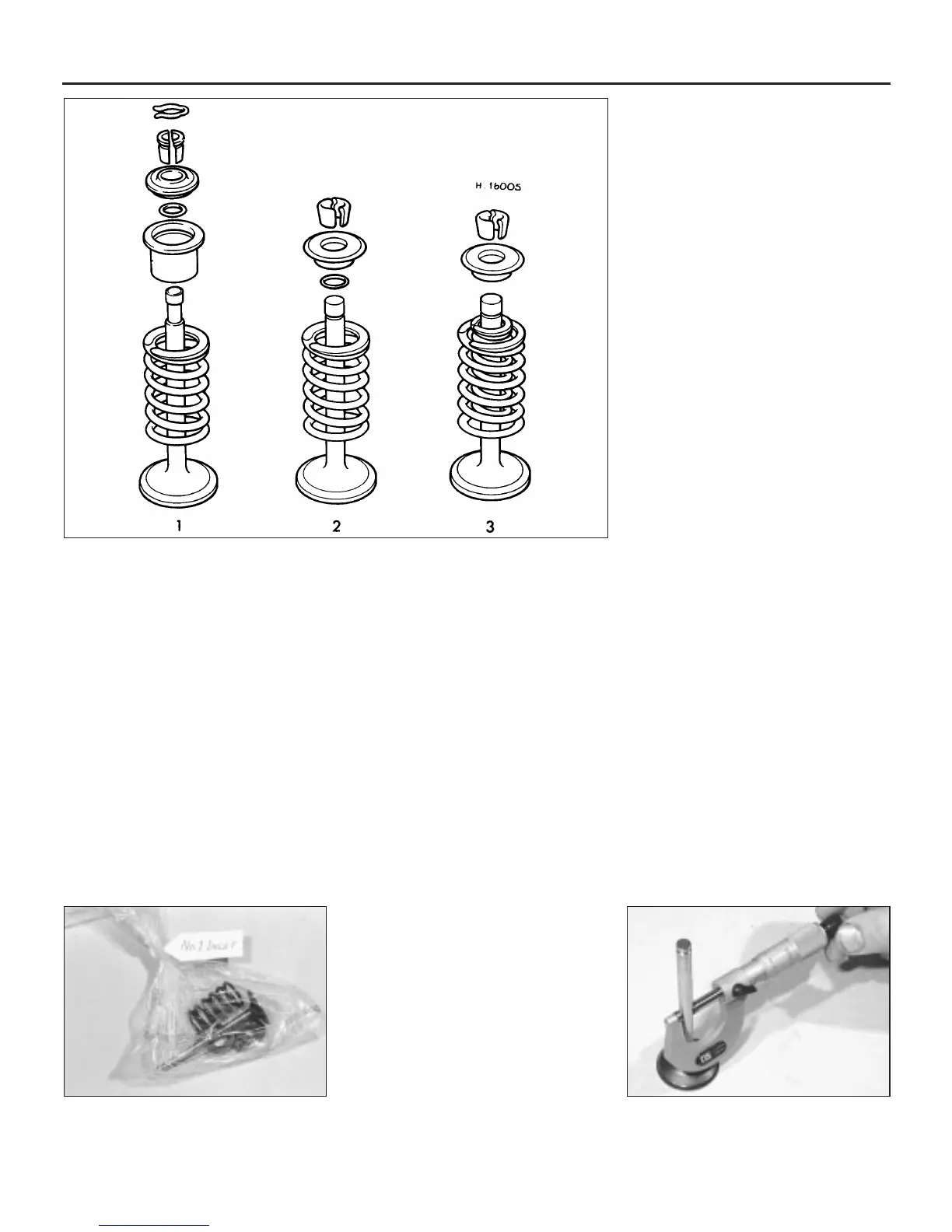
surface.
8 Remove the carbon from the combustion
chambers and ports, then clean all traces of
oil and other deposits from the cylinder head,
paying particular attention to the valve guides
and oilways.
9 Wash the head thoroughly with paraffin or a
suitable solvent. Take plenty of time and do a
thorough job. Be sure to clean all oil holes and
galleries very thoroughly, dry the head
completely and coat all machined surfaces
with light oil.
10 Scrape off any heavy carbon deposits that
may have formed on the valves, then use a
power-operated wire brush to remove
deposits from the valve heads and stems.
Inspection
Note: Be sure to perform all the following
inspection procedures before concluding that
the services of an engineering works are
required. Make a list of all items that require
attention.
Cylinder head
11 Inspect the head very carefully for cracks,
evidence of coolant leakage, and other
damage. If cracks are found, a new cylinder
head should be obtained.
12 Use a straight-edge and feeler blade to
check that the cylinder head gasket surface is
not distorted. If it is, it may be possible to
have it machined. Seek the advice of a Rover
dealer or engine overhaul specialist if
distortion is suspected.
13 Examine the valve seats in each of the
combustion chambers. If they are severely
pitted, cracked, or burned, they will need to
be renewed or re-cut by an engine overhaul
specialist. If they are only slightly pitted, this
can be removed by grinding-in the valve
heads and seats with fine valve-grinding
compound, as described below.
14 Check the valve guides for wear by
inserting the relevant valve, and checking for
side-to-side motion of the valve. A very small
amount of movement is acceptable. If the
movement seems excessive, remove the
valve. Measure the valve stem diameter (see
below), and renew the valve if it is worn. If the
valve stem is not worn, the wear must be in
the valve guide, and the guide must be
renewed. The renewal of valve guides is best
carried out by a Rover dealer or engine
overhaul specialist, who will have the
necessary tools available.
15 If renewing the valve guides, the valve
seats should be re-cut or re-ground only after
the guides have been fitted.
Valves
16 Examine the head of each valve for
pitting, burning, cracks, and general wear.
Check the valve stem for scoring and wear
ridges. Rotate the valve, and check for any
obvious indication that it is bent. Look for pits
or excessive wear on the tip of each valve
stem. Renew any valve that shows any such
signs of wear or damage.
17 If the valve appears satisfactory at this
stage, measure the valve stem diameter at
several points using a micrometer (see
illustration). Any significant difference in the
readings obtained indicates wear of the valve
stem. Should any of these conditions be
apparent, the valve(s) must be renewed.
18 In order to reduce oil consumption, valve
stem oil seals are fitted to the inlet valves of
later 998 cc engines. Fitting of the seals has
required the incorporation of modified valves,
with cotter grooves nearer the end of the
stem. The valve spring seats have also been
raised by 1.2 mm.
19 If renewing any valves, bear in mind that
new type valves and seals can be fitted to old
type cylinder heads in complete sets only,
with the addition of a shim 1.2 mm thick
underneath each spring. These shims may
also be found already fitted to engines which
left the factory with the new type valves and
2B•12 Engine removal and overhaul procedures
8.6 Keep all valve components together in
a labelled plastic bag
8.17 Measuring the valve stem diameter
8.4c Valve assembly components
1 Early type 2 Later type 3 Cooper S type


 To Next Page
 Loading...