EasyManua.ls Logo

HB Products HBPH-MK2 - User Manual

HB Products HBPH-MK2
8 pages
Print Icon
To Next Page IconTo Next Page
Loading...
INSTRUCTION MANUAL
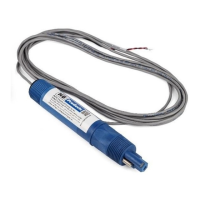
HBPH-MK2 pH sensor
Suited for brine/NH3 Leakage detection
DIFFERENTIAL 2-WIRE (4-20 mA) pH Sensor
TABLE OF CONTENTS
General Information ...................................................................................................................................................................... 2
Specifications ................................................................................................................................................................................. 2
Installation ..................................................................................................................................................................................... 3
Cold Liquid applications ................................................................................................................................................................. 3
Electrical connection ...................................................................................................................................................................... 4
Storage ........................................................................................................................................................................................... 4
Maintenance and calibration ......................................................................................................................................................... 4
Calibrating the Sensor .................................................................................................................................................................... 5
Checking the Sensor ....................................................................................................................................................................... 5
Probe Cleaning ............................................................................................................................................................................... 6
Replacement of Salt Bridge ............................................................................................................................................................ 7
Troubleshooting ............................................................................................................................................................................. 7
Parts and Accessories .................................................................................................................................................................... 8

Sensor Return ................................................................................................................................................................................ 8

Further Information ....................................................................................................................................................................... 8
Included in the package
Sensor with cable
Replacement salt bridge
Liquid for flushing and
filling
Salt bridge kit
Question and Answer IconNeed help?

Do you have a question about the HB Products HBPH-MK2 and is the answer not in the manual?

Overview

The HBPH-MK2 is a differential 2-wire (4-20 mA) pH sensor designed for brine/NH3 leakage detection. It provides pH measurement in brine and is suitable for industrial applications where long lifetime, user serviceability, and accurate readings are crucial. Unlike common combination probes that may last only months, the HBPH sensor is engineered for years of service.

Function Description:

The sensor measures pH values in brine, specifically designed for detecting ammonia leakage. It operates on a differential principle, which contributes to its extended lifespan and improved accuracy. The device incorporates an encapsulated transmitter that outputs a 4-20 mA analog signal, allowing direct connection to a PLC. The output from this two-wire transmitter is non-isolated and un-calibrated, requiring the system to provide 24 VDC with the "low" input isolated from earth ground, and a mechanism for calibrating offset and span.

Important Technical Specifications (HBPH-2W-9-MKLT model):

  • Measurement Range: 0 to 14.00 pH
  • Wetted Materials: Ryton®(PPS), glass, ceramic, titanium, Viton
  • Ambient Temperature: -15°C to +50°C
  • Liquid Temperature: -15°C to +95°C
  • Stability: 0.03 pH/day
  • Resolution: 0.01 pH
  • Sensitivity: < 0.005 pH
  • Output Span: 1.14 mA/pH
  • Output Offset: 12±1.0 mA @ pH 7
  • Mounting: 1" NPT
  • Max. Flow Rate: 3.0 m/sec (10 ft/sec)
  • Maximum Load: 450 Ω
  • Temperature Limits: 6.9 barg (100 psig) @ 65 °C, 2.75 barg (40 psig) @ 95°C
  • Power Supply Limit: 24±4 VDC
  • Cable Length: 4.6 m (15 ft)
  • Dimensions: Approximately 207 mm total length, with a 128.3 mm body and 50.8 mm threaded section. Diameter is 35.6 mm.

Usage Features:

  • Installation: The sensor should be installed in direct contact with the brine. The preferred mounting is vertical, pointing downwards, or at least 15° above horizontal to prevent trapped air from disturbing measurements. Horizontal or upside-down installations are not acceptable. If direct connection to the instrument is not possible, the probe cable should be routed to a well-sealed junction box with a terminal strip, ensuring enough slack for removal during calibration and servicing. The interconnect cable should preferably be run in metal conduit, separate from power or control cables.
  • Cold Liquid Applications: For brine temperatures below -15°C, an additional system is recommended. This involves bypassing a small amount of brine into a pot with a built-in heating element and thermostat, controlling the temperature between 0°C and +10°C.
  • Electrical Connection: The sensor has two wires: red and black. The red wire connects to the +24 VDC terminal, and the black wire connects to the 24 VDC common terminal via the load in the loop.
  • Calibration: The sensor is not pre-calibrated upon receipt. Calibration is performed in the PLC, PC, or display by translating the mA signal into a pH value using a formula. This process requires two pH buffer solutions (7 pH and either 4 pH or 10 pH) and a DC milliammeter. The calibration involves measuring mA readings at two known pH points (e.g., 7 pH and 10 pH) and then calculating constants (K and C) for the formula: pH = K * mA signal + C. For example, if mApH7 = 11.08mA and mApH10 = 14.47mA, then K = 0.885 and C = -2.81, resulting in pH = 0.885 * mA signal - 2.81.
  • Leakage Detection: For leakage detection, high precision is not always necessary. Annual or biannual checks are often sufficient, especially with a warning system. For brines with a pH of 6-8, ammonia leakage of 1ml/l can increase pH from 7 to 10. A dual-level warning/alarm system is recommended: a warning level (e.g., pH > 8 or pH < 6) to prompt calibration checks, and a second alarm level (e.g., pH = 9) to indicate a stop due to leakage.

Maintenance Features:

  • Storage: The protective cap provided with the sensor should be retained. If the sensor is removed from service for extended periods, it must be thoroughly cleaned, and a cotton ball with a few drops of water should be placed in the protective cap and secured to the sensor. This prevents the junction from drying out, which can cause slow response or permanent damage. Sensors should never be left in dry lines or empty vessels. Improper storage voids the warranty.
  • Probe Cleaning: Regular cleaning is essential to prevent measurement errors. The frequency depends on the application. The cleaning process involves:
    1. Rinsing with clean warm water.
    2. Soaking the probe end in warm water and dish detergent for 3-4 minutes.
    3. Brushing the electrodes with a soft bristle brush, avoiding scratching the glass electrode.
    4. If still not clean, acid cleaning may be necessary. Use the most dilute effective acid (e.g., 10 parts water to 1 part muriatic acid (HCl)). Avoid hydrofluoric acid and acid cleaning probes used with cyanide solutions. Soak for no more than 5 minutes, then rinse thoroughly with warm water and soak in water for 3-5 minutes.
    5. After cleaning, calibrate the system.
  • Salt Bridge Replacement: If calibration fails after cleaning, the salt bridge and/or standard cell solution may need replacement. A salt bridge kit (HBPH-SB-KIT) is available. The process involves:
    1. Holding the probe vertically, electrodes up.
    2. Removing the used hexagonal salt bridge using a #3 Phillips screwdriver, ½" wrench, or pliers.
    3. Discarding the used salt bridge and solution.
    4. Rinsing the bridge chamber with pH 7 solution or distilled water.
    5. Refilling the chamber with the new reference solution (supplied in the kit) up to the tip of the electrode, leaving space for the salt bridge thread and a small amount of air. Do not overfill.
    6. Screwing the new salt bridge into the cavity until finger tight, ensuring edges are aligned with the probe face.
  • Troubleshooting:
    • If the sensor output changes between pH buffers but is slow or insufficient (span < 0.9mA/pH), it may indicate scaling or biofouling on the process electrode. Soaking in weak acid (vinegar or 0.1M HCl) for scaling or bleach for fouling can resolve this.
    • If the offset is outside specifications (11mA > pH7 > 13mA), the reference solution may be contaminated, or the salt bridge may be fouled. Salt bridge replacement is needed.
    • If the pH reading does not change at all between calibration solutions, the process electrode is inoperable (cracked/broken), or the printed circuit board (PCB) has failed. In this case, the sensor is non-repairable.
    • If the output is outside of 4-20mA, the sensor electronics have failed, and the sensor is non-repairable.

Parts and Accessories:

  • HBPH-SB-KIT: 3-pack salt bridge replacement kit
  • HBPH-C1: Controller for pH Sensor
  • HBPH-C1-ENC: Controller for pH Sensor (enclosed)

Sensor Return:

When returning a probe for inspection, a description of the problem should be included. The probe must be adequately packed to prevent damage to the glass electrode and exposure to temperatures below -15°C (to avoid damage from freezing). For safety, probes must be thoroughly cleaned of all process material, and a moist cotton ball placed in the protective cap to prevent drying out.

HB Products HBPH-MK2 Specifications

General IconGeneral
BrandHB Products
ModelHBPH-MK2
CategoryAccessories
LanguageEnglish

Related product manuals