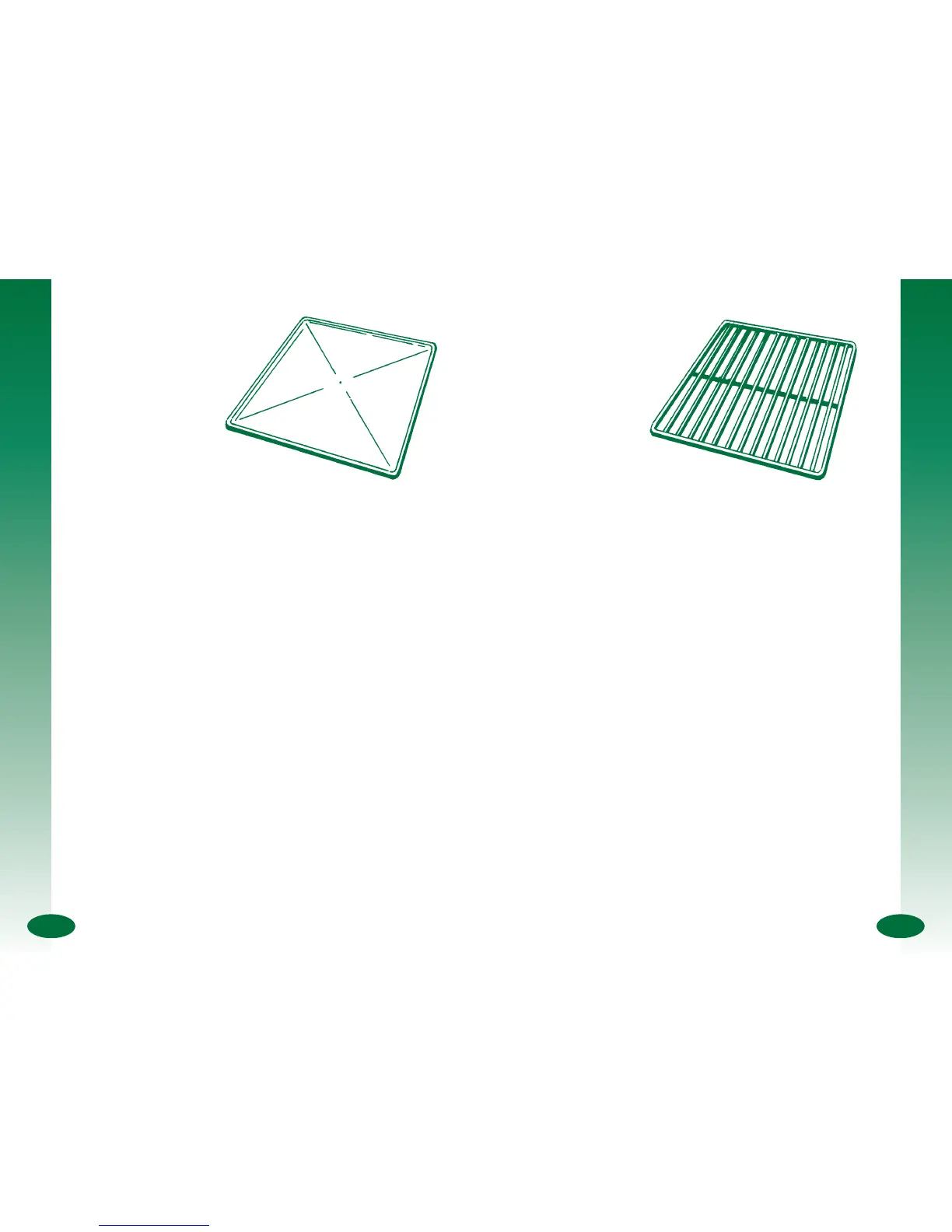
GRIDDLE COOKING
Each Heritage barbecue has a
separate, solid cast-iron cooking
surface as well as the traditional
‘char-grill’ cooking area.
The griddle is normally hot
enough for cooking on after
heating up on ‘high’ for
10 minutes. Weather conditions can of course
vary this time. The griddle can also be left on low and
used simply as a warming plate.
SO VERSATILE
This solid plate is the most flexible cooking area on your barbecue, it opens up a
whole new area of cooking out of doors. Firstly, you can cook everything on this
surface that you cook on the char-grill side, great for when fatty sausages or
burgers cause ‘flare-ups’ on the char-grill. You can use it as a hot plate to heat
pans of vegetables or barbecue sauces. And you can cook directly on the plate,
ideal for small items like prawns, mushrooms, onions and stir fries.
THE GREAT BRITISH BREAKFAST
This means you can also cook your authentic British breakfast. Add a little oil to
one side of your hot griddle to cook bacon, eggs, mushrooms and even fried
bread! On the other side you can heat up your pan of baked beans.
EVEN TASTIER
Of course one of the most traditional ways to use your griddle is to sear pieces of
meat on both sides before cooking them over the char-grill, sealing all of the
flavour in for the tastiest meal.
CHAR-GRILL COOKING
Char-grill cooking is traditionally
the most popular method of
barbecuing. The cast-iron gas
burners heat up the flame
tamer from below and
food placed on the
char-grill is then cooked by
the heat emitted from the hot
flame tamer and briquettes. The char-grill
and solid plate are ready for cooking after
approximately 10 minutes on high.
BARBECUE FLAVOUR
Using this method of cooking the unique barbecue flavour comes to your food from
the juice dripping on the hot briquettes below, vapourising and then being
absorbed back into the food. This is the same way non-gas barbecues cook, using
charcoal instead of heated briquettes.
FLARE-UPS
Some cuts of meat can be excessively fatty and during cooking the fat may begin
to drip into the fire, and a flare-up may occur. The flames will die out when the fat
or oil has burnt out, during this time you can transfer food to the griddle plate and
continue cooking. To help avoid flare-ups cut away any excess fat from the meat.
Before you begin cooking always check the fat drip tray is not full and likely to
catch fire. Line the drip tray with tin-foil to make cleaning easier.
We recommend that the drip tray is emptied after every barbecue session to
avoid the risk of fat fires. If cooking for an extended period, check the drip tray
more frequently.
FAT FIRES
Should you experience a fat fire in the drip tray, simply turn off the gas at the
cylinder, then the individual burners. Do not pull out the drip tray. After 2 or 3
minutes the fire will extinguish.
IMPORTANT NOTE
Fat fires are usually caused by excessive fat in the drip tray, or by cooking very
fatty burgers, sausages or chicken legs/wings. We recommend that you cook food
with a low fat content or that has the excess fat or skin trimmed off. Although
damage caused by fat fires is not covered by the warranty, any replacement parts
can be purchased very inexpensively.
Griddle
3
Char-grill
4


 To Next Page
 Loading...