CLEANING
AND CARE OF
YOUR BARBECUE
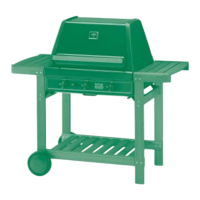
TROLLEY
WEATHERING
As part of the natural
weathering process the
timber may leach (bleed)
a dark red-brown sap.
During the leaching process,
leaving the trolley on
untreated concrete or unsealed
tiled areas should be avoided. If staining does occur
it can be removed easily by scrubbing with warm soapy water.
The sun will also bleach out the stains over a longer period but using less ‘elbow grease’!
The period of weathering is unpredictable and is accelerated if the timber is wet.
After a period of time the bleaching process ceases.
Initial care should be taken when the trolley is wet that clothing and other articles
that may stain are not rubbed against the timber.
TREATMENT
Your trolley is manufactured using timber from managed Malaysian forests. It is a
heavy hardwood and is ideal for outdoor use.
During the manufacturing process the timber has been treated with a wood
preserving oil. It is recommended that further annual applications are made with
teak oil, linseed oil or other wood preserving treatments.
FITTINGS
Each year it is recommended that all metal fixings on the trolley are checked
and tightened.
CLEANING
During normal use, grease and oil from food may splash onto the trolley. This can
be rubbed into the wood to provide additional protection.
Water stains or splashes can be reduced in their appearance by rubbing over with
teak or linseed oil.
COVER
To maintain the good looks and durability of the wooden trolley and the barbecue
it is recommended that a Heritage vinyl cover is placed over the barbecue when not
in use.
Caring For Your Trolley
8
CLEANING AND
CARE OF YOUR
HERITAGE
BARBECUE
COOKING PLATES
When you have finished using your barbecue,
clean off the cooking surfaces with a metal scraper
or stiff wire brush. This is done most easily when the
cooking area is still warm, about 20 - 30 minutes after turning
off the barbecue. Any debris and excess oil can then be removed with a
rag or kitchen roll. Water should only be used to clean the cooking surfaces when
they have cooled down. Water on hot cast-iron can cause the metal to crack or
break.
Ensure that you oil the cast-iron cooking surfaces with cooking oil after use.
This is particularly important when putting the barbecue away for winter storage.
Careful attention to this matter will eliminate rust forming on the cast-iron surfaces.
The next time you use your barbecue the oil will be burnt off during the 10 minute
warm up period, leaving a clean cooking surface.
BARBECUE CASING & ROASTING LID
If you need to clean the casing of your barbecue this should be done with a soft
cloth and warm soapy water. DO NOT use a wire brush or scraper on the
barbecue’s inside, main body or drip tray, as this will remove the zinc coating that
protects it from corrosion. If you have spilt marinade on your barbecue during
cooking it is best to wipe after use as some marinades can be quite acidic, and
may affect the paint-work. Try not to wipe the paint-work when the barbecue is still
hot as this can be dangerous and the paint may become soft in some conditions.
Should there be any blemishes to the paint work, a touch-up repair kit is available.
BRIQUETTES
DO NOT WASH the briquettes these can be cleaned by turning the burners on
‘high’ for 15 minutes or so to allow the fat to burn off. Heavily impregnated
briquettes should be turned over so the dirty side faces the burners, and burnt off in the
same way. When burning off excessive fat, leave the lid in the open position.
BURNERS
It is also recommended that the gas burners are removed from the barbecue at the
start of each season and cleaned. Simply unclip the rear underside of the burner
from the barbecue and lift them out. Use a stiff wire brush to remove any surface
rust and to keep the small ports (holes) free from debris. It is quite normal for
surface rust to appear on these cast-iron burners. When clean, shake off the debris
from inside the burner and replace in barbecue.
Caring For Your Heritage BBQ
7


 To Next Page
 Loading...