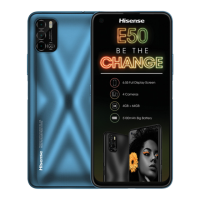
This document provides a user guide for the Hisense E50, model HLTE232E, a mobile phone manufactured by Hisense Communications Co., Ltd.
Function Description
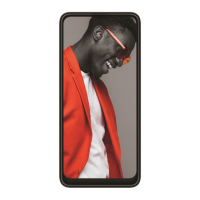
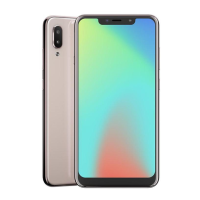
The Hisense E50 is a mobile phone designed for general use, supporting voice calls, data transmission, and various applications. It integrates 2G/3G/4G, Wi-Fi, Bluetooth, GPS, GLONASS, and FM radio technologies. The device allows users to manage contacts, send messages, browse the internet, take photos and videos, listen to music, and utilize various Google services.
Important Technical Specifications
- Model: HLTE232E
- Manufacturer: Hisense Communications Co., Ltd.
- Hardware Version: FS185-MB-V5.0
- Software Version: Hisense_HLTE232E_S03_01_01_ZA06, Hisense_HLTE232E_01_S03_01_01_ZA00, Hisense_HLTE232E_02_S03_01_01_ZA04
- Operating Temperature: 0°C to +35°C
- SAR Values:
- Head: 0.544 W/kg
- Body: 0.919 W/kg (at 5 mm distance)
- Supported Frequencies and Max Power:
- GSM850: 824MHz-894MHz; Max Power: 33±2dBm
- GSM900: 880MHz-960MHz; Max Power: 33±2dBm
- GSM1800: 1710MHz-1880MHz; Max Power: 30±2dBm
- GSM1900: 1850MHz-1990MHz; Max Power: 30±2dB
- WCDMA B1: 1920MHz-2170MHz; Max Power: 23±2.7dBm
- WCDMA B2: 1850MHz-1990MHz; Max Power: 23±2.7dBm
- WCDMA B8: 880MHz-960MHz; Max Power: 23±2.7dBm
- FDD B1: 1920MHz-2170MHz; Max Power: 23±2.7dBm
- FDD B3: 1710MHz-1880MHz; Max Power: 23±2.7dBm
- FDD B7: 2500MHz-2690MHz; Max Power: 23±2.7dBm
- FDD B8: 880MHz-960MHz; Max Power: 23±2.7dBm
- FDD B20: 791MHz-862MHz; Max Power: 23±2.7dBm
- TDD B38: 2570MHz-2620MHz; Max Power: 23±2.7dBm
- TDD B40: 2300MHz-2400MHz; Max Power: 23±2.7dBm
- TDD B41: 2535MHz-2655MHz; Max Power: 23±2.7dBm
- WIFI: 2412MHz-2483.5MHz; 11b EIRP Power: 15±3dBm
- Bluetooth: 2400MHz-2483.5MHz EIRP Power: ≤8.5dBm
- GPS: L1: 1559MHz-1610MHz
- GLONASS: L1: 1559MHz-1610MHz
- FM: 87.5 MHz-108MHz
- Battery: LPN385500, 3.85V/5000mAh (from Shenzhen Aerospace Electronic Co., Ltd. or Dongguan Milai Electronics Co., Ltd.)
- Adapter:
- TPA-46050200VU (Input: 100-240V, 50/60Hz, 0.3A; Output: 5V/2A)
- TPA-185C050200BU01 (Input: 100-240V, 50/60Hz, 0.3A; Output: 5V/2A)
- USB Cable: Micro USB B, 0.8m (KS228 from Dongguan Keling Electronic Technology Co., Ltd)
- Earphone: 1.2m (KLKS228A from Dongguan Keling Electronic Technology Co., Ltd)
- Antenna: Fixed Internal (2G/3G/4G, WIFI, Bluetooth, GPS/GLONASS), Earphone Line (FM)
- Storage: Supports SD card up to 512GB.
Usage Features
The Hisense E50 features a standard smartphone interface with a touch screen for navigation.
- Physical Buttons:
- Power Button: Located on the right side, used to lock the screen or access phone options (Power off, Restart, Screenshot, Emergency) with a long press.
- Volume Button: Located above the power key, used to adjust ring volume.
- Smart Button: A physical button on the left side, configurable for specific actions with a short press or to launch a set application with a long press.
- Onscreen Navigation:
- Back Icon: Returns to the previous interface.
- Recent Icon: Opens a list of recent applications.
- Home Icon: Returns to the main interface.
- Touch Screen Gestures:
- Touch: For selecting items, typing, or pressing onscreen buttons.
- Touch & Hold: For opening context menus or initiating actions.
- Drag: For moving items on the screen.
- Swipe or Slide: For scrolling lists or navigating across screens.
- Communication:
- Calls: Supports dialing from contacts, recent calls, and answering/managing multiple incoming calls. Call barring can be canceled.
- Messages: Allows sending text (SMS) and multimedia (MMS) messages.
- Gmail: For reading and sending emails, with features like account setup, email notifications, contact/calendar synchronization, and attaching files.
- Duo: Video chat application.
- Connectivity:
- SIM Card: Supports SIM card installation for mobile network access.
- Wi-Fi: Connects to wireless networks for internet access.
- Bluetooth: Pairs with other Bluetooth devices like headphones, hands-free kits, and other portable devices.
- USB: Connects to a computer for file transfer (music, pictures) between the phone's SD card and the computer.
- Hotspot & Tethering: Shares mobile data connection.
- VPN: Virtual Private Network support.
- Multimedia:
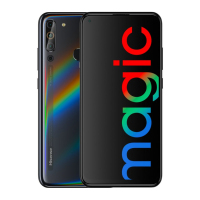
- Camera: Takes photos and records videos with a three-rear camera setup and a front camera, supported by a flash lamp.
- Photos: Views pictures and videos stored on the phone or SD card, and online after Google account login.
- YT Music: Plays audio files stored on the phone and supports online music streaming after Google account login.
- Play Movies & TV: Watches videos after Google account login.
- FM Radio: Requires headphones (acting as an antenna) to operate.
- Sound Recorder: Records audio and allows setting recorded audio as a ringtone.
- Productivity & Utilities:
- Calculator: Performs basic and advanced arithmetic calculations.
- Calendar: Manages events, supports event creation, and synchronization with Google and Microsoft Exchange accounts.
- Clock: Displays date and time, and allows setting alarms.
- Chrome: Web browser for internet access.
- Contacts: Manages contacts, including creation, deletion, synchronization, and import/export options.
- Drive: Google cloud storage and file management.
- Files: Manages directories and files on the phone and SD card.
- Google: Provides instant access to Google Assistant, Search, and Recent history.
- Maps: Displays geographic locations and provides navigation.
- Play Store: Downloads applications, games, entertainment, and other digital content.
- SIM Toolkit (STK): Provides SIM card-dependent services.
- System Settings:
- Network & Internet: Manages SIM card, Wi-Fi, Airplane mode, Hotspot & tethering, VPN.
- Connected Devices: Manages Bluetooth, Printing, Cast.
- Apps & Notifications: Views application details, manages data, forces stops, and controls notifications.
- Battery: Monitors battery status, level, and usage.
- Display: Adjusts brightness, wallpaper, auto-rotate screen, font size, display size, and screen saver.
- Scheduled Power On/Off: Sets automatic power on/off times.
- Sound: Adjusts volume, vibration, and Do Not Disturb settings.
- Storage: Monitors used and available space on the phone and SD card.
- Privacy: Manages permissions, notifications on lock screen, and ads.
- Location: Manages location access and app permissions.
- Security: Configures security parameters, including face unlock.
- Accounts: Manages user accounts.
- Accessibility: Configures accessibility plug-ins.
- Smart Controls: Intelligent smartphone control features.
- Buttons: Configures the smart button.
- Digital Wellbeing & Parental Controls: Manages screen time, app timers, and bedtime schedules.
- Google: Manages Google services.
- System: Includes Languages & input, Gestures, Date & time, Backup, Navigation bar, Reset options, Multiple users, System update, and About phone.
- Gestures: Configures quick camera access and system navigation.
- Date & Time: Sets date, time, and time zone preferences.
- Backup: Backs up phone data.
- Navigation Bar: Selects navigation button combinations.
- Reset Options: Resets phone settings.
- Multiple Users: Supports multiple user profiles.
- System Update: Checks and updates software versions.
- About Phone: Displays phone-related information.
Maintenance Features
- General Care:
- Avoid disassembling, modifying, or repairing the device or battery yourself to maintain warranty validity.
- Use only Hisense-approved batteries, chargers, accessories, and supplies.
- Do not crush, throw, or puncture the phone; avoid dropping, squeezing, or bending it.
- Keep the phone dry; avoid moist environments, rain, liquids, or chemicals.
- Do not use or store the phone in dusty places, high-temperature places (which can shorten electronic circuit life and damage plastic parts), or chilly places (which can cause moisture formation).
- Do not throw, knock, or shock the phone to prevent damage to internal circuits and components.
- Clean the device with a dry, soft cloth; avoid water, alcohol, or detergents.
- Backup important data regularly to prevent loss during repairs or other operations.
- Do not disconnect the device during memory formatting or file transfer to prevent program or file damage.
- Keep the phone, battery, and charger out of reach of children.
- Children should use the device only with adult supervision.
- Battery and Charging:
- Use only the battery and charger included with the product.
- Ensure the charger plug and USB cable are inserted correctly to prevent charging failure or other problems.
- The battery is internal and rechargeable; do not expose it to excessive heat (sunshine, fire).
- Recycle or dispose of the battery separately from household waste as it contains hazardous materials.
- Avoid using damaged cables or chargers, or charging when moisture is present, to prevent electric shock.
- The power adapter is for indoor use only and should be easily accessible and not blocked.
- Unplug the AC/DC cable from the power outlet to fully disconnect the phone from the mains.
- Allow adequate ventilation around power adapters during use.
- Do not plug or unplug the USB port with wet hands.
- Optimizing Battery Life:
- Turn off unused radios (Wi-Fi, Bluetooth).
- Reduce screen brightness and set a shorter screen timeout.
- Turn off automatic syncing for Gmail, Calendar, Contacts, and other applications if not needed.
- Troubleshooting:
- If the SIM card is damaged, contact the network service provider.
- If the SIM card is not in position, check its placement.
- If the metal face of the SIM card is polluted, clean it.
- If signals are obstructed (e.g., near high buildings or in a basement), move to a location with better signal.
- Avoid using the phone during line congestion (high-traffic hours).
- If the phone cannot be powered on, charge the battery.
- If calls cannot be dialed, check if call barring is activated.
- If the mobile phone cannot connect to the network, ensure the SIM card is valid and move to a service area with good signal quality.
- If the battery cannot be charged, ensure the charging voltage matches the charger's specifications and that the charger plug is in good contact with the phone. Use the charger specially designed for the mobile phone.
- Safety Precautions:
- Observe all rules and regulations in hospitals and health care facilities; switch off the phone when prohibited or when it may cause interference.
- Maintain at least 20 cm separation between the phone and pacemakers.
- Stop using the phone and consult a physician if interference with medical devices is suspected.
- Avoid using a hand-held phone while driving; use hands-free fittings.
- Switch off the phone in aircraft.
- Switch off the phone before entering risky areas (e.g., oil stations, chemical plants, blasting sites).
- Do not obstruct the antenna area during a conversation to prevent quality deterioration.
- For driving safety, only a passenger should operate the device when the car is in motion.
- Keep volume at a reasonable level when listening to music to be aware of surroundings.
- Obey rules prohibiting phone use or headphones while driving or riding a bicycle.
- Do not obstruct air bags with wireless equipment.
- To reduce radiation exposure, use the phone in good signal reception conditions and use a hands-free kit.
- Keep the phone away from the abdomen of pregnant women and the lower abdomen of teenagers during calls.
- To prevent hearing damage, avoid listening at high volume levels for long periods.

 Need help?
 General


 To Next Page