Screwdrivers
Screwdrivers of various lengths and types are mandatory for the simplest tool kit.
The two basic types are the slotted tip (flat blade) and the Phillips tip. These are
available in sets that often include an assortment of tip size and shaft lengths.
As with all tools, use a screwdriver designed for the job. Make sure the size of the
fastener. Use them only for driving screws. Never use a screwdriver for prying or
chiseling metal. Repair or replace worn or damaged
screwdrivers. A worn tip may damage the fastener,
making it difficult to remove.
Phillips-head screws are often damaged by
incorrectly fitting screwdrivers. Quality Phillips
screwdrivers are manufactured with their crosshead tip
machined to Phillips Screw Company specifications.
Poor quality or damaged Phillips screwdrivers can back
out (cam out) and round over the screw head. In
addition. Weak or soft screw materials can make
removal difficult.
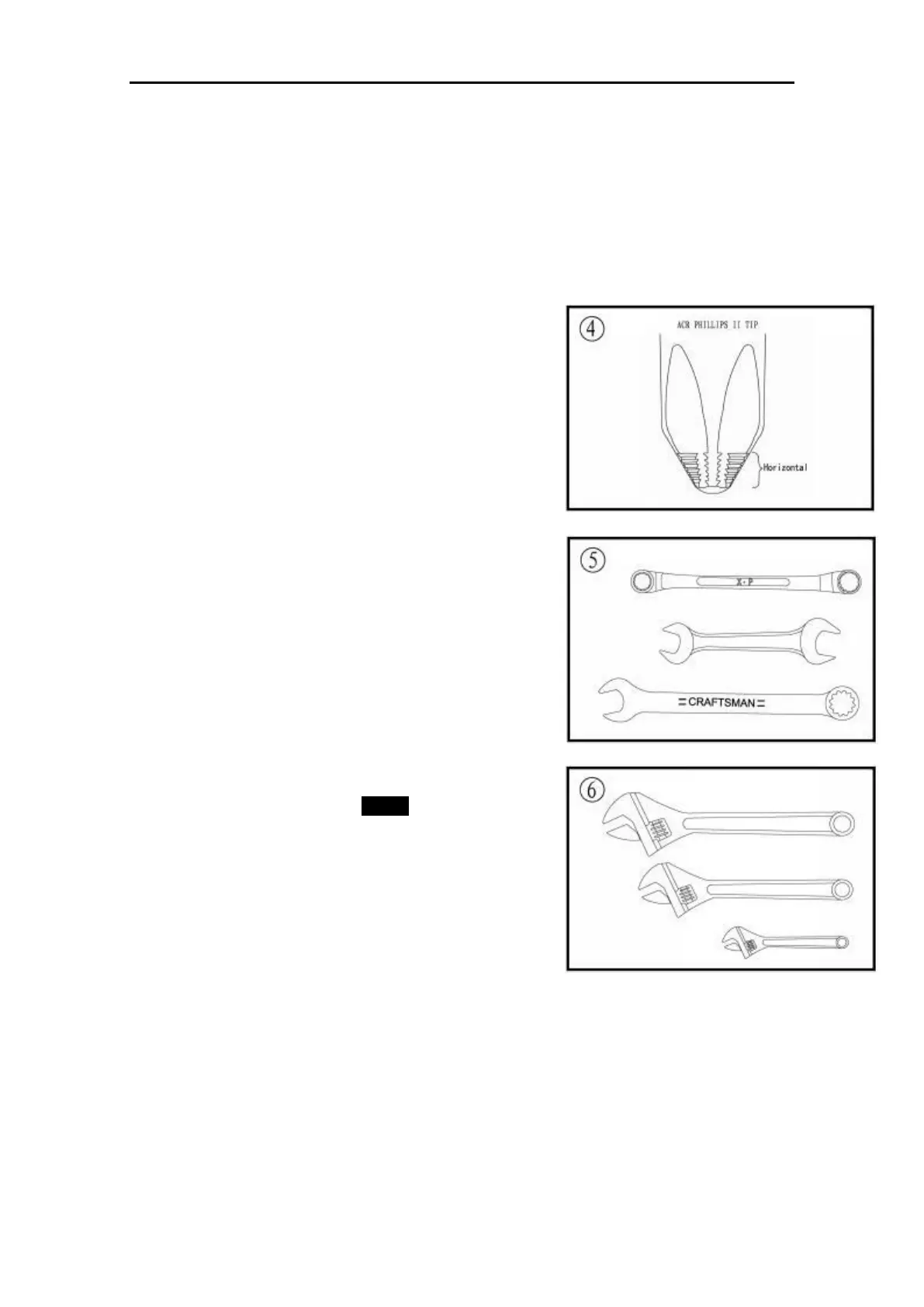
The best type of screwdriver to use on Phillips
screw is the ACR Phillips II screwdriver, patented by
the horizontal anti-cam out ribs found on the driving
faces or flutes of the screwdriver’s tip (figure 4). ACR
Phillips II screwdrivers were designed as part of a
manufacturing drive system to be used with ACR
Phillips II screws, but they work of tool companies offer
ACR Phillips II screwdrivers in different Tip size and
interchangeable bits to fit screwdriver bit holders.
NOTE
Another way to prevent cam out
and to increase the grip of a
Phillips screwdriver is to apply
valve grinding compound or
permute screw & socket Gripper
onto the screwdriver tip.After
loosening/tightening the screw,
clean the screw recess to
prevent engine oil
contamination.
Wrenches
Open-end, box-end and combination wrenches (figure 5) are available in a variety
of types and sizes.


 To Next Page
 Loading...