fixed scale. In this example, the number is 10 mm. To determine the next number, note
which of the lines on the movable scale align with a mark on the fixed scale. A number
of lines will seem close, but only one will align exactly. In this case, 0.50 mm is the
reading to add to the first number. Adding 10 mm and 0.50 mm equals a measurement
of 10.50 mm.
Micrometers
A micrometer is an instrument designed for linear measurement using the decimal
divisions of
the inch or meter (Figure 22). While there are many types and styles of micrometers,
most of the
procedures in this manual call for an outside
micrometer. Use the outside micrometer to
measure the outside diameter of cylindrical forms
and the thickness of materials.
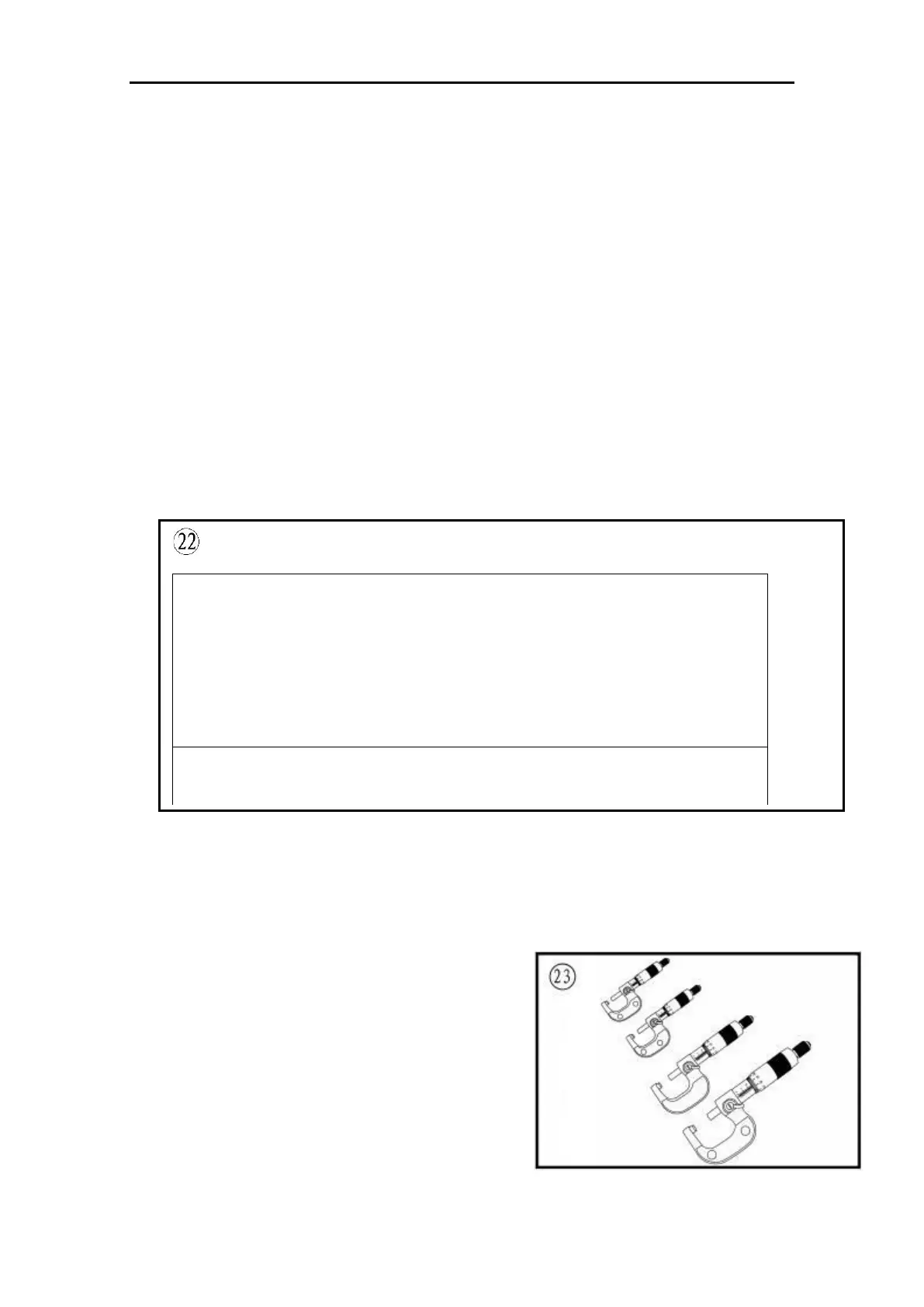
A micrometer’s size indicates the minimum and
maximum size of a part that it can measure. The
usual sizes (Figure 23) are 0-25mm (0-1 in.), 25-
50 mm (1-2 in.), 50-75 mm (2-3 in.) and 75-100
mm (3-4 in.).
*This chart represents the values of figures placed to the right of the decimal point.
Use it when reading decimals from one-tenth to one one-thousandth of an inch or
millimeter. It is not a conversion chart (for example: 0.001 in. is not equal to 0.001
mm).


 To Next Page
 Loading...