For frozen screws, apply penetrating fluid as
described, the insert a screwdriver in the slot and
rap the top of the screwdriver with a hammer. This
loosens the rust so the screw can be removed in the
normal way. If the screw head is too damaged to
use this method, grip the head with locking pliers
and twist the screw out.
Avoid applying heat unless specifically
instructed. Heat may melt, warp or remove the
temper from parts.
Removing Broken Fasteners
If the head breaks off a screw or bolt, several methods are available for removing
the remaining portion. If a large portion of the remainder projects out, try gripping it with
locking pliers. If the projecting portion is too small, file it to fit a wrench of cut a slot in it
to fit a screwdriver (Figure 37)
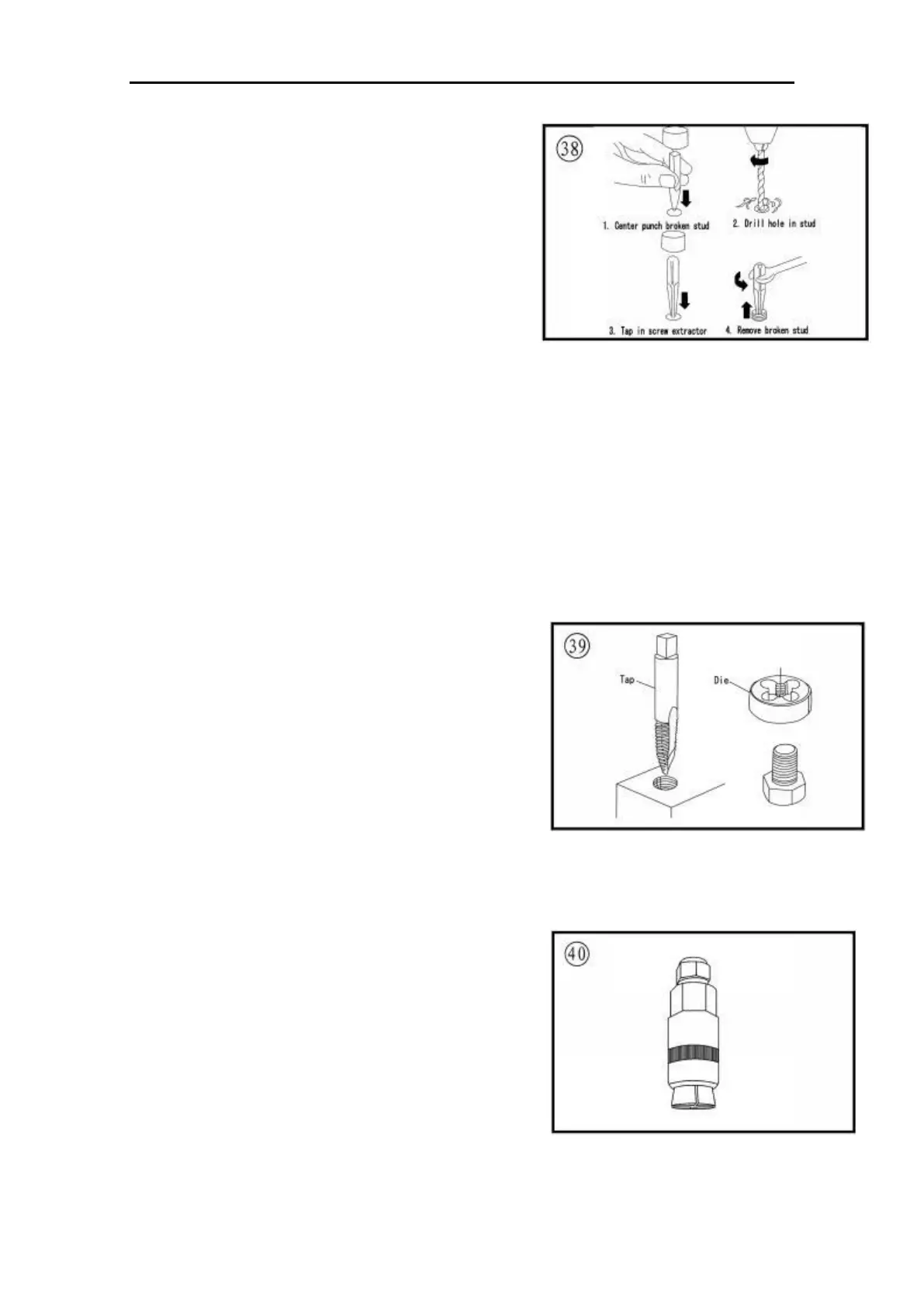
If the head breaks off flush, use a screw extractor. To do this, center punch the
exact center of the remaining portion of the screw or bolt. Drill a small hole in the screw
and tap the extractor into the hole. Back the screw out with a wrench on the extractor
(Figure 38)
Repairing Damaged Threads
Occasionally, threads are stripped through
carelessness or impact damage. Often the threads
can be repaired by running a tap (for internal threads
on nuts) or die (for external threads on bolts) through
the threads (Figure 39). To clean or repair spark
plug threads, use a spark plug tap.
If an internal thread is damaged, it may be
necessary to install a Helical or some other type of
thread insert. Follow the manufacturer’s instructions when installing their insert.
If it is necessary to drill and tap a hole, refer to Table 8 for metric tap and drill
sizes.
Stud Removal/Installation
A stud removal tool (Figure 40) is available
from most tool suppliers. This tool makes the removal
and installation of studs easier. If one is not available,
thread two must onto the stud and tighten them
against each other. Remove the stud by turning the
lower nut (Figure 41).


 To Next Page
 Loading...